What is preventive car maintenance?
Preventive car maintenance is the routine servicing of your vehicle before problems develop. Oil changes before the oil turns to sludge. Brake pad checks before metal grinds on metal. Timing belt replacements before a snap destroys your engine. The whole idea is to address small issues while they are still cheap and easy, rather than waiting for a breakdown that costs you far more in time and money.
The industry term you will see in owner’s manuals and service records is “scheduled maintenance” or “preventive maintenance,” and it covers a specific set of planned tasks performed at regular intervals. This is the opposite of reactive maintenance, where you wait until something fails and then fix it. Reactive repairs are almost always more expensive, and they tend to happen at the worst possible time.
Common preventive maintenance tasks include:
- Oil and filter changes to keep the engine lubricated and clean
- Tire rotations to promote even tread wear and extend tire life
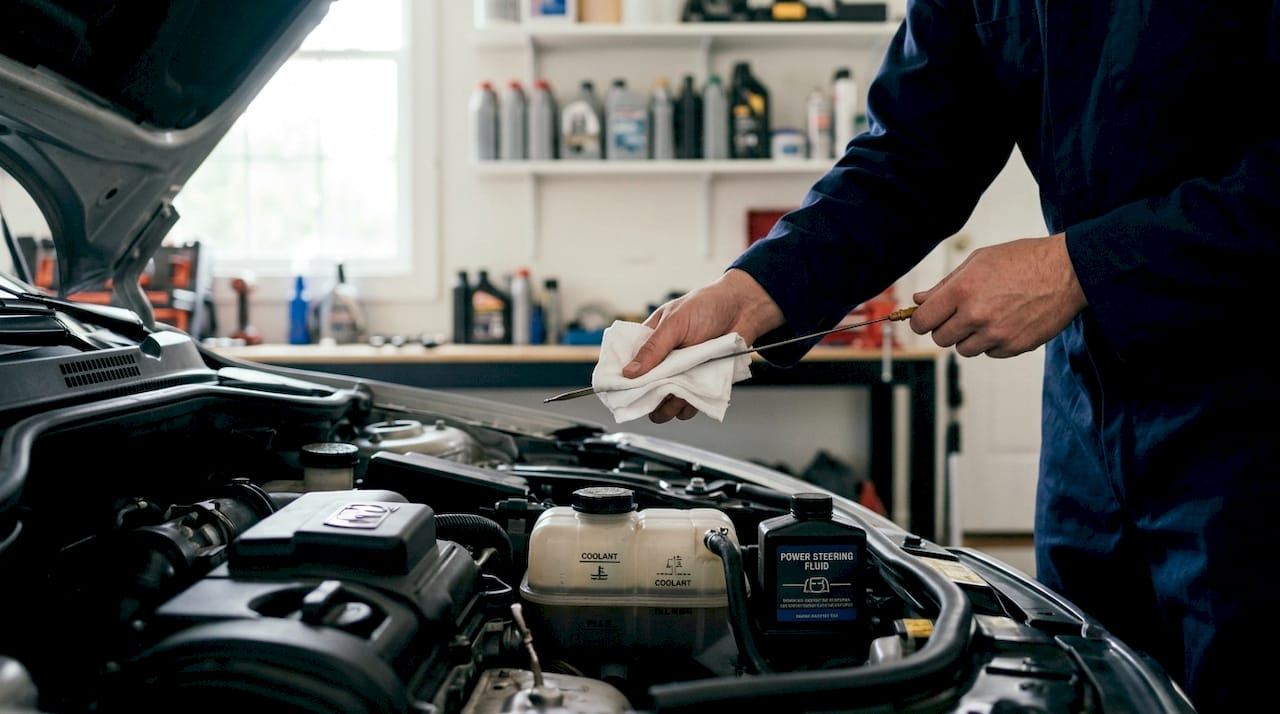
- Fluid level checks covering coolant, brake fluid, transmission fluid, and power steering fluid
- Battery testing to catch a weakening cell before it leaves you stranded
- Belt and hose inspections to spot cracking or fraying before a failure
- Air and cabin filter replacements to protect the engine and your air quality
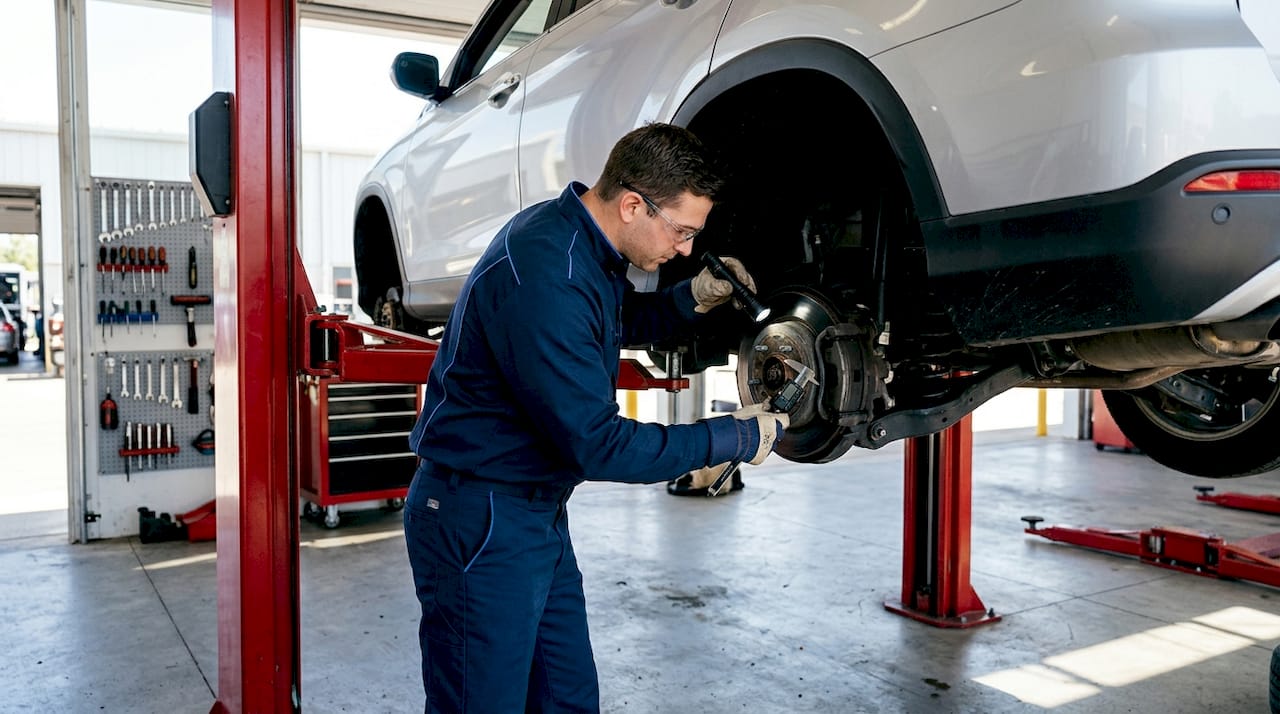
- Brake inspections to monitor pad thickness and rotor condition
Following your manufacturer’s recommended schedule matters beyond just reliability. Skipping required services can void your factory warranty or lease agreement, which turns a small oversight into a very expensive one.
Why does preventive maintenance actually save you money?
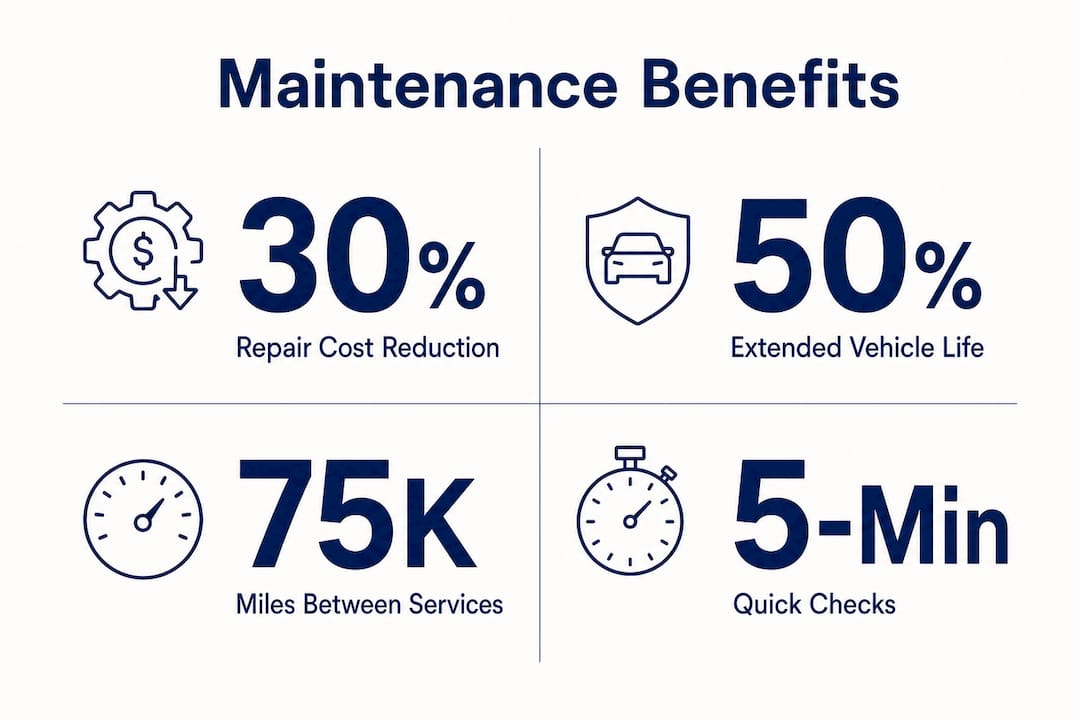
The financial case for staying on top of vehicle upkeep is straightforward: small, planned costs consistently beat large, unplanned ones. Reactive maintenance costs up to 2–5 times more than a planned approach, and properly maintained equipment can last 20–40% longer. Those numbers come from industrial equipment research, but the principle applies directly to your car.
Safety is the other side of the equation. Worn brake pads, underinflated tires, and low coolant levels are all conditions that preventive checks catch early. A brake inspection that costs you an hour catches a problem that could otherwise cause an accident. That is not an exaggeration; it is just how mechanical wear works.
Key benefits of staying current with your maintenance schedule:
- Fewer breakdowns because wear items get replaced before they fail
- Better fuel economy since a clean engine with fresh oil and properly inflated tires burns less fuel
- Higher resale value because documented service history reassures buyers
- Longer vehicle lifespan through consistent care of major systems
- Warranty protection by meeting manufacturer service requirements
The average age of vehicles on U.S. roads was about 12.6 years as of 2024, according to the Federal Bureau of Transportation Statistics. An older vehicle that has been consistently maintained is far more reliable than a newer one that has been neglected, and it holds its value better when you decide to sell.
The bottom line on cost: Staying ahead of wear through scheduled service is the single most effective way to reduce what you spend on your car over its lifetime.
Common preventive maintenance tasks every car owner should know
Understanding which tasks matter and why makes it much easier to stay on schedule. AAA recommends that car owners keep up with regular oil changes, tire rotations, fluid level checks, battery testing, and inspections of belts, hoses, and filters. Some of these are straightforward enough to handle yourself; others are worth leaving to a qualified mechanic.
Tasks you can often handle yourself
Checking fluid levels under the hood takes about five minutes and requires no tools. Engine oil, coolant, brake fluid, and windshield washer fluid all have clearly marked reservoirs with min/max indicators. Checking tire pressure is equally simple, though timing matters: always check pressure when the tires are cold, since driving heats the air inside and gives you a falsely high reading. The NHTSA tire safety guidelines confirm that cold-tire readings are the only accurate baseline.
Replacing cabin air filters and engine air filters is another job most owners can do with basic tools and a YouTube video. The filters are inexpensive, and swapping them out takes 10–15 minutes on most vehicles.
Tasks that belong with a professional
Brake inspections, timing belt replacements, transmission fluid flushes, and battery load testing all require either specialized tools or the kind of trained eye that catches problems a visual check misses, which is why many companies rely on bijverdieners en jobstudenten als automechanieker of elektricien to assist with these tasks. Battery health checks and fluid inspections are simple in concept but easy to misread without the right equipment, which is why AAA flags them as tasks where professional verification pays off. A mechanic doing an oil change can also scan your car’s overall condition while they are under the hood, which is a genuine advantage of sticking with a consistent service provider.
One more thing worth knowing: not every service a shop recommends is actually necessary. Coolant flushes, power steering fluid exchanges, and differential oil changes are sometimes pushed outside the manufacturer’s schedule. Always cross-check any recommended service against your owner’s manual before agreeing to it.
How often should you perform preventive maintenance?
Maintenance intervals vary by vehicle, driving conditions, and the specific task. The table below reflects general guidelines; your owner’s manual is the authoritative source for your specific car.
| Maintenance task | Typical interval |
|---|---|
| Oil and filter change | — |
| Tire rotation | Every 5,000 miles |
| Cabin and engine air filters | Annually |
| Battery test | Every 1–2 years, or at each oil change |
| Brake inspection | Annually |
| Coolant flush | — |
| Timing belt replacement | — |
| Transmission fluid change | — |
A few things to keep in mind when reading this table. First, “severe duty” driving, which includes frequent short trips, stop-and-go traffic, towing, or extreme temperatures, shortens most of these intervals. Los Angeles traffic qualifies as severe duty for oil degradation purposes. Second, mileage and time both matter. A car driven only 5,000 miles a year still needs an annual oil change because oil breaks down from heat and moisture even when the car sits.
Pro Tip: Set a calendar reminder every six months to check your tire pressure, top off fluids, and review your mileage against your last service date. Catching a missed interval early is far cheaper than catching it late.
Deviating from the manufacturer’s schedule carries a real risk beyond mechanical wear. Failing to follow the manufacturer’s maintenance schedule can void your factory warranty, which means a repair that would have been covered becomes your full expense. That is a costly mistake on a newer vehicle.
Where to find your vehicle’s maintenance schedule
Your owner’s manual is the first place to look, and for most cars it is the most reliable source. It lists every required service, the correct fluid specifications, and the exact intervals the manufacturer tested and validated for your engine. If you bought a used car without a manual, printed replacements are available through the manufacturer or online retailers for most models.
Many manufacturers have moved away from printed manuals entirely in favor of online owner portals, where you can enter your VIN and pull up the exact maintenance schedule for your model year. These portals also reflect any updated recommendations the manufacturer has issued since the car was built, which printed manuals cannot.
A few practical tips for staying organized:
- Keep a maintenance log in your glove box or a notes app. Record the date, mileage, and service performed each time.
- Save receipts from every service visit. These records directly support your car’s resale value and can resolve warranty disputes.
- Use your VIN when searching manufacturer portals or calling a dealership for schedule information. Generic schedules by make and model are a reasonable starting point, but VIN-specific data is more accurate.
- Be cautious with aftermarket schedules. Third-party maintenance guides are often more conservative than necessary, which means more frequent service visits and higher costs without a real benefit.
Experienced independent mechanics can perform most preventive maintenance tasks just as effectively as dealerships, and they often provide more personalized attention. The key is finding a shop or mechanic you trust and sticking with them, since a consistent service provider builds a history of your car’s condition over time.
Expert tips for getting the most from your maintenance routine
Mechanics who work on cars every day tend to give the same advice: do not wait for a symptom before you act. Fluids degrade, belts crack, and batteries weaken on a schedule that is largely predictable. Waiting until something feels wrong means the damage has already started.
Dashboard warning lights are a specific case where delay is costly. A check engine light does not always mean catastrophe, but Kelley Blue Book’s maintenance guidance is clear: never ignore it. The light signals a fault that needs professional diagnosis. Driving on an undiagnosed fault can turn a $150 sensor replacement into a $2,000 catalytic converter repair.
A few more tips from experienced mechanics:
- Check tire pressure monthly, not just when a tire looks low. Tires lose about 1 PSI per month naturally, and underinflation accelerates wear and reduces fuel economy.
- Prioritize by vehicle age. On a car over 100,000 miles, timing belts, coolant hoses, and spark plugs deserve closer attention than on a newer vehicle.
- Verify before you approve. If a shop recommends a service not listed in your owner’s manual, ask them to show you where the manufacturer requires it. Consumer Reports notes that flushes and fluid exchanges are sometimes offered outside the regular schedule when they are not actually needed.
- Do not skip the small stuff. A $15 cabin air filter replacement protects your HVAC system. A $5 wiper blade keeps your visibility clear in rain. These are not glamorous, but they matter.
For car owners in Los Angeles, scheduling maintenance around a busy week is often the real obstacle. Stop-and-go commutes accelerate wear, but finding time to get to a shop is genuinely difficult. Onsite Los Angeles Mobile Mechanic handles oil changes, battery replacements, fluid checks, and other preventive services at your location, whether that is your driveway, your office parking lot, or anywhere else in the greater Los Angeles area. Most services are completed within an hour, with upfront pricing and no hidden fees. Call 213-583-4159 to book.
Pro Tip: If your car is over 75,000 miles, ask your mechanic to do a full inspection at your next oil change. Catching a worn belt or a leaking seal at that stage costs a fraction of what it costs after a failure.
Key Takeaways
Preventive car maintenance is the most cost-effective strategy available to car owners, reducing repair costs by up to 2–5 times compared to reactive fixes and extending vehicle life by 20–40%, according to research from Honeywell.
| Point | Details |
|---|---|
| Definition | Preventive maintenance means servicing your car on a schedule before problems develop, not after they appear. |
| Cost advantage | Reactive repairs cost 2–5 times more than planned maintenance. |
| Vehicle longevity | Properly maintained vehicles can last 20–40% longer. |
| Schedule source | Your owner’s manual or manufacturer’s online portal is the only authoritative source for your specific intervals. |
| Warranty risk | Skipping required services can void your factory warranty, turning a covered repair into a full out-of-pocket expense. |
Keep your car maintained without the hassle
Staying current with preventive maintenance is straightforward once you know what to do and when. The harder part, especially in a city like Los Angeles, is actually finding the time to get it done. Onsite Los Angeles Mobile Mechanic brings the service to you, handling oil changes, fluid checks, battery tests, and more at your location with transparent, upfront pricing.
No towing. No waiting rooms. No surprises on the bill. Call 213-583-4159 or visit Onsite Los Angeles Mobile Mechanic’s services page to book your next maintenance appointment.