Driveway car maintenance is the practice of regularly cleaning, repairing, and preserving your driveway surface to protect your vehicle’s condition, safety, and lifespan during everyday use. Most car owners focus entirely on what happens under the hood, but the surface your car sits on every day has a direct impact on tires, brakes, chassis, and even your battery. Properly maintained asphalt driveways can last up to 30 years, compared to just 10–15 years when neglected. That gap matters because a deteriorating driveway creates the exact conditions that accelerate vehicle wear. Onsite Los Angeles Mobile Mechanic sees this connection play out constantly with car owners across the greater Los Angeles area.
What is the role of driveway car maintenance for your vehicle?
The role of driveway car maintenance goes beyond curb appeal. Your driveway is the primary workspace for your car, the surface it rests on daily, and the environment where most DIY maintenance tasks happen. When that surface is cracked, wet, or covered in debris, every one of those tasks becomes less safe and less effective.
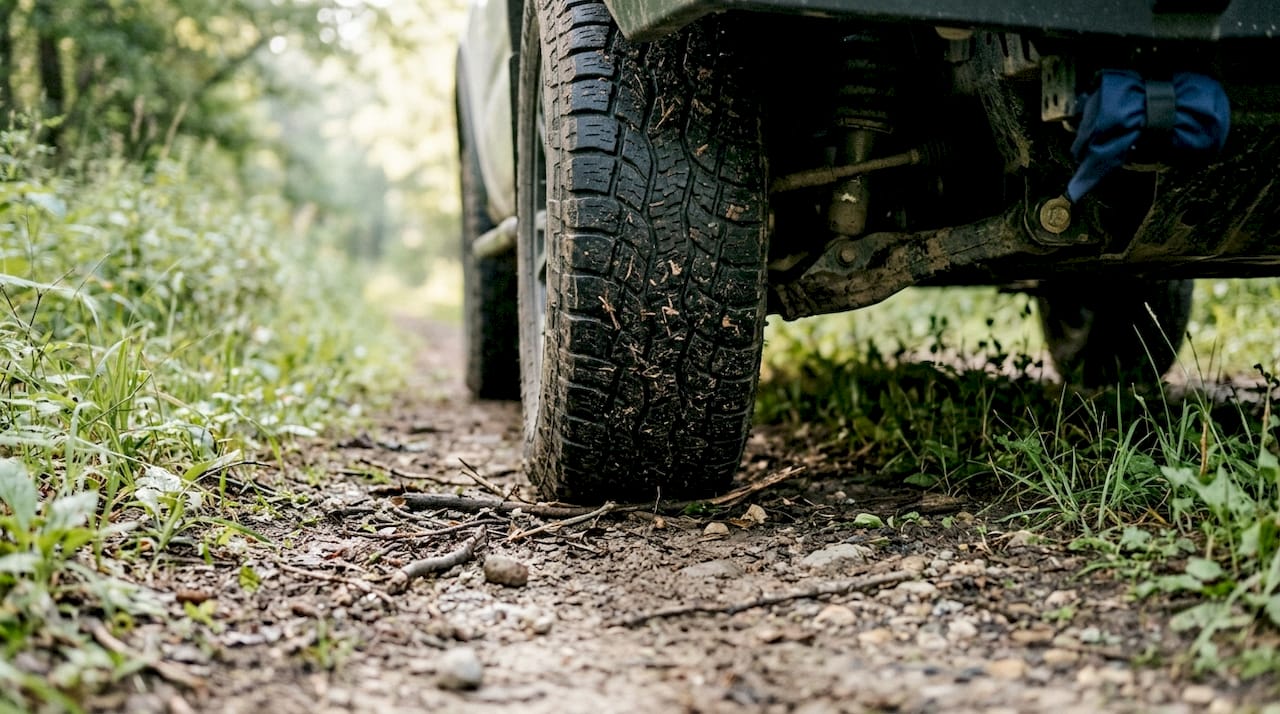
Debris and moisture increase tire wear and braking component damage risk. Small rocks and grit act like sandpaper on brake pads and rotors over time. Standing water accelerates chassis corrosion from underneath, attacking metal components that are expensive to repair.
The industry standard for driveway upkeep includes annual spring and fall inspections, crack filling as needed, and sealcoating every 3–5 years. These steps are not just about the driveway. They are about keeping the environment around your car clean, level, and dry enough to support safe vehicle operation and maintenance.
How do driveway conditions affect car health and safety?
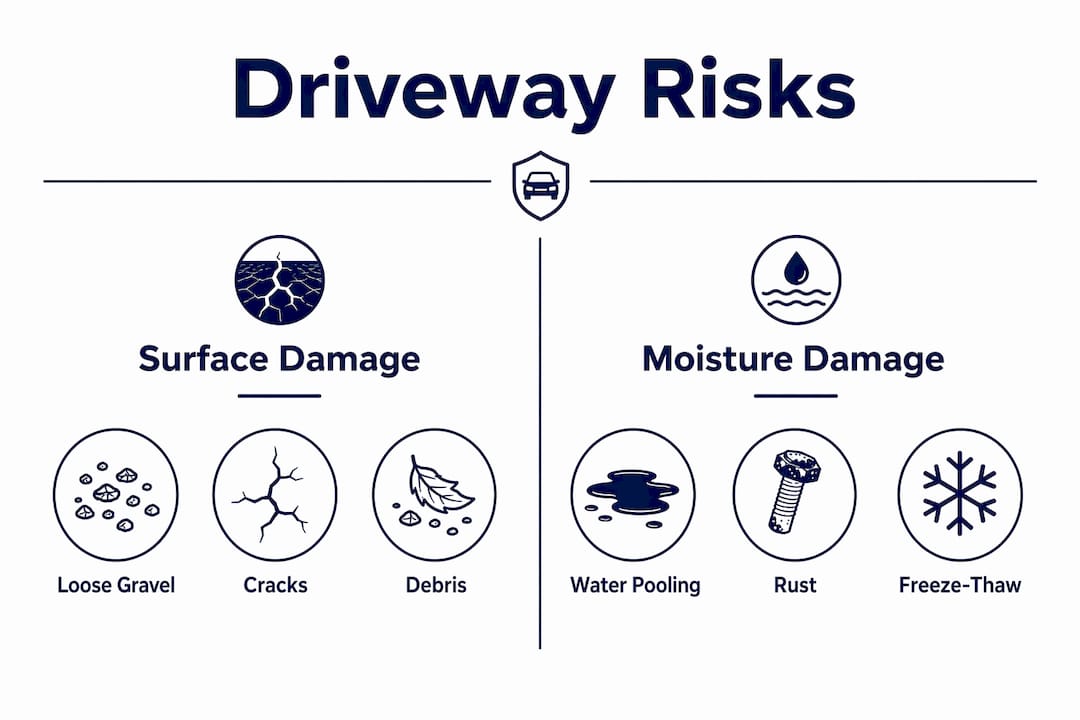
A poorly maintained driveway creates three distinct categories of vehicle risk: surface damage, moisture damage, and instability during maintenance tasks.
Surface damage happens when loose gravel, broken asphalt chunks, or embedded debris get kicked up into wheel wells or dragged under the chassis. Paint chips, scratched undercarriages, and clogged brake vents are all common results. Tire sidewalls are especially vulnerable when cars repeatedly roll over sharp edge cracks.
Moisture damage is slower but more expensive. Water pooling under a parked car accelerates rust on the frame, exhaust system, and suspension components. Moisture exposure accelerates corrosion and seal damage, particularly on older vehicles with less protective coating. A single drainage problem left unaddressed can cause thousands of dollars in rust repairs over a few years.
Instability during maintenance is the most underappreciated risk. Changing a tire, checking brake fluid, or replacing a battery on an uneven or slippery surface increases the chance of a jack slipping or a spill. Flat, dry, and debris-free surfaces are the baseline requirement for safe at-home car work.
| Driveway Issue | Vehicle Impact | Risk Level |
|---|---|---|
| Loose gravel and debris | Tire sidewall cuts, brake vent clogs | Moderate |
| Standing water and poor drainage | Chassis rust, seal deterioration | High |
| Cracked or uneven surface | Jack instability during DIY tasks | High |
| Oil stains on surface | Transferred grime to undercarriage | Moderate |
| Frost and ice buildup | Slip risk, suspension stress | High |
What are the essential driveway maintenance practices for car owners?
The most effective driveway care routine follows a seasonal schedule with a few consistent year-round habits.
- Spring inspection: Check for winter frost damage, new cracks, and drainage issues. Fill cracks before they widen.
- Fall inspection: Clear debris, check sealcoat condition, and prepare for freezing temperatures.
- Year-round sweeping: Remove dirt, leaves, and grit weekly to prevent surface abrasion and moisture trapping.
- Crack filling: Apply filler as soon as cracks appear. A $12 bottle of crack filler prevents $200–$300 pothole repairs within two winters.
- Sealcoating: Apply every 3–5 years on asphalt to block oxidation and water intrusion.
- Snow removal: Use plastic shovels rather than metal. Plastic shovels preserve surface integrity and prevent the gouging that creates new cracks.
Asphalt vs. concrete maintenance differences:
- Asphalt needs sealcoating every 3–5 years and is more flexible in freeze-thaw cycles.
- Concrete resists oil stains better but cracks more rigidly and requires joint sealing.
- Both materials benefit from prompt crack repair and regular cleaning.
- Concrete is more sensitive to salt damage and requires gentler deicing products.
Pro Tip: Fill cracks in late summer or early fall when temperatures are warm enough for the filler to bond properly. Cold application reduces adhesion and shortens the repair’s lifespan.
How do you perform safe car maintenance in your driveway?
Safe DIY car maintenance starts with the workspace, not the vehicle. A clean, level, and dry driveway surface is the foundation for every fluid check, tire rotation, and battery swap you do at home.
- Clear the surface. Sweep away all gravel, leaves, and debris before placing a jack or creeper under the car.
- Check for level ground. Use a simple bubble level or visually confirm the surface is flat. Even a slight slope creates jack instability.
- Dry the surface. Never work on a wet driveway. Water under a jack stand is a serious safety hazard.
- Set up lighting. Good visibility prevents missed bolts and fluid spills that stain and damage the driveway surface.
- Know your local rules. Some municipalities and HOAs restrict certain types of vehicle work in residential driveways. Check before you start.
- Keep fluids contained. Use drip trays under the vehicle to catch oil, coolant, or brake fluid. Spills left on asphalt or concrete degrade both the surface and the car’s undercarriage.
Cars left idle in driveways accumulate dormancy damage including fluid settling, dried seals, and battery discharge. A minimum 15-minute highway drive weekly keeps the battery charged and fluids circulating properly. Idling in the driveway does not provide enough RPM to recharge the battery effectively.
When driveway conditions make DIY work unsafe or local rules restrict it, Onsite Los Angeles Mobile Mechanic provides mobile mechanic services that come directly to you, handling everything from oil changes to battery replacements on-site.
Pro Tip: Rotate your parking spot on the driveway periodically. Parking in the same position every day concentrates weight and UV exposure on one area, accelerating surface wear and tire flat-spotting.
What driveway mistakes cause the most vehicle damage?
Most driveway damage comes from a handful of repeated mistakes. Each one has a direct cost to both the driveway and the car sitting on it.
| Harmful Practice | Recommended Alternative | Vehicle Impact |
|---|---|---|
| Rock salt for ice removal | Calcium magnesium acetate or sand | Salt corrodes chassis and brake lines |
| Sealing over active cracks | Fill cracks first, then sealcoat | Peeling sealant worsens surface damage |
| Ignoring oil stains | Clean with degreaser promptly | Stains transfer grime to undercarriage |
| Metal shovels for snow | Plastic shovels only | Metal gouges create new crack entry points |
| Ignoring drainage issues | Regrade or install a channel drain | Standing water accelerates rust and seal failure |
Rock salt accelerates freeze-thaw damage through a process called concrete spalling, where moisture penetrates, freezes, and expands, breaking the surface from within. Calcium magnesium acetate and sand provide traction without the corrosive chemistry. The vehicle impact is just as serious. Salt spray from a deteriorating driveway coats the underside of your car every time you pull in or out.
Sealcoating over active cracks is one of the most common and costly mistakes. Sealcoat is a protective layer, not a structural repair. Applied over damage, it traps moisture underneath and peels within one season, leaving the surface worse than before.
What are the most budget-friendly driveway maintenance strategies?
The cost math on driveway maintenance is straightforward. Average driveway repair costs $1,808, and full replacement can exceed $6,000. DIY maintenance for a 500 sq ft concrete driveway costs under $150 per year. Spending $150 annually to avoid a $6,000 replacement is the clearest ROI in home maintenance.
- Crack filling: $10–$15 per bottle, applied annually, prevents potholes that cost $200–$300 each to repair professionally.
- Sealcoating: DIY sealcoating a standard driveway costs $50–$100 in materials versus $200–$400 for professional application.
- Pressure washing: A one-time equipment rental removes oil stains, moss, and debris that degrade both surface and vehicle.
- Drainage fixes: A simple regrading job or channel drain installation costs far less than repairing rust damage caused by years of standing water.
- Seasonal scheduling: Bundling spring and fall inspections with your regular vehicle maintenance checks costs nothing extra and catches problems early.
The highest ROI task is always crack filling done early. A narrow crack left untreated expands into a pothole within two winters. That pothole then becomes a vehicle hazard and a professional repair bill. Catching it at the crack stage costs under $15.
Key Takeaways
Driveway car maintenance is the single most overlooked factor in vehicle longevity, and fixing it costs less than $150 per year.
| Point | Details |
|---|---|
| Driveway condition affects vehicle health | Debris, moisture, and uneven surfaces directly damage tires, brakes, and chassis. |
| Annual inspections prevent major costs | Spring and fall checks catch cracks before they become expensive potholes or safety hazards. |
| Crack filling delivers the highest ROI | A $12 filler prevents $200–$300 pothole repairs and protects the car from surface debris. |
| Avoid rock salt and metal shovels | Both accelerate driveway and vehicle damage; use calcium magnesium acetate and plastic shovels instead. |
| Mobile mechanics fill the gap | When driveway conditions limit safe DIY work, Onsite Los Angeles Mobile Mechanic brings the service to you. |
Why driveway upkeep belongs in your car maintenance routine
Most car owners treat driveway care and vehicle maintenance as two completely separate tasks. That separation is a mistake I see cause real problems. A car owner spends $80 on a premium oil change and then parks on a cracked, oil-stained driveway that slowly corrodes the undercarriage. The maintenance mindset stops at the hood and ignores everything below the chassis.
The practical fix is simple: tie your driveway inspection to your oil change schedule. Every time you change the oil, walk the driveway and look for new cracks, drainage issues, or debris buildup. It takes five minutes and catches problems before they cost money. That kind of integrated maintenance approach is what separates car owners who avoid expensive repairs from those who are constantly reacting to them.
The other misconception I run into is that a “good enough” driveway is fine for DIY work. It is not. An uneven or wet surface turns a routine battery swap into a genuine safety risk. If your driveway is not in good shape, the smarter call is to get a mobile mechanic to handle the job on-site rather than risk working on an unstable surface. Onsite Los Angeles Mobile Mechanic handles exactly those situations, and the onsite car repair process is straightforward to set up with a phone call.
— Aaron
Onsite Los Angeles Mobile Mechanic and your driveway car care
Car maintenance tasks like fluid checks, battery replacements, and brake inspections all require a clean, level, and safe surface. When your driveway is not in that condition, or when local rules limit what you can do at home, Onsite Los Angeles Mobile Mechanic brings certified service directly to your location anywhere in the greater Los Angeles area.

Onsite Los Angeles Mobile Mechanic operates with upfront pricing and no hidden fees, completing most services like oil changes and battery swaps within an hour. Whether your driveway needs work before it is safe for DIY tasks or you simply want a professional to handle the job, mobile auto services are available by calling 213-583-4159. No towing, no waiting rooms, and no surprises on the bill.
FAQ
What is the role of driveway car maintenance?
Driveway car maintenance protects vehicles by keeping the surface clean, level, and free of moisture and debris that cause tire wear, chassis corrosion, and unsafe DIY working conditions.
How often should you inspect your driveway for car safety?
Experts recommend spring and fall inspections annually, with crack filling done as soon as damage appears to prevent pothole formation within two winters.
Does a cracked driveway actually damage your car?
Yes. Cracked surfaces create loose debris that damages tires and brake components, and uneven ground makes jack placement unsafe during routine maintenance tasks.
Is rock salt safe to use on a driveway where cars are parked?
Rock salt accelerates freeze-thaw damage on driveway surfaces and corrodes vehicle chassis and brake lines. Calcium magnesium acetate or sand are safer alternatives.
When should you call a mobile mechanic instead of doing driveway car work yourself?
Call a mobile mechanic when your driveway surface is uneven, wet, or restricted by local rules. Onsite Los Angeles Mobile Mechanic handles oil changes, battery replacements, and brake repairs on-site with a single phone call to 213-583-4159.