How online mechanic review platforms actually work
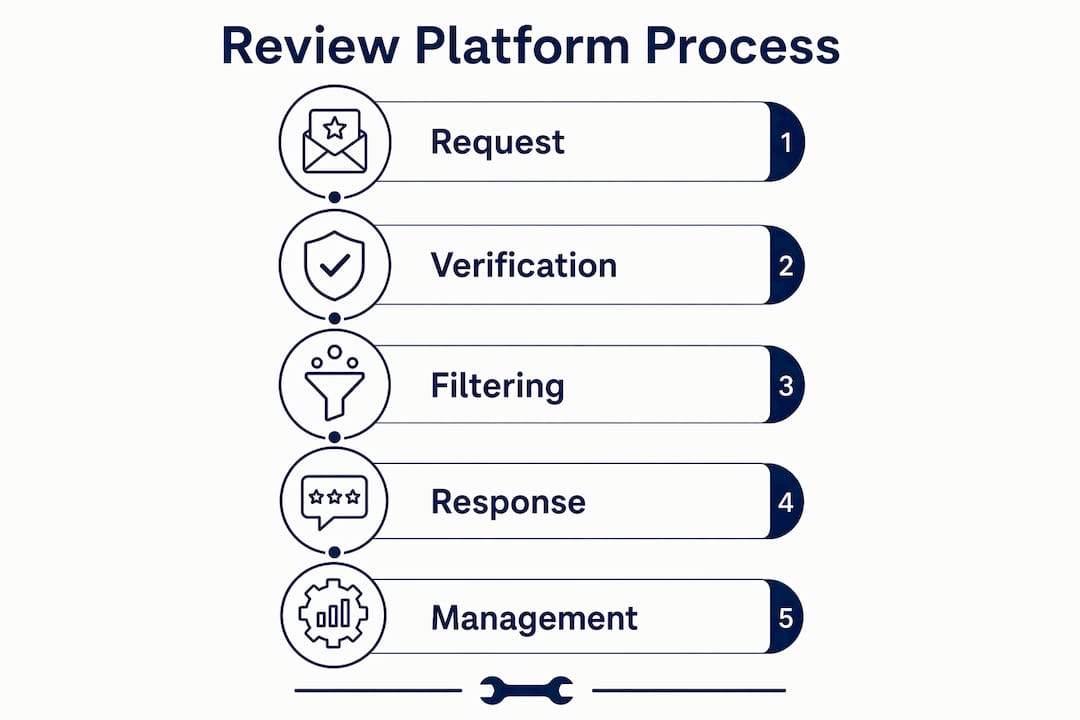
Online mechanic review platforms are digital systems that collect, verify, filter, and display customer feedback on auto repair shops, giving you a way to gauge a mechanic’s trustworthiness before you hand over your keys. The core components are straightforward once you see them laid out:
- Automated review collection: Platforms trigger review requests by SMS or email immediately after a job closes, capturing feedback while the experience is fresh.
- User-generated feedback: Customers submit star ratings and written comments, which form the raw data behind every reputation score.
- Filtering and moderation: Algorithms scan for fake, duplicate, or suspicious reviews before they affect a shop’s public rating.
- Reputation scoring: Platforms calculate aggregate scores from verified reviews, often pulling signals from multiple sites to build a fuller picture.
- Multi-source aggregation: Rather than relying on one platform, the strongest reputation profiles draw from Google, Yelp, Facebook, and automotive-specific directories simultaneously.
The platforms’ primary job is reducing the information gap between a shop and a first-time customer. When a mechanic has 200 detailed reviews spread over two years, you can read patterns, not just a number. That depth is what separates a genuinely useful review profile from a five-star rating with eight entries.
Understanding mechanic review platform features helps you read those profiles with the right skepticism, and it helps shops understand what they are actually being measured on.
1. How platforms collect and verify customer reviews
The timing of a review request matters more than most people realize. Platforms that connect directly to shop management software fire an SMS shortly after a job is marked complete, ideally within a short window when the customer’s goodwill peaks. That window is when a customer’s goodwill peaks. Wait until the next morning and the moment is gone.
Why SMS dominates review collection:
- SMS open rates are around 98%, compared to 20–25% for emails.
- Automated SMS workflows drive 2–4 times more reviews than email-based requests.
- Short messages with a single direct link yield about 3 times higher click-through rates than elaborate email templates.
Verification steps platforms use:
- Profile checks: platforms cross-reference the reviewer’s account age, activity history, and review frequency.
- Cross-platform comparison: a shop’s rating on Google is compared against its Yelp and Facebook scores to spot inconsistencies.
- Suspicious pattern detection: a sudden cluster of reviews posted in a single week triggers automated flags for manual review.
- Verified badges: some platforms, like Trustpilot, label reviews as “Verified” when they can confirm a real business transaction occurred.
Pro Tip: When a platform offers a direct review link in the SMS, the customer lands straight on the review form with zero navigation. That one-tap experience is the single biggest driver of review completion rates.
Platforms also block incentivized submissions. Offering a discount for a five-star rating violates FTC guidelines on review gating practices, and most major platforms have automated checks that flag reviews submitted immediately after a coupon redemption.
| Collection method | Open rate | Review volume impact |
|---|---|---|
| Automated SMS (within 90 min) | 98% | 2–4x higher |
| Email request | 20–25% | Baseline |
| Manual follow-up | Varies | Inconsistent |
2. How review filtering and moderation maintain trust
Filtering is where platforms try to separate real customer experiences from noise. The process combines automated scanning with occasional human review, and neither is perfect.
Automated filters look for:
- Reviewer profile age: Accounts created the same week a review is posted carry less weight.
- Review frequency: A profile with 15 reviews all posted on the same day is a statistical red flag.
- Review clustering: Sudden surges of a large number of reviews in a short period indicate a likely manipulation campaign.
- Generic language: Phrases like “great service, highly recommend” with no specifics are common signals of purchased or templated reviews.
The harder problem is enforcement. Filtering systems are opaque, and enforcement is slow. A shop can hide negative feedback while fake positive reviews stay live for weeks before a platform acts. Flagging a suspicious review is possible on most platforms, but the outcome is uneven. Google, for example, allows users to flag reviews as inappropriate, but the review process can take weeks and often produces no visible result.
Manual moderation fills some of those gaps. Platforms assign human reviewers to cases that automated systems flag but cannot resolve, particularly when a business disputes a review or a reviewer disputes a removal.

Pro Tip: Sort a shop’s reviews by lowest rating before reading anything else. The one-star and two-star entries reveal how a shop handles problems, which tells you far more than a wall of five-star praise.
3. How auto repair shops manage their online reputation
Reputation management for mechanics has moved well beyond manually asking customers to leave a review. Shops using integrated platforms connect their review workflow directly to their job management software, so every closed ticket automatically triggers an outreach sequence.
The core tools shops use:
- Automated SMS sequences: A first message goes out within 90 minutes of job completion. A follow-up reaches customers who opened the first message but did not click, typically 48 hours later.
- AI-assisted response drafting: AI drafting tools generate professional, specific responses that a human reviews and posts quickly, rather than leaving reviews unanswered for days.
- Review gating for service recovery: When a customer submits a low satisfaction score through an internal survey, the system flags it for the service manager before routing the customer to a public review platform. Google’s guidelines discourage explicitly filtering which customers get a review link, but flagging internal dissatisfaction for service recovery is standard practice.
- CRM integration: Connecting review data to a customer database lets shops segment by satisfaction level and target follow-up marketing to their warmest customers.
Shops using integrated platforms report 18–22% higher customer retention than those running disconnected tools. The retention gain comes from the combination of faster service recovery and more consistent post-service communication, not just from having more reviews.
| Reputation tactic | Primary benefit | Risk if misused |
|---|---|---|
| Automated SMS follow-up | Higher review volume | Feels intrusive if poorly timed |
| AI response drafting | Faster, consistent replies | Sounds robotic without human edit |
| Review gating | Catches problems early | Violates FTC rules if used to block negative reviews |
| CRM segmentation | Targeted retention campaigns | Requires clean customer data |
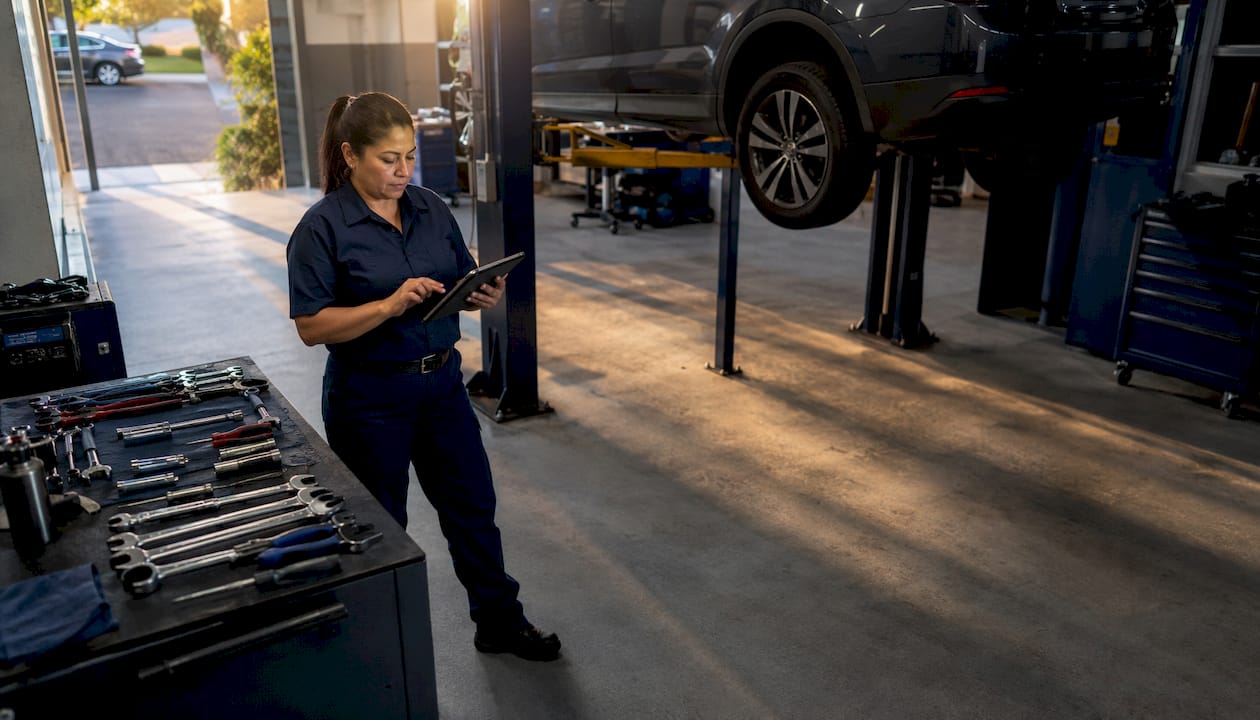
For shops looking to build visibility alongside their review strategy, auto repair SEO services can amplify the reputation signals that review platforms generate.
4. Risks and limitations of online mechanic reviews
Online reviews are useful. They are also manipulable, biased, and sometimes outright fabricated. Knowing the failure modes makes you a better reader of any rating you encounter.
Common risks:
- Fake purchased reviews: Review farms sell bulk submissions at low cost, and the resulting profiles often share telltale signs: single-review accounts, generic praise, and reviews posted in tight clusters.
- Review gating legality: Routing only satisfied customers to public review platforms while capturing dissatisfied ones privately is a gray area. The FTC has taken action against businesses that explicitly filter reviews by sentiment before deciding who gets a public link.
- Extreme bias: Only highly satisfied or deeply frustrated customers tend to post reviews. The middle ground, the customers who had a perfectly adequate but unremarkable experience, rarely shows up in the data.
- Thin profiles: A shop with fewer than 50 reviews has a rating that a handful of friends or family members could easily skew. The volume-and-rating combination matters more than the star count alone.
Frequently asked questions:
Are online mechanic reviews trustworthy? They are a starting point, not a verdict. A shop with 200+ reviews spread over two years and a 4.5-star average is much harder to fake than a perfect rating with a dozen entries. Cross-check across platforms and read the low ratings carefully.
Is it legal for a shop to offer discounts for reviews? Offering an incentive specifically for a positive review violates FTC guidelines. Asking for an honest review after service is fine. The line is whether the incentive is tied to the rating, not just the act of reviewing.
What does a suspicious review profile look like? Watch for profiles with only one review or accounts that posted multiple reviews across unrelated businesses on the same day. Those patterns suggest review farms or coordinated manipulation.
Overreliance on online reviews at the expense of checking professional credentials is a real risk. ASE certification, state licensing, and BBB complaint history are verification layers that no star rating can replace. Reading reviews alongside those checks gives you a far more complete picture than either source alone.
5. Expert guidance on reading mechanic reviews critically
The most reliable way to spot fake reviews is to look at the reviewer’s profile, not just the review itself. Authentic reviewer profiles show a mix of ratings across different business categories, reviews posted over months or years, and specific details like staff names, prices paid, and work performed. A profile with one review, posted the same week the shop received a surge of identical praise, is almost certainly not a real customer.
What to look for in credible reviews:
- Specific work described: “replaced the alternator on a 2019 Camry” beats “great service.”
- Mentions of price, timeline, or staff by name.
- A mix of positives and minor negatives, since real experiences rarely go perfectly.
- Reviews spread over at least 12 months, not clustered in a single week.
Expert guidance consistently warns about extreme review bias. Reading lower ratings reveals more about a shop’s actual service quality than 50 five-star entries ever will. How a shop responds to a one-star review, whether it acknowledges the problem, offers a resolution, or gets defensive, tells you exactly how it handles things when they go wrong.
Cross-platform validation is the strongest authenticity check available. A shop that holds a 4.7 on Google, a 4.4 on Yelp, and appears in automotive forums with genuine recommendations is almost certainly legitimate. A shop with a 4.9 on one platform and no presence anywhere else deserves a harder look.
Statistic to know: SMS review requests sent within 90 minutes of job completion generate open rates around 98%, compared to 20–25% for email, and drive 2–4 times more review responses. That gap explains why the reviews you read on most platforms skew toward customers who were reached quickly and felt strongly enough to respond.
For a deeper look at reading mobile mechanic reviews without being misled, the red flags covered here apply across every platform you will encounter.
Key takeaways
Online mechanic review platforms use automated SMS triggers, multi-source aggregation, and filtering algorithms to build reputation scores, but critical reading across platforms remains the most reliable way to assess a shop’s true quality.
| Point | Details |
|---|---|
| SMS timing drives volume | Review requests sent within 90 minutes of job completion generate 2–4 times more responses than email requests. |
| Filtering has real limits | Platforms flag suspicious reviews, but enforcement is slow and outcomes are uneven. |
| Reputation management is active | Shops use automated follow-ups, AI response drafting, and CRM integration to manage their public image. |
| Cross-platform checks matter | A consistent rating across Google, Yelp, and automotive forums is a stronger trust signal than any single score. |
| Low ratings reveal the most | Reading one-star and two-star reviews, and how the shop responds, tells you more than a wall of five-star praise. |
Why reviews alone should not drive your mechanic decision
The mechanic review ecosystem has matured considerably. Platforms are better at catching fake submissions than they were five years ago, and shops that engage professionally with negative feedback have a real advantage over those that ignore it. But the system still has structural problems that no algorithm has fully solved.
The bias toward extreme opinions is the one that gets overlooked most often. The customers who post reviews are not a representative sample. They are the ones who were delighted or furious, and the platforms have no way to weight for the silent majority who had a fine, forgettable experience. That means a shop’s rating is always a filtered signal, not a census.
What actually works is treating reviews as one layer of a multi-source check. A 4.5-star rating with 200+ reviews is a strong baseline. Add an ASE Blue Seal certification, a clean BBB profile, and a state repair license, and you have something much closer to a complete picture. Reviews tell you about customer experience. Credentials tell you about technical competence. Neither replaces the other.
Shops that respond to every review, positive and negative, with specific and professional replies are signaling something real: they are paying attention. That habit, more than any star count, is what builds lasting trust with new customers who are reading the exchange before they ever call.
Skip the guesswork on your next repair
Onsite Los Angeles Mobile Mechanic brings the repair to you, anywhere in the greater Los Angeles area, with upfront pricing and no hidden fees. Oil changes, battery replacements, diagnostics, and more, completed at your home or office, often within an hour. No towing, no waiting rooms, no surprises on the invoice.
Call 213-583-4159 to book, or browse the full list of mobile mechanic services to see what Onsite Los Angeles Mobile Mechanic can handle at your location today.