Safe car repair while kids are home requires a controlled environment, physical barriers between children and the work zone, and a realistic assessment of which repairs you can actually handle safely. Parents who skip these steps face real hazards: corrosive chemicals, falling vehicles, and sharp tools within reach of curious hands. The Occupational Safety and Health Administration (OSHA) classifies auto repair environments as industrial work zones, and that standard applies whether you are in a commercial shop or your own driveway. Onsite Los Angeles Mobile Mechanic serves families across the greater Los Angeles area who want professional repairs done safely, without turning their home into a hazard zone.
1. Safe car repair while kids home starts with physical barriers
Physical barriers are significantly more effective than verbal instructions for keeping children under 8 safe during home repairs. Telling a toddler to “stay back” does not work. A locked door, a closed garage gate, or a sturdy partition does.
Children under 8 lack the reaction speed to respond to sudden hazards like a rolling tool or a spilled fluid. The practical rule is simple: if a child can open it, it is not a barrier. Use a keyed lock or a latch mounted above their reach on any door leading to your work area.
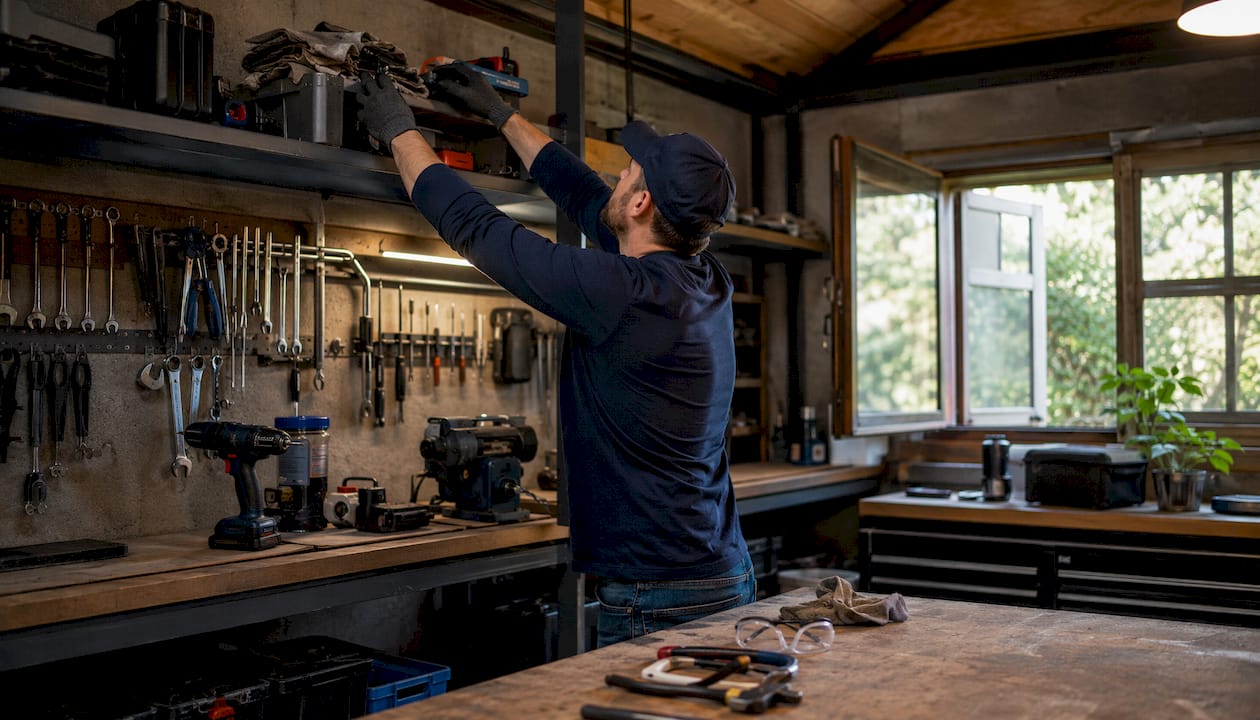
Parents should treat the repair zone as an active industrial space, not a shared family area. That mindset shift changes how you set up the space before you ever touch a wrench.
Pro Tip: Set up your barrier before you pull any tools out. Once you are mid-repair, you will not want to stop to address a child who has wandered in.
2. Store tools above 1.5 meters and lock chemicals away
Tool storage height is a specific, measurable safety standard. Tools stored above 1.5 meters are out of reach for children under 8, which covers the majority of the injury risk from sharp or heavy items.
Chemicals are the less obvious danger. Brake fluid and battery acid are corrosive to skin and damaging to surfaces. Many parents underestimate this risk until a spill happens. Store all fluids in a locked cabinet, clearly labeled, and never in repurposed food or drink containers.
Nitrile gloves and safety glasses belong on your hands and face before you open any fluid container. Flushing a spill immediately with water limits damage, but prevention is the better standard.
3. Never work when you are tired or distracted
Fatigue reduces reaction time and increases the chance of skipping safety steps during home repairs. The risk multiplies when children are nearby. A lapse in focus that costs you a scraped knuckle in a child-free garage can cost much more when a child is in the area.
The rule is direct: avoid repairs after a long day. If you are tired, schedule the repair for another time. Car maintenance can wait. Injuries cannot be undone.
“Just for a second” is the phrase that precedes most workshop injuries involving children. If a child enters your workspace, stop work completely before addressing them.
4. Know which repairs are safe to do at home with children around
The safest home repairs are those you can pause mid-task without creating a new hazard. Beginner-safe jobs include changing wiper blades, replacing cabin air filters, and cleaning battery terminals. These tasks typically take under 30 minutes, require minimal tools, and do not involve lifting the vehicle or opening fluid systems.
Repairs you should never attempt at home without professional training include brake hydraulics, fuel system work, and high-voltage electrical components. These repairs carry catastrophic failure risks and involve chemicals or voltages that are dangerous even for experienced DIYers.
The golden rule: if you cannot safely stop the repair mid-task and walk away, it is not a job for a home setting with children present. Consult a reliable vehicle service manual or a trusted online guide before starting any repair you have not done before.
Pro Tip: Before starting any repair, ask yourself: “If my child runs out right now, can I stop safely?” If the answer is no, call a professional mobile mechanic instead.
5. How professional mobile mechanics improve safety for families
Mobile mechanics provide professional repairs at your home or a nearby location, removing the need for risky DIY work on complex jobs. They bring the right tools, follow professional safety protocols, and complete the work without requiring you to manage both a repair and your children at the same time.
The scheduling flexibility is a real advantage for parents. You can book a repair during nap time, while a co-parent supervises the kids, or at any time that fits your routine. There is no drop-off, no waiting room, and no towing involved.
Onsite Los Angeles Mobile Mechanic handles common repairs including oil changes, battery replacements, brake inspections, and more, all completed at your location across the greater Los Angeles area. Many of these services are finished within an hour, with upfront pricing and no hidden fees.
The cost comparison with traditional shops also favors mobile service when you factor in towing, time off work, and the risk of a DIY repair gone wrong. Safer family car care does not have to cost more than the alternative.
- No vehicle drop-off required
- Repairs completed at your driveway or parking spot
- Upfront quotes with transparent pricing
- Flexible scheduling around childcare routines
- Professional tools and safety standards on every job
6. Essential safety equipment for home car maintenance with children
A properly equipped workspace is the foundation of home car maintenance with children nearby. The minimum safety gear for any repair includes a Class B fire extinguisher, nitrile gloves, safety glasses, and wheel chocks. Each item addresses a specific, documented risk.
Never rely on a hydraulic floor jack alone when lifting a vehicle. Floor jacks can fail or be knocked over, especially with children in the area. Always use rated jack stands on a solid, level surface, and secure the vehicle with wheel chocks before going underneath.
Proper ventilation prevents toxic fume buildup when working with chemical sprays or running an engine. Keep the garage door fully open and use a fan to move air through the space. Closed spaces concentrate fumes quickly, and children are more vulnerable to them than adults.
A clean, organized workspace prevents trips, falls, and chemical exposure. Floors should be clear enough to evacuate quickly in an emergency. Spills should be cleaned immediately, and tools returned to their storage location after each use. A seat protection mat placed at the garage entry also helps contain fluid and debris from spreading into living areas, which matters when children move between spaces.
| Safety item | Purpose | Key usage note |
|---|---|---|
| Class B fire extinguisher | Suppresses fuel and chemical fires | Mount within arm’s reach of the work area |
| Nitrile gloves | Protects skin from corrosive fluids | Replace after each use; do not reuse contaminated gloves |
| Safety glasses | Shields eyes from debris and splashes | Required any time you work under the hood or beneath the vehicle |
| Wheel chocks | Prevents vehicle from rolling | Place on both sides of a tire on the opposite axle from the lift point |
| Rated jack stands | Supports vehicle weight safely | Never substitute with bricks, wood blocks, or the floor jack alone |
Key Takeaways
Safe car repair while kids are home requires physical barriers, the right safety gear, and a clear limit on which repairs belong in a DIY setting versus a professional one.
| Point | Details |
|---|---|
| Physical barriers are non-negotiable | Locked doors and gates protect children under 8 far better than verbal warnings. |
| Limit DIY to low-risk tasks | Wiper blades, cabin air filters, and battery cleaning are safe; brake and fuel work are not. |
| Fatigue increases injury risk | Never start a repair after a long day or when your attention is divided. |
| Safety gear is the minimum standard | Nitrile gloves, safety glasses, wheel chocks, and a Class B fire extinguisher belong on every job. |
| Mobile mechanics remove the biggest risks | Professional service at your location eliminates the need for complex DIY repairs around children. |
The repair that almost wasn’t worth it
The hardest lesson I have seen parents learn is that saving $80 on a brake job is not worth the risk when a four-year-old is in the next room. The math looks fine on paper until something goes wrong, and then it does not look like math at all.
What I have found actually works is setting a firm personal rule before you start: if the repair requires lifting the vehicle, opening a fluid system, or working with electrical components, it goes to a professional. That rule removes the in-the-moment temptation to push through a job that has gotten more complicated than expected.
Children also learn from watching. Parents who model consistent safety habits, putting on gloves before touching fluids, checking wheel chocks before going under a car, stopping work when a child enters the space, build real safety awareness in their kids over time. That is a long-term benefit most people do not think about.
The honest truth is that mobile mechanic services exist precisely because not every repair belongs in a driveway. Using one is not admitting defeat. It is making the right call for your family.
— Aaron
Onsite Los Angeles Mobile Mechanic keeps your family safe
Parents managing car repairs at home with children around face a real tension between getting the job done and keeping everyone safe. Onsite Los Angeles Mobile Mechanic removes that tension by sending a certified mechanic directly to your location across the greater Los Angeles area.

From oil changes and battery replacements to brake inspections, the team handles the repairs that carry the most risk when attempted as DIY projects around children. Scheduling is flexible, pricing is upfront, and most common repair services are completed within an hour. Call 213-583-4159 to book your appointment and get a transparent quote before any work begins.
FAQ
What repairs are safe to do at home with kids around?
Wiper blade replacement, cabin air filter changes, and battery terminal cleaning are safe for home DIY. These tasks take under 30 minutes, require minimal tools, and do not involve lifting the vehicle or opening fluid systems.
How do I keep kids safe during car repairs at home?
Use a locked door or physical barrier to separate children from the work area completely. Verbal instructions alone are not reliable for children under 8.
Is a hydraulic floor jack safe enough to work under a car?
No. A hydraulic floor jack alone is not safe for working under a vehicle. Always use rated jack stands on a level surface and secure the vehicle with wheel chocks before going underneath.
When should I call a mobile mechanic instead of doing it myself?
Call a professional for any repair involving brake hydraulics, fuel systems, or electrical components. If you cannot safely stop the repair mid-task, it is not suitable for a home setting with children present.
How does Onsite Los Angeles Mobile Mechanic work for families?
Onsite Los Angeles Mobile Mechanic sends a certified mechanic to your home or nearby location, completing repairs on-site with professional tools and upfront pricing. You can book by calling 213-583-4159.