Parking lot auto repair is the practice of performing vehicle maintenance or minor repairs directly at a parking lot or similar on-site location, using a licensed mobile mechanic who brings tools and parts to your vehicle. The industry term for this service category is mobile auto repair, and it covers everything from battery replacements to flat tire service without requiring a tow or a shop visit. Car owners in busy urban areas like Los Angeles use this service to avoid the time cost of dropping off a vehicle, arranging a ride, and waiting hours for a callback. Onsite Los Angeles Mobile Mechanic delivers exactly this type of on-site vehicle maintenance across the greater Los Angeles area, with upfront pricing and no hidden fees.
What is parking lot auto repair and what jobs does it cover?
Parking lot auto repair covers routine maintenance and minor repairs that a licensed mechanic can complete safely without a lift, alignment rack, or other fixed shop equipment. The scope is broader than most car owners expect, but it does have firm limits.
Jobs that work well in a parking lot:
- Battery replacement and testing
- Flat tire repair or spare tire installation
- Oil and filter changes
- Brake pad inspection and replacement (on accessible wheels)
- Minor door ding and dent repair using paintless dent repair (PDR) techniques
- Serpentine belt replacement
- Spark plug replacement
- Fluid top-offs and coolant flushes
- Wiper blade replacement
- Emergency car repair for incorrect fueling situations, where quick professional intervention prevents serious engine damage
Jobs that require a traditional shop:
- Transmission rebuilds or replacements
- Full engine overhauls
- Suspension alignment
- Exhaust welding
- Air conditioning recharging with refrigerant recovery equipment
Mobile repair is limited by the absence of lifts and heavy shop equipment, which restricts complex mechanical work. That constraint is not a flaw in the service model. It simply defines where mobile repair excels and where a shop visit remains the right call.
Pro Tip: Before calling a mobile mechanic, take a short video of the symptom. A good mechanic can often diagnose the issue remotely and arrive with the correct parts, cutting your wait time significantly.
How do mobile auto repair services operate in parking lots?
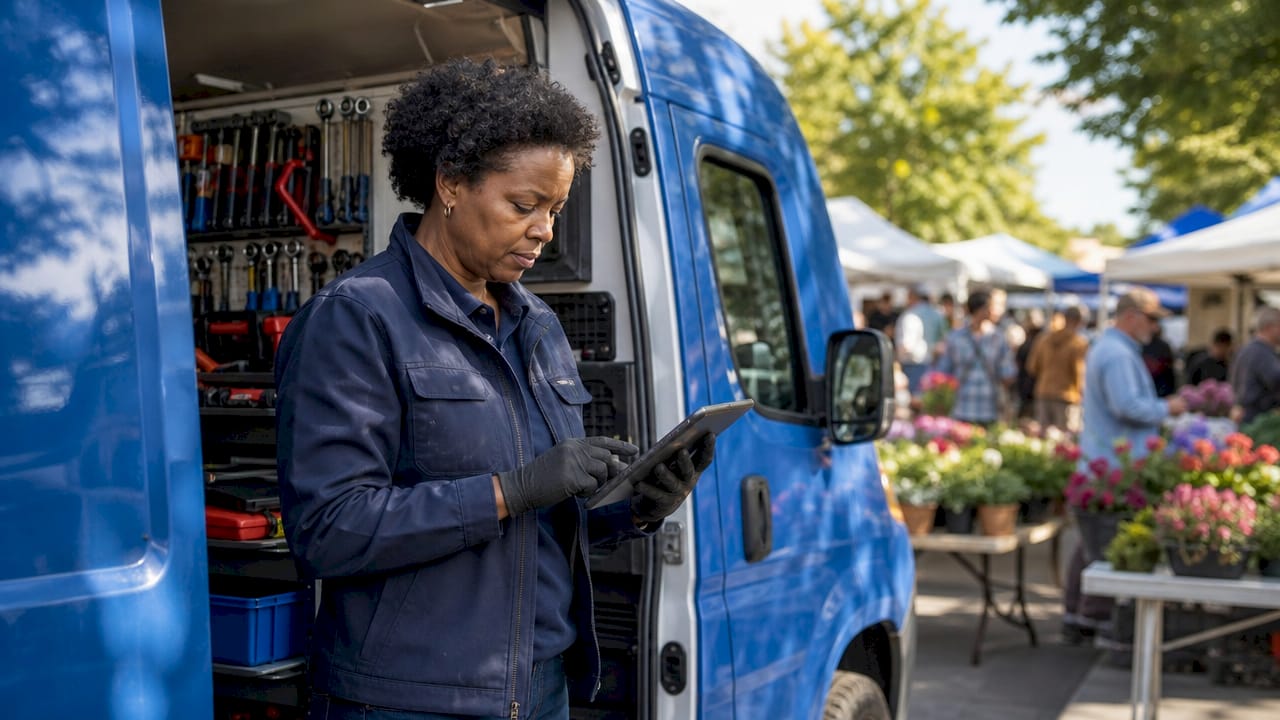
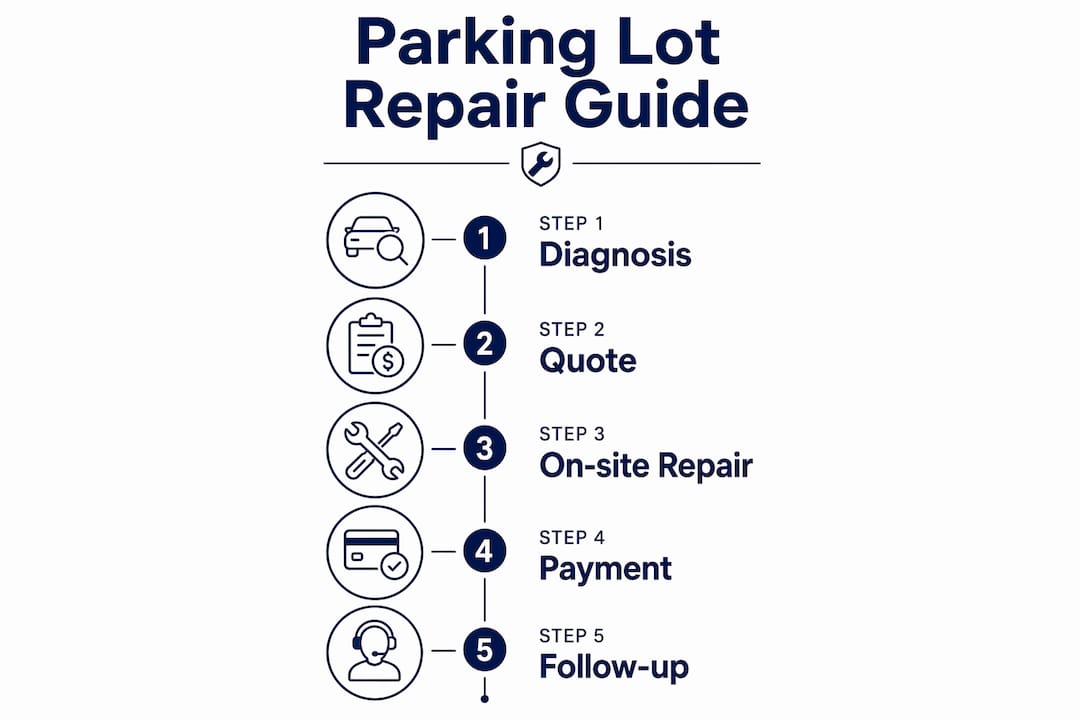
A professional mobile mechanic operates from a fully equipped service van, carrying diagnostic tools, common replacement parts, and safety gear. The process starts with an on-site diagnostic assessment to confirm whether the repair can be completed at the location or requires a shop referral. Mobile repair often begins with this triage step, which protects both the customer and the mechanic from committing to a job that cannot be finished safely outside.
Licensing and insurance requirements
Many jurisdictions, including California, require professional licensing and strict regulatory compliance for any mobile auto repair work performed for compensation. In California, this means holding a valid Bureau of Automotive Repair (BAR) license. Operating without one is illegal, regardless of where the repair takes place.
Certified personnel and business insurance are the clearest markers separating a legitimate mobile repair service from an unregulated roadside operator. Insurance protects you if something goes wrong during the repair. Certification confirms the mechanic has met a recognized competency standard.
Property rules and legal limits
Most commercial parking lots are private property. The property owner sets the rules, and many explicitly prohibit third-party commercial repair work on their premises. Most parts stores prohibit third-party commercial auto repair in their parking lots due to insurance and liability concerns. A licensed mobile mechanic operating under a regulated business model navigates these rules correctly, often by working in public parking areas or with prior property permission.
Warning signs of an unlicensed operator:
- Cash-only payment with no written estimate
- No business name, license number, or insurance documentation
- Pressure to decide immediately without a written quote
- No diagnostic step before quoting a repair price
Informal parking lot repairs are often unlicensed cash-for-service arrangements that violate property policies and carry no liability chain. If something goes wrong, you have no recourse.
What does parking lot auto repair cost?
On-site vehicle maintenance pricing depends on the job type, parts availability, and the complexity of access. Minor cosmetic repairs give a useful baseline for understanding the cost structure.
| Repair Type | Typical Cost Range | Notes |
|---|---|---|
| Door ding (1–2 cm) | $80–$150 | PDR technique, no painting needed |
| Larger dent (2–5 cm) | $150–$275 | Varies by panel location |
| Battery replacement | $100–$200 | Includes parts and labor |
| Oil change (standard) | $60–$120 | Synthetic oil adds to cost |
| Flat tire repair | $50–$100 | Plug or patch on-site |
Minor cosmetic repairs such as door dings typically cost $80 to $150, while larger dents range $150 to $275, varying by panel location and accessibility. Those figures reflect the real cost of professional work, not a bargain-bin estimate.
The cost of on-site service also needs to be measured against what you avoid paying. A tow to a shop can run $75 to $150 before any repair begins. Add a rental car or rideshare for the day and the math shifts quickly in favor of mobile repair for jobs within its scope. For a full breakdown of what affects your bill, the auto repair pricing checklist covers parts, labor, and markup in plain language.
Pro Tip: Always ask for a written quote before work begins. A reputable mobile mechanic provides one without hesitation. If the quote changes after the job starts, ask for a written explanation of why.
What are the benefits and challenges of parking lot vehicle services?
The core benefit of parking lot vehicle services is time. You keep your schedule. The mechanic comes to your office, your apartment complex, or wherever your car is parked. Professional mobile repair services typically arrive within 30 to 60 minutes depending on local traffic and distance. That response window makes mobile repair genuinely useful for emergency car repair situations, not just scheduled maintenance.
Key benefits:
- No towing cost or shop drop-off required
- Repairs completed while you work or run errands
- Transparent upfront pricing before work starts
- Direct communication with the mechanic doing the work
- Faster turnaround for routine jobs like oil changes and battery swaps
Real challenges to plan for:
- Environmental factors such as uneven ground and weather conditions affect whether precise repairs can be done safely on-site. A sloped or wet surface is not appropriate for brake work.
- Parts availability limits same-day repairs for less common vehicles or unusual failure modes.
- Property restrictions may require relocating the vehicle to a public area before work begins.
- Complex repairs that reveal deeper problems mid-job may still require a shop visit.
When to choose a traditional shop instead
Choose a shop when the repair requires a lift, specialized diagnostic equipment, or refrigerant handling. Transmission work, full suspension rebuilds, and air conditioning recharges fall into this category. Driveway or parking lot mobile repair excels in convenience but cannot replace shop repairs requiring specialized tools. Knowing that boundary upfront saves time and avoids a frustrating mid-job discovery.
For truck owners, truck repair in a parking lot follows the same rules. Routine maintenance and accessible component replacements work well. Heavy drivetrain or frame work does not.
Key Takeaways
Parking lot auto repair is a legitimate, licensed service category that covers routine maintenance and minor repairs performed at your location, saving time and towing costs when used within its proper scope.
| Point | Details |
|---|---|
| Defined service scope | Mobile repair covers batteries, tires, oil changes, and minor dents. It does not cover lifts or heavy mechanical work. |
| Licensing is non-negotiable | California requires a Bureau of Automotive Repair license for any paid mobile repair work. Always verify before hiring. |
| Cost savings are real | Avoiding a tow and rental car often makes mobile repair cheaper than a shop visit for qualifying jobs. |
| Environment matters | Flat, dry, level ground is required for safe on-site repairs. Uneven or wet surfaces create safety and quality risks. |
| Verify before you hire | Ask for a written quote, license number, and proof of insurance before any work begins. |
Why I think most car owners underestimate mobile repair quality
The skepticism I hear most often goes like this: “Can a mechanic really do good work in a parking lot?” The honest answer is yes, for the right jobs, and no, for the wrong ones. The problem is that most car owners have never been given a clear map of which is which.
What I’ve seen is that the quality gap between a mobile repair and a shop repair is almost entirely about job selection, not mechanic skill. A licensed mechanic replacing your battery in a parking lot uses the same parts and the same process as a shop. The parking lot does not make the work worse. Choosing a mobile mechanic for a transmission rebuild would be the wrong call, but that is a scope problem, not a quality problem.
The real risk is not the parking lot. The risk is the unlicensed operator who shows up with no insurance, no written quote, and no accountability. Safety, insurance, and proper licensing are the key differentiators that protect you from substandard or risky parking lot repair offerings. That is the filter to apply before anything else.
My advice: treat mobile repair the same way you treat any professional service. Check the license, get the quote in writing, and confirm the mechanic carries insurance. Do those three things and you will have a good experience the vast majority of the time. Learn more about why professionals choose mobile mechanics when time and quality both matter.
— Aaron
Onsite Los Angeles Mobile Mechanic comes to your parking spot
Onsite Los Angeles Mobile Mechanic sends licensed, insured mechanics directly to your location across the greater Los Angeles area, including Long Beach and Pasadena. Whether you need a battery swap, an oil change, or a flat tire fixed while you are at work, the service comes to you with upfront pricing and no hidden fees.
Most routine jobs are completed within an hour. You get a written quote before any work starts, and you book by calling 213-583-4159. No app required. For a full list of what Onsite Los Angeles Mobile Mechanic handles on-site, visit the mobile repair services page and see which parking lot repairs are available in your area today.
FAQ
What is parking lot auto repair exactly?
Parking lot auto repair is on-site vehicle maintenance or minor repair performed by a licensed mobile mechanic at your parking location, without requiring a tow or shop visit.
Is it legal to repair a car in a parking lot?
Licensed mobile mechanics can legally perform repairs for compensation in California, but they must hold a Bureau of Automotive Repair license. Informal, unlicensed cash repairs violate both state law and most property policies.
What repairs can a mobile mechanic do on-site?
Battery replacements, oil changes, flat tire service, brake pad replacements, and minor dent repairs are all feasible on-site. Complex jobs requiring a lift or specialized equipment must be done at a shop.
How long does a parking lot repair typically take?
Most routine mobile repairs are completed within 30 to 60 minutes. Response time from booking to arrival also typically falls within that same window, depending on traffic and distance.
How do I know if a mobile mechanic is legitimate?
Ask for their BAR license number, proof of business insurance, and a written quote before work begins. A legitimate operator provides all three without hesitation.