Most people assume mobile mechanics are only good for jump-starts or swapping a battery in a parking lot. That picture is outdated. Understanding how onsite car repair works today means recognizing a full-service model where a trained technician drives to your home, office, or roadside location, runs professional diagnostics, and completes a wide range of repairs without you ever leaving your driveway. This guide walks you through every step of the mobile car repair process, what services you can realistically expect, and how to get the most out of your appointment.
Table of Contents
- Key Takeaways
- How onsite car repair works, step by step
- What services mobile mechanics can actually do
- Why onsite repair makes sense for most car owners
- How to prepare for your onsite repair appointment
- My take on the future of mobile car repair
- Get your car repaired where you are
- FAQ
Key Takeaways
| Point | Details |
|---|---|
| Five-step repair process | Onsite repair follows a clear booking-to-handoff workflow, with most jobs completed in under 60 minutes. |
| Wide service range | Mobile mechanics handle oil changes, brake repairs, electrical faults, battery and alternator replacement, and more. |
| Transparency builds trust | Diagnostics are performed in front of you using real-time scanner data, removing the guesswork from repair quotes. |
| Warranties stay protected | The Magnuson-Moss Warranty Act means using a mobile mechanic does not void your vehicle warranty. |
| Preparation matters | Providing accurate vehicle info, confirming parking access, and requesting written estimates makes the service run smoothly. |
How onsite car repair works, step by step
The mobile car repair process follows five distinct stages: booking, confirmation and arrival, on-site diagnosis, repair, and handoff. Knowing what happens at each stage removes any uncertainty before your technician shows up.
1. Booking and information gathering
You contact the service provider online or by phone and describe your vehicle’s symptoms, make, model, year, and your location. Good providers ask detailed questions upfront so the technician arrives with the right parts and tools. This is not a vague “we’ll figure it out when we get there” situation. The more specific you are about what your car is doing, the faster the job gets done.
2. Confirmation and arrival
After booking, you receive a confirmation with the technician’s estimated arrival window. Reputable mobile auto repair services send technician details in advance, including name and contact number. This matters because it lets you communicate any last-minute changes to your location or parking situation before the van pulls up.
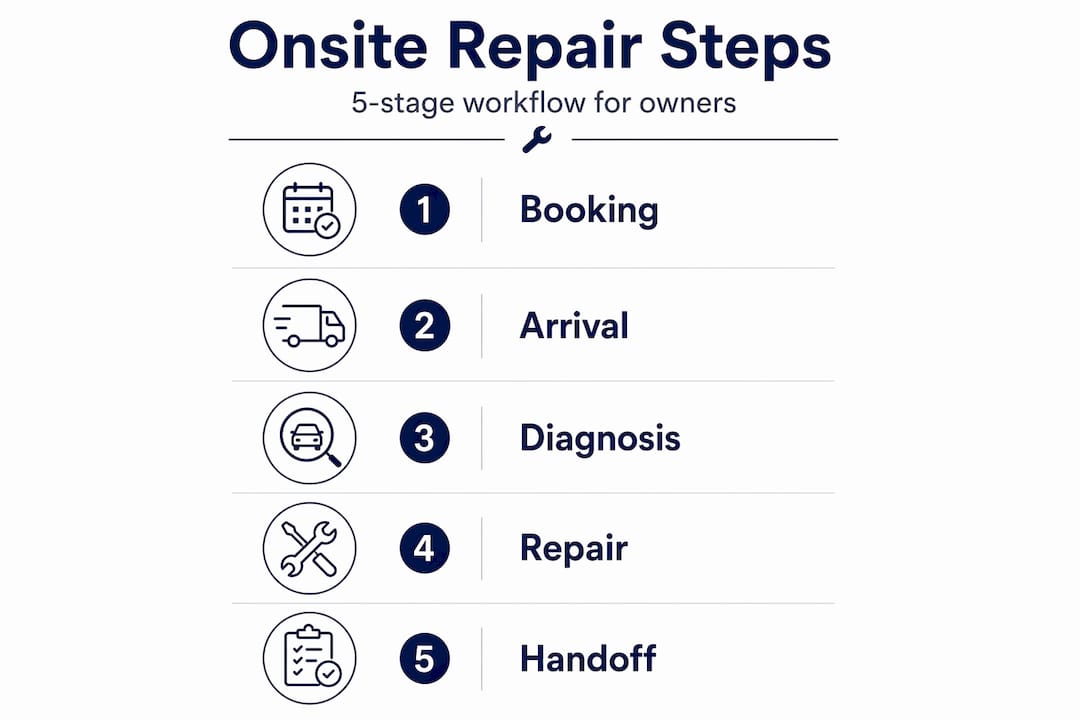
3. On-site vehicle diagnosis
This is where mobile mechanics separate themselves from the stereotype. Advanced diagnostic scanners capable of reading dealership-level fault codes are standard equipment in a professional mobile mechanic’s van. The technician connects directly to your vehicle’s OBD2 port, pulls live data, and reviews wiring diagrams on a tablet or laptop. You can stand right there and watch the process unfold.
Pro Tip: Ask the technician to walk you through the fault codes on the scanner screen. Any professional worth hiring will explain what each code means in plain language, not shop jargon.
4. The repair itself
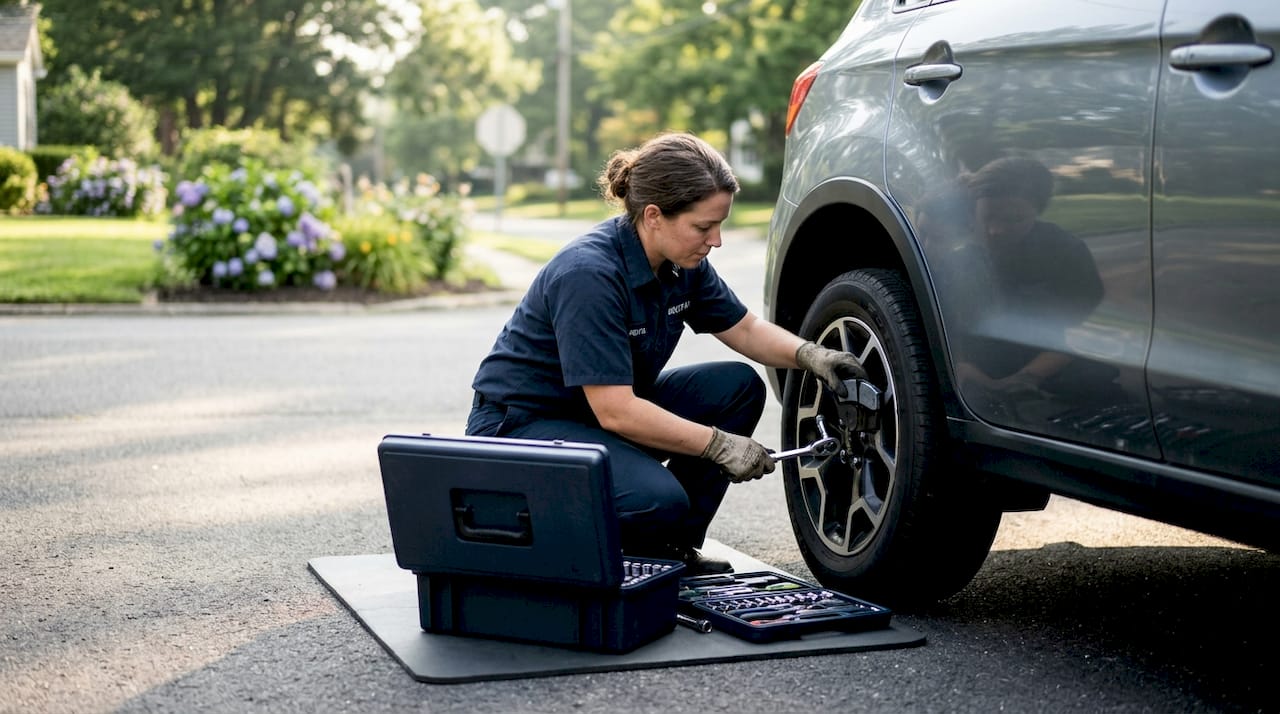
Once the diagnosis is confirmed and you approve the work, the repair begins. Most routine tasks finish in under 60 minutes. The technician works from the van’s inventory of parts and tools, which are stocked based on the job details you provided during booking. If a part is not on hand, a good provider will tell you upfront and schedule a return visit rather than improvise.
5. Final handoff and communication
When the work is complete, the technician walks you through what was done, shows you any replaced parts, and provides a written invoice. This final step is where transparency pays off. You know exactly what was repaired, what parts were used, and what the total cost is. No surprise charges added after the fact.
What services mobile mechanics can actually do
There is a wide gap between what people think mobile mechanics can handle and what they actually can. Typical onsite services include:
- Oil and filter changes
- Brake pad replacement and brake inspections
- Battery installation and testing
- Alternator replacement and charging system diagnosis
- Starter motor replacement
- Electrical troubleshooting using professional OBD2 scanners and wiring diagrams
- Air filter replacement
- Spark plug replacement
- Coolant flushes and minor fluid services
- Pre-purchase vehicle inspections
Mobile mechanics also use professional-grade OBD2 scanners and wiring diagrams to perform complex electrical diagnostics that were previously only available at dealerships. This is a meaningful capability. Electrical faults that would once require a tow and a multi-day shop visit can now be diagnosed and often resolved in your driveway.
What onsite repair cannot cover
There are real limits, and any honest provider will tell you what they are. Repairs requiring heavy equipment such as lifts, hoists, or specialized transmission tools cannot be performed onsite. That includes:
- Major transmission rebuilds
- Engine removal or replacement
- Suspension work requiring a vehicle lift
- Exhaust system welding
If the technician determines your repair falls into this category, a trustworthy provider will tell you immediately and recommend a shop rather than attempt work they cannot safely complete.
| Service type | Can be done onsite? |
|---|---|
| Oil change | Yes |
| Brake pad replacement | Yes |
| Battery replacement | Yes |
| Electrical diagnostics | Yes |
| Alternator replacement | Yes |
| Engine removal | No |
| Transmission rebuild | No |
| Suspension lift work | No |
Pro Tip: When booking, describe your symptoms in detail rather than guessing the repair. Let the technician diagnose the root cause. Guessing a repair and ordering the wrong part wastes everyone’s time.
Why onsite repair makes sense for most car owners
The benefits of on-site repair go well beyond skipping the waiting room. Here is what actually changes for you as a car owner.
Time and location flexibility
You choose where the work happens. Your driveway, your office parking lot, a friend’s address. There is no towing cost, no arranging a ride home from the shop, and no half-day lost waiting for your car. For anyone managing a busy schedule in a city like Los Angeles, that flexibility alone is worth a great deal.
Real-time transparency
Experts from Ford Mobile Service and Christian Brothers Automotive highlight that performing diagnostics in front of the customer is one of the most trust-building aspects of mobile service. When you watch the scanner pull fault codes in real time, you understand exactly why a repair is being recommended. That removes the anxiety most people feel when a shop calls with a list of “needed” repairs you cannot verify.
Cost considerations
Eliminating towing fees alone can save $75 to $150 per service visit. Add the fact that mobile mechanics typically have lower overhead than brick-and-mortar shops, and the pricing often comes out favorably. Transparent upfront quotes, like those provided by Onsitelosangelesmechanic, mean you approve the cost before any work begins.
Your warranty is protected
This is one of the most common concerns car owners raise. The Magnuson-Moss Warranty Act protects your right to choose your own repair provider without voiding your vehicle warranty. The one exception worth knowing: recall repairs must be performed at an authorized franchised dealer at no charge, as required by federal recall regulations. That rule applies regardless of where your regular maintenance is done.
“The main advantage of mobile car repair is not only convenience but the transparency and trust built by showing diagnostics live to customers.” — How mobile car service works
How to prepare for your onsite repair appointment
Getting the most out of your on-site vehicle service comes down to a few practical steps before the technician arrives.
- Give accurate vehicle information. Year, make, model, trim level, and mileage all matter. If your check engine light is on, note any symptoms like rough idling, unusual smells, or warning lights. The more detail you provide, the better stocked the technician’s van will be.
- Confirm your parking situation. The technician needs enough space to open the hood and move around the vehicle safely. A standard driveway or open parking spot works well. Let the provider know in advance if access is restricted.
- Communicate if you will not be present. Many car owners leave keys in lockboxes or with a neighbor for unattended repairs. If you go this route, get the technician’s direct contact number, confirm the work order in writing before they start, and document your vehicle’s condition with photos beforehand.
- Request a written estimate. Consumer repair warranty standards require itemized invoices and written estimates. Ask for both before work begins. This protects you if any dispute arises about what was agreed upon.
- Stay reachable. Even if you are not physically present, keep your phone available. The technician may need to confirm a detail or get approval for an additional repair discovered during the job.
Pro Tip: Take dated photos of your vehicle before the appointment, focusing on any existing scratches, dents, or fluid stains on the ground. This takes two minutes and gives you a clear record of pre-existing conditions.
My take on the future of mobile car repair
I’ve watched the mobile mechanic space grow from a novelty into a genuinely capable service category, and what strikes me most is how it changes the power dynamic between car owner and technician. In a traditional shop, the car disappears behind a closed door. You get a phone call with a dollar amount and a list of repairs you have no way to verify. That information gap is where distrust lives.
Onsite repair collapses that gap completely. I’ve seen customers go from skeptical to genuinely engaged when a technician pulls up fault codes on a scanner and explains each one in plain language. That moment of shared information changes the entire tone of the transaction. It stops feeling like something being done to you and starts feeling like a service being done for you.
My honest caveat: not every mobile mechanic operates at the same standard. The protocols for unattended repairs matter. GPS-tracked vans, verified insurance, documented vehicle condition before and after. These are not optional extras. They are the baseline for a provider worth trusting. Ask about them before you book.
The technology trajectory is also worth watching. As vehicles become more software-dependent, the gap between dealership diagnostics and mobile diagnostics will continue to narrow. Mobile mechanics who invest in current scan tools and training will handle an expanding range of repairs that once required a dealer visit.
Get your car repaired where you are
If you’ve been putting off a repair because you don’t have time to deal with a shop, Onsitelosangelesmechanic is built for exactly that situation. Certified technicians come to your home, office, or wherever your car is sitting, anywhere across the greater Los Angeles area.
From brake repairs and electrical diagnostics to oil changes and alternator work, the full service menu covers the repairs most car owners actually need. Onsitelosangelesmechanic serves drivers across Los Angeles, Long Beach, Burbank, and Pasadena, with upfront pricing and no hidden fees. You get a quote before any work starts. Call 213-583-4159 or book online to schedule your appointment. No tow truck. No waiting room. Just a qualified technician at your location, ready to work.
FAQ
How long does an onsite car repair take?
Most routine repairs and maintenance services are completed in under 60 minutes. More complex jobs may take longer, but the technician will give you a time estimate after the initial diagnosis.
Does using a mobile mechanic void my car warranty?
No. The Magnuson-Moss Warranty Act protects your right to use any qualified repair provider without voiding your manufacturer warranty. Recall repairs are the only exception and must be handled by an authorized dealer at no cost.
What repairs can a mobile mechanic not do onsite?
Repairs requiring lifts or heavy equipment cannot be completed onsite. This includes engine removal, transmission rebuilds, and suspension work that requires raising the vehicle on a hoist.
How do I book an onsite car repair appointment?
Contact the provider by phone or online, describe your vehicle’s symptoms, and confirm your location and parking access. A reputable mobile auto repair service will send a confirmation with the technician’s details before arrival.
Is onsite car repair safe if I’m not home during the service?
Yes, with the right precautions. Use a lockbox for key handoff, document your vehicle’s condition with photos beforehand, confirm the work order in writing, and choose a provider with verified insurance and GPS-tracked vehicles.
Recommended
- Mobile Mechanic Los Angeles — I Come to You | 213-583-4159 – Onsite Los Angeles Mobile Mechanic
- Mobile Mechanic Services – 213-583-4159 – Local Auto Repair Services – Onsite Los Angeles Mobile Mechanic
- Mobile Mechanic Burbank – I Come to You | 213-583-4159 – Onsite Los Angeles Mobile Mechanic
- Mobile Mechanic Pasadena – I Come to You | 213-583-4159 – Onsite Los Angeles Mobile Mechanic