Most car owners assume a mobile mechanic shows up with a wrench and handles the basics. The reality is far more sophisticated. The role of certified mobile technician covers everything from advanced ECU reprogramming to on-site brake replacements, all performed at your driveway, office parking lot, or roadside. These professionals are not a stripped-down version of a shop mechanic. They carry diagnostic software, manage their own scheduling, and communicate findings directly to you. This guide breaks down what they actually do, why certification matters, and what you gain as a car owner when you choose one.
Table of Contents
- Key Takeaways
- What certified mobile technicians actually do
- Why certification and training change everything
- The practical benefits for car owners
- Compensation, demand, and career trajectory
- My take on why certified mobile technicians matter more than people realize
- Get certified mobile service at your location
- FAQ
Key Takeaways
| Point | Details |
|---|---|
| Broad on-site capabilities | Certified mobile technicians perform diagnostics, repairs, and maintenance without requiring a workshop. |
| Certification builds trust | Formal training and certification programs prepare technicians for complex, advanced vehicle systems. |
| Real time savings for owners | Mobile service eliminates towing, waiting rooms, and scheduling delays by coming directly to you. |
| Advanced tools, not just wrenches | Certified technicians use connected diagnostic software for accurate troubleshooting on location. |
| Growing demand and specialization | Consumer preference for on-site service is driving more skilled, specialized mobile technicians into the market. |
What certified mobile technicians actually do
There is a persistent myth that mobile mechanics only handle oil changes and dead batteries. That misconception undersells the full scope of mobile technician responsibilities. Certified mobile technicians perform routine maintenance, diagnostics, and repairs directly at customer locations, covering tasks that many car owners assume require a full garage setup.
Here is what a typical scope of work looks like for a certified mobile vehicle technician:
- Routine maintenance: Oil and filter changes, tire rotations, fluid top-offs, and multi-point inspections done on-site, often in under an hour.
- Diagnostics: Using connected scan tools and diagnostic software to read fault codes, identify sensor failures, and trace electrical issues in real time.
- Hardware repairs: Replacing brake pads and rotors, alternators, starters, water pumps, belts, and other components at the customer’s location.
- Advanced tasks: ECU reprogramming and sensor calibration, capabilities once restricted to dealerships, are now performed on-site by properly certified technicians.
- Triage decisions: Mobile technicians quickly assess whether a repair can be completed curbside or requires tow assistance, saving time and giving you a clear answer fast.
- Customer communication: Explaining what was found, what was fixed, and what needs attention next, directly to you, without a service advisor acting as a middleman.
- Administrative duties: Technicians handle documentation, safety assessments, and invoicing independently, without any back-office support.
The administrative and time-management side is one that surprises most car owners. A certified technician working independently does not have a shop manager coordinating their day. They plan their own routes, manage parts procurement, and keep detailed service records. That level of self-sufficiency is built through training, not just wrenching experience.
Pro Tip: Before booking any mobile technician, ask specifically what diagnostic equipment they carry. A certified professional should be able to name the scan tools and software they use. Vague answers are a red flag.
Why certification and training change everything
Not every person who shows up with a toolbox qualifies as a certified technician. The difference between a certified and uncertified mobile mechanic is not just a piece of paper. It reflects hours of structured training, tested knowledge, and a commitment to staying current as vehicle technology evolves.
Here is what quality mobile technician training typically covers:
- Vehicle diagnostics and fault code interpretation: Reading OBD-II systems, understanding live data streams, and pinpointing root causes rather than replacing parts by guesswork.
- Advanced vehicle systems: Training now covers solar panels, generators, and HVAC systems for specialized vehicles, reflecting how complex modern automotive technology has become.
- On-site safety protocols: Working in driveways, parking lots, and roadsides means managing environmental hazards that a controlled workshop environment eliminates.
- Customer service and communication: Translating technical findings into plain language so car owners can make informed decisions without feeling pressured.
- Field readiness and shadowing: New mobile mechanics complete intensive training and a shadowing period before working independently, building confidence through real-world exposure under supervision.
Certifications like ASE (Automotive Service Excellence) remain the most recognized standard in the United States. An ASE-certified technician has passed rigorous testing across specific repair categories, from engine repair to electrical systems. When you see ASE certification listed, it means that technician’s knowledge has been independently verified.
Choosing a certified mobile technician is not just about getting your car fixed today. It is about knowing the person diagnosing your vehicle actually understands what they are looking at, not just what they are touching.
The shift in mobile technician training also reflects a bigger truth about modern vehicles. A 2024 car is not a 1990 car. It has multiple ECUs, advanced driver-assistance systems, and software that requires specific programming tools to service correctly. Without advanced diagnostic tools, mobile repair services face inefficiency and repeated visits. Certification programs are adapting to that reality.
The practical benefits for car owners
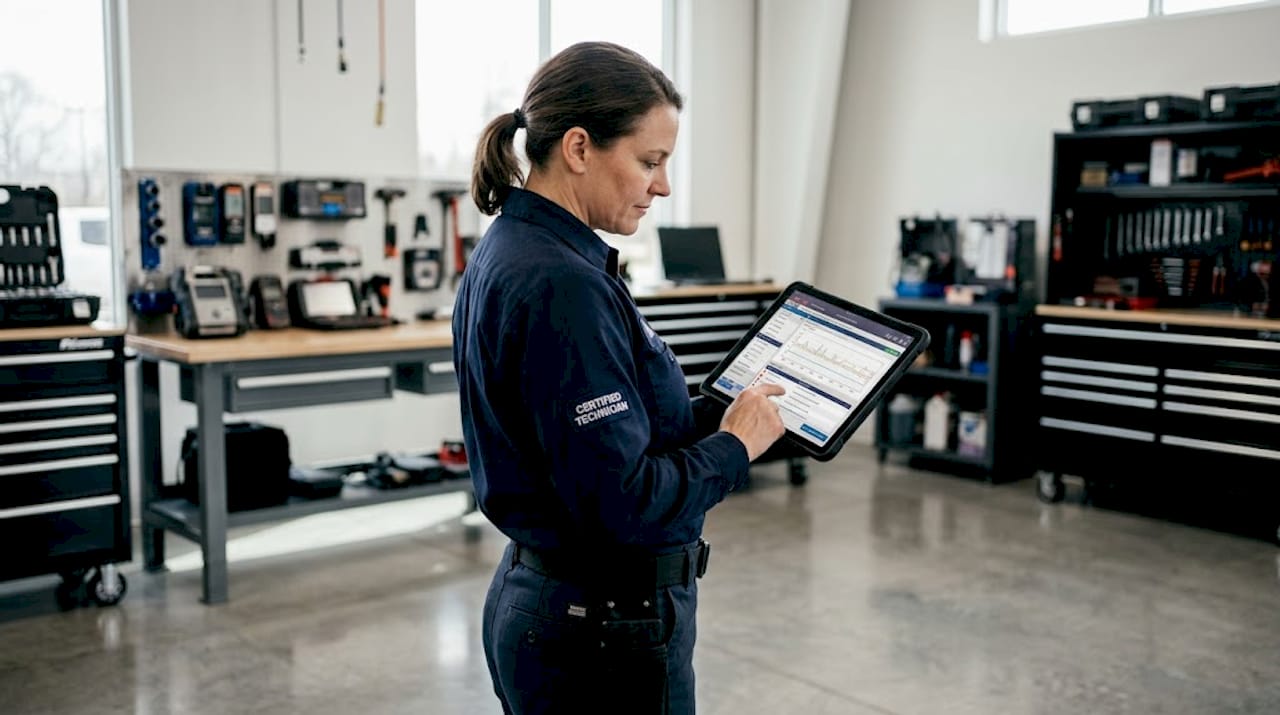
The convenience argument for mobile repair services is obvious. You skip the tow truck, the waiting room, and the loaner car scramble. But the benefits of working with a certified mobile technician go beyond just saving time.
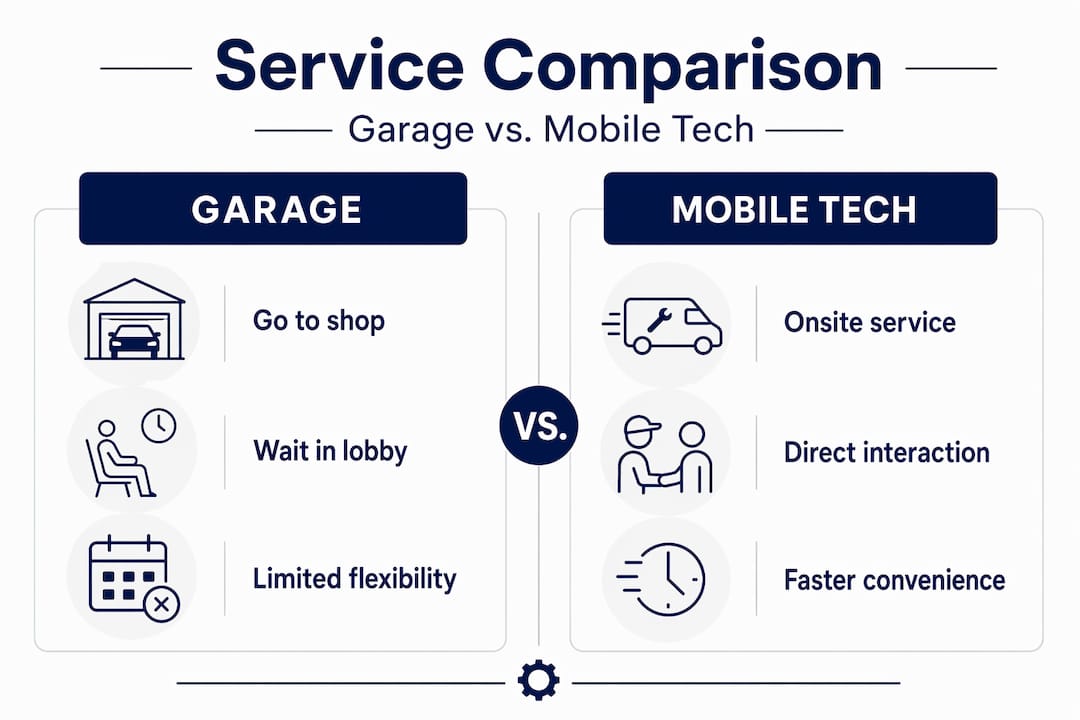
| Factor | Traditional garage | Certified mobile technician |
|---|---|---|
| Location | You go to them | They come to you |
| Communication | Through a service advisor | Direct with the technician |
| Diagnostic transparency | Estimate given after inspection | Explained to you in real time |
| Turnaround time | Hours to days | Often under two hours |
| Pricing model | May include shop fees and overhead | Typically upfront, no hidden fees |
| Advanced diagnostics | Full workshop setup | Portable connected tools on-site |
The direct interaction model deserves more attention than it usually gets. The shift to mobile services changes the customer-technician relationship from a transactional hand-off into a collaborative conversation. When a certified technician is standing next to your car explaining what they found on the scan tool, you are in control of the repair decision. That is very different from getting a phone call from a service desk after your car has been sitting in a garage for four hours.
Pro Tip: Ask for an upfront quote before any work starts. Reputable certified mobile technicians, like those at Onsite Los Angeles Mobile Mechanic, provide clear pricing before touching your vehicle. If a technician cannot give you a number before starting, consider that a warning sign.
For drivers in busy urban environments, the time savings compound fast. You can book a same-day mobile service, keep working from home or the office while the repair happens, and get your car back without any disruption to your schedule. The role of mobile diagnostic tools in making this possible is significant. Modern portable diagnostic hardware has closed most of the gap between what a shop can do and what a certified mobile technician can do at your curb.
Compensation, demand, and career trajectory
Understanding who certified mobile technicians are as professionals helps you appreciate the level of expertise behind every service visit. This is a growing field, and the people entering it are serious about the trade.
| Technician type | Typical earnings (USA) | Notes |
|---|---|---|
| General mobile technician | $26 to $32+ per hour | Retail automotive sector |
| Specialized mobile technician | Higher end of range | HGV, fleet, or advanced diagnostics |
| Independent mobile mechanic | Varies by market and volume | Business costs factor into net income |
Automotive mobile technicians in US retail typically earn $26 to $32 or more per hour, with specialist technicians commanding significantly higher rates based on their certifications and vehicle category expertise.
Demand is rising for a simple reason. Car owners increasingly expect services to come to them, the same way food delivery, telehealth, and home services have shifted. The automotive repair industry is following that consumer trend, and the technicians who carry certifications and advanced tools are the ones capturing the growth.
Vehicle technology is also pushing specialization. Electric vehicles, hybrid drivetrains, and ADAS systems require technicians with specific training that goes well beyond traditional mechanical knowledge. The certified mobile technicians entering the field now are investing in EV training and software certifications because that is where the fleet is heading. For car owners, this means the mobile technician you hire today likely has more technical depth than one you would have hired five years ago.
The work environment is distinct from a shop job. Mobile technicians manage their own time, interact directly with clients, and take ownership of every service outcome without a team around them. That independence attracts a certain kind of professional. One who is organized, communicates well, and takes personal accountability for their work.
My take on why certified mobile technicians matter more than people realize
I have seen firsthand how car owners underestimate mobile technicians until they actually use one. The assumption that “real” repairs happen in a shop is outdated, but it persists because people anchor their expectations to older experiences.
What separates a great certified mobile technician from an average one is not just technical skill. It is diagnostic discipline. Anyone can replace a part. The best mobile technicians read data, ask the right questions about symptoms, and solve the actual problem rather than the most obvious one. I have seen vehicles that bounced through three shops still leaving with unresolved issues, fixed on the first mobile visit because the technician used connected software and traced the fault properly.
The customer relationship piece is something I think the industry undersells. When a technician works in your driveway, there is nowhere to hide. You can watch, ask questions, and understand what is happening to your vehicle. That transparency is uncomfortable for technicians who are not confident in their work, and exactly why the certified ones thrive in this model.
The future is pointing toward more complexity, not less. As EVs and connected vehicles become the norm, the mobile technicians who keep their certifications current and invest in the right tools will be capable of handling repairs that most people still assume only dealerships can manage. The gap between mobile and dealer-level service is already smaller than most car owners think.
— Aaron
Get certified mobile service at your location
Onsite Los Angeles Mobile Mechanic brings certified technicians directly to you, anywhere in the greater Los Angeles area. No towing, no waiting rooms, and no surprise charges. Every service starts with an upfront quote so you know exactly what you are paying before any work begins. From oil changes and battery replacements completed within an hour, to advanced diagnostics and brake repairs, the certified technicians at Onsite Los Angeles Mobile Mechanic carry the tools and training to handle it on-site. Call 213-583-4159 to book your appointment and explore the full range of on-site auto repair services available across Los Angeles, Long Beach, Pasadena, and surrounding areas.
FAQ
What does a certified mobile technician do?
A certified mobile technician performs vehicle maintenance, diagnostics, and repairs at the customer’s location, including tasks like oil changes, brake replacements, battery swaps, and ECU reprogramming. They use portable diagnostic tools and handle all customer communication directly on-site.
How is a certified mobile technician different from a regular mechanic?
The key difference is location and interaction. A certified mobile technician comes to your car rather than requiring you to bring it to a shop, and communicates findings directly with you in real time rather than through a service advisor.
Why does certification matter for a mobile technician?
Certification verifies that a technician has passed standardized testing on vehicle systems, diagnostics, and repair procedures. For car owners, this means greater accuracy, fewer unnecessary part replacements, and confidence that complex issues are being handled correctly.
What types of repairs can a mobile technician handle on-site?
Most routine and mid-level repairs are handled on-site, including fluid services, brake work, starter and alternator replacements, battery diagnostics, and sensor calibration. Tasks requiring heavy lifts or specialized shop equipment may need a traditional facility.
How do I find a reliable certified mobile technician in Los Angeles?
Look for technicians with verifiable certifications such as ASE, upfront pricing, and a clear explanation of the diagnostic tools they carry. Onsite Los Angeles Mobile Mechanic offers certified mobile repair throughout the Los Angeles area and can be reached directly by calling 213-583-4159.