This one-page family car maintenance checklist gives busy parents the tasks and calendar they need to keep a family vehicle safe, reliable, and cost-efficient in 2026. The short version: check tires, oil, battery, and lights monthly; rotate tires every 5,000–7,500 miles; change oil per your owner’s manual; and schedule a full inspection once a year. Consistent upkeep prevents most large repairs — the families who skip small checks are the ones paying for big ones.
Do these today:
- Check all four tire pressures (cold, against the door-jamb sticker PSI) and the spare
- Pull the oil dipstick and confirm the level is between the MIN and MAX marks
- Look at the battery terminals for white or blue corrosion
- Confirm your emergency kit is in the car (jumper cables, flashlight, first-aid kit, water)
- Glance at every exterior light: headlights, brake lights, turn signals
Your vehicle’s owner’s manual is the final authority on every interval and fluid spec in this guide. When a task involves brakes, steering, suspension, airbags, or anything you are not fully confident about, call a professional. J.D. Power’s 2026 Vehicle Dependability Study confirms that modern vehicles with interconnected electronics and driver-assist systems depend on manufacturer-recommended intervals more than ever before. Generic advice is a starting point; your manual is the rule.
Key Takeaways
Consistent monthly checks, a mileage-based service schedule, and knowing when to call a professional are the three habits that keep a family vehicle safe and cost-efficient through 2026 and beyond.
| Point | Details |
|---|---|
| Monthly checks take 10 minutes | Tire pressure, oil level, lights, and battery visual catch most issues before they grow expensive. |
| Rotate tires every 5,000–7,500 miles | Even tread wear improves safety and fuel economy; check the spare at the same time. |
| Owner’s manual is final authority | Manufacturer intervals for modern vehicles with electronics override generic advice every time. |
| Know the DIY line | Safe home tasks include fluid top-offs, filter swaps, and wiper changes; brakes, suspension, and electrical diagnosis need a pro. |
| Onsite Los Angeles Mobile Mechanic | On-location oil changes, battery replacements, and pre-trip inspections with upfront pricing, booked by calling 213-583-4159. |
Table of Contents
- What does a family car maintenance checklist for 2026 actually look like?
- System-by-system checklist: what to inspect and how often
- What should you check before a family road trip?
- Dashboard warning lights: what to do right now
- Which tasks can your family do at home, and which need a pro?
- Seasonal maintenance your family should plan for
- How should families track maintenance and budget for it?
- When does mobile service make sense for busy families?
- Why this checklist was written for families in 2026
- Onsite Los Angeles Mobile Mechanic comes to your family
- Sources
What does a family car maintenance checklist for 2026 actually look like?
A practical schedule breaks into four time bands. The table below gives you the full picture at a glance — print it, photograph it, or copy it into your family calendar app.
| Interval | Key Tasks |
|---|---|
| Monthly | Tire pressure (cold), oil level, washer fluid, all lights, battery terminal visual |
| Every 3 months / ~3,000 miles | Oil and filter change (if using conventional oil or per manual), brake visual, wiper condition, cabin air filter check |
| Every 6 months / 5,000–7,500 miles | Tire rotation, engine air filter check, battery load test (if 3+ years old), inspect belts and hoses, top off all fluids |
| Annual | Full brake inspection, coolant flush (check interval in manual), spark plug check, suspension and steering inspection, exhaust visual, seat belt and child seat check, alignment check |
CARFAX recommends tire rotation every 5,000–7,500 miles and uses mileage milestones as the primary trigger for most service tasks. Time-based reminders work better for low-mileage families — if you drive fewer than 10,000 miles a year, a six-month calendar reminder often catches the same issues a mileage trigger would.
A monthly check takes roughly 10 minutes and catches the problems that grow expensive when ignored. That is the single best return on time in this entire guide.
Pro Tip: Sync your oil change or tire rotation with a school break or a long weekend. You are already home, the car is available, and you can schedule a mobile visit or shop appointment without rearranging the week.
Mileage vs. time: which trigger wins?
Use whichever comes first. A vehicle sitting in a garage still needs oil changes on a time schedule because oil degrades even without miles. A vehicle driven hard in stop-and-go Los Angeles traffic hits mileage triggers faster than the calendar. Watch both.
System-by-system checklist: what to inspect and how often
Tires
Tire pressure is the most under-checked item on most family vehicles. Check cold pressure (before driving more than a mile) against the PSI printed on the door-jamb sticker, not the number on the sidewall. Use a Lincoln penny for the tread test: insert it head-down into the tread groove. If you can see all of Lincoln’s head, the tread is below 2/32 of an inch and the tire needs replacing. Do not rely on a visual glance alone.
- Rotate every 5,000–7,500 miles to maintain even wear and better fuel economy
- Check spare tire pressure monthly — a flat spare is useless on the side of a highway
- Alignment: schedule a check if the car pulls to one side, the steering wheel is off-center, or you notice uneven tread wear across tires
Brakes
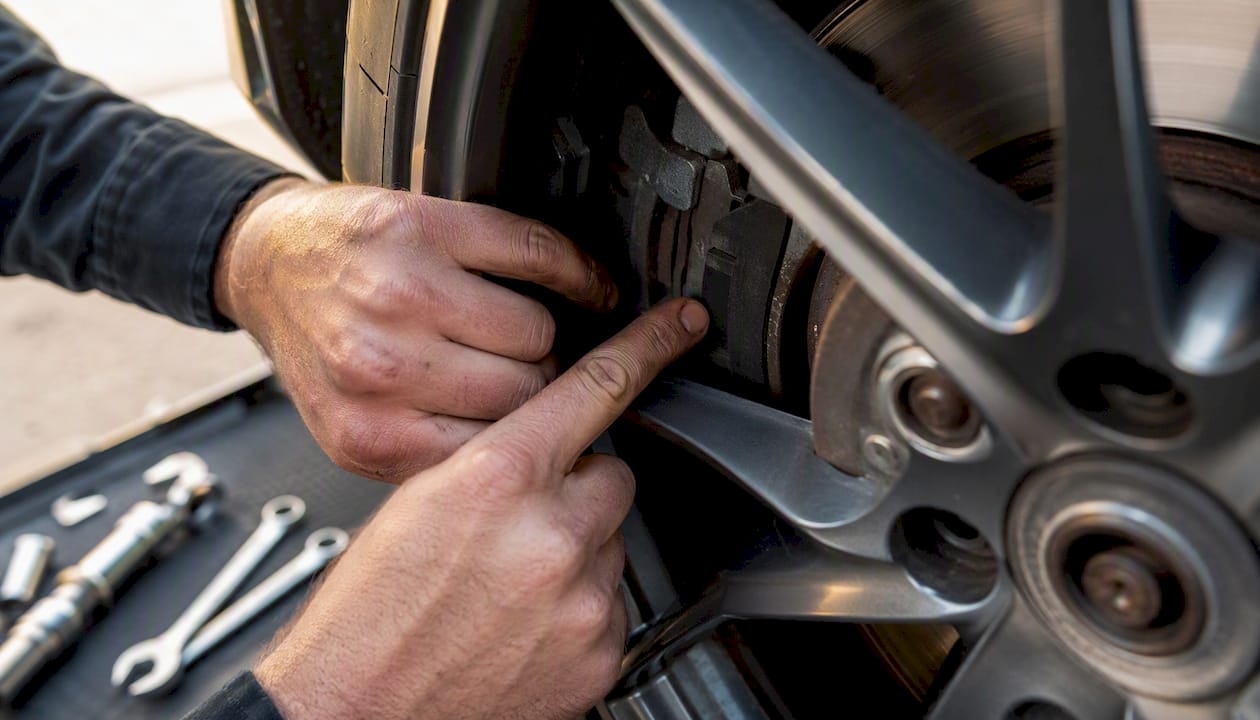
A visual check through the wheel spokes can show pad thickness. Most pads have a wear indicator that produces a high-pitched squeal when they are getting thin. Grinding metal-on-metal sound means the pad is gone. A spongy or soft brake pedal points to air in the brake lines or low brake fluid. Any of these signs means stop driving and call a professional — mobile brake repair can come to you rather than requiring a tow.
Battery and electrical
Battery performance often declines with age, and heat accelerates that process significantly. If the engine cranks slowly on a warm morning, that is a slow-crank warning. Many auto parts stores offer free load tests; a shop can also test under load to give you a real picture of remaining capacity. Clean terminal corrosion with a baking soda and water solution and a wire brush. If the battery is four or more years old, replace it before a long road trip rather than after.

Fluids
Consumer Reports’ guidance on reading an oil dipstick is straightforward: wipe the dipstick clean, reinsert fully, pull it out, and read the level against the MIN/MAX marks. Top off only with the oil grade your owner’s manual specifies. Beyond oil:
- Coolant/antifreeze: check the overflow reservoir level when the engine is cold; the color should be bright (green, orange, or pink depending on type), not brown or rusty
- Brake fluid: check the reservoir level; brake fluid absorbs moisture over time and typically needs flushing every 2–3 years
- Transmission fluid: a healthy color is red or pink; dark brown or black with a burnt smell means it needs attention — a transmission fluid color guide can help you read the difference
- Power steering fluid: check the reservoir; a whining noise when turning is the first warning
- Washer fluid: top off freely; it costs almost nothing and matters a lot in rain or dust
Filters and ignition
The engine air filter keeps debris out of the combustion chamber. Hold it up to light — if you cannot see light through it, replace it. Most last 15,000–30,000 miles, but dusty driving conditions shorten that. The cabin air filter affects the air your family breathes inside the car; replace it every 12,000–15,000 miles or when airflow from the vents weakens noticeably.
Spark plugs follow the owner’s manual interval, which ranges from 30,000 miles for standard copper plugs to 100,000 miles for iridium or platinum types. Misfires, rough idling, or a noticeable drop in fuel economy are the early signs that ignition components need attention.
Belts, hoses, suspension, and exhaust
Inspect the serpentine belt for cracks, fraying, or glazing. A squealing belt on startup is a warning; a snapped belt stops the engine. Hoses should feel firm, not soft or spongy, and should show no cracks or bulges at the clamps. These are safety-critical items — if you spot damage, schedule a repair before the next long drive.
Suspension and steering: grab each front tire at 9 o’clock and 3 o’clock and try to wiggle it. Any play points to worn tie rods or ball joints. A clunking sound over bumps usually means worn struts or sway bar links. Exhaust: look under the car for rust holes, loose hangers, or dark soot stains around joints. A louder-than-normal exhaust note or a sulfur smell inside the cabin means get it inspected.
Seat belts and child safety seats: buckle and unbuckle every belt in the car monthly. The webbing should retract smoothly and lock under a sharp tug. For child seats, check the installation tightness (less than one inch of movement at the belt path) and confirm the seat has not passed its expiration date, which is printed on the plastic shell.
Lights, wipers, and EV/hybrid notes
Walk around the car with a helper once a month: headlights, taillights, brake lights, reverse lights, and turn signals. Replace any bulb immediately — a burned-out brake light is a rear-end collision waiting to happen. Wiper blades that streak or skip need replacing; most last 6–12 months. For winter visibility, a seasonal wiper inspection before the first cold snap prevents the frustrating moment of a smeared windshield in the rain.
For EV and hybrid owners: the 12-volt auxiliary battery still needs the same attention as any conventional battery. Tires wear differently on heavier electric vehicles and may need rotation closer to the 5,000-mile end of the range. Cabin filters, brake fluid, and coolant still require regular service. Software updates from the manufacturer can affect driver-assist calibration — check for pending updates at each service visit.
Statistic callout: A monthly 10-minute check of tires, oil, washer fluid, and lights catches most developing issues before they become repair bills.
What should you check before a family road trip?
Do these checks 1–2 weeks before departure — not the night before. That lead time lets you schedule any needed repairs without canceling the trip.
Mechanical checks (1–2 weeks out):
- Check all tire pressures, including the spare, and inspect tread depth with the penny test
- Have the battery load-tested if it is 3 or more years old
- Check all fluid levels: oil, coolant, brake, transmission, power steering, washer
- Inspect wiper blades and replace if they streak
- Walk around and confirm every exterior light works
- Inspect brake pads visually and listen for any noise during a slow test stop
- Confirm the AC or heater works properly for the season
- Check that the spare tire, jack, and lug wrench are present and functional
Family safety items:
- Verify all seat belts latch and retract correctly; re-check child seat installation tightness
- Pack a first-aid kit, water, snacks, phone chargers, and a paper map as backup
- Confirm your roadside assistance coverage is active (AAA, insurance add-on, or manufacturer plan)
- Download offline maps for areas with poor cell coverage
Decision triggers: if a brake inspection reveals worn pads, or a battery load test shows it is failing, postpone the trip by a day or two and fix it. A tire with borderline tread on a highway trip in rain is not a calculated risk — it is a preventable one. Minor items like a slightly low washer fluid or a single burned-out interior bulb can wait; anything affecting stopping, steering, or visibility cannot.
Dashboard warning lights: what to do right now
Most families have seen a warning light and hoped it would go away. Some do. Most do not.
Never ignore these:
- Oil pressure light (red oil can): pull over safely and stop the engine as soon as it is safe to do so. Driving with no oil pressure destroys an engine in minutes. Check the oil level; if it is fine and the light stays on, call for a tow or mobile mechanic.
- Engine temperature / overheat (red thermometer): pull over, turn off the engine, and let it cool for at least 20 minutes before opening the hood. Never open a hot radiator cap. Top off coolant only when the engine is cool.
- Battery / charging light: the alternator or charging system is failing. Drive directly to a shop or call for service — the car may stall within miles.
- Brake warning light: check the parking brake first. If it is released and the light stays on, check the brake fluid level. A low level combined with this light means stop driving and call a professional.
- ABS, traction control, or airbag lights: these affect active safety systems. Drive carefully to a shop; do not attempt a long trip with these lights on.
Pro Tip: A check engine light alone, with no other symptoms and no change in driving feel, often indicates an emissions-related code. You can drive to a shop within a day or two. But if the check engine light is flashing, that signals an active misfire that can damage the catalytic converter — get it checked the same day.
If the car starts smoking, loses power suddenly, pulls hard to one side, or vibrates severely, stop driving. Pull to a safe location, turn on hazard lights, and call for assistance. No destination is worth the risk.
Which tasks can your family do at home, and which need a pro?
The line between safe DIY and professional-only work is clearer than most people think.
Safe for most families to do at home:
- Check and top off tire pressure
- Top off washer fluid
- Clean battery terminals with baking soda solution and a wire brush
- Replace engine air filter (usually tool-free on most vehicles)
- Swap wiper blades
- Check all fluid levels visually
- Replace interior and exterior bulbs on most vehicles (check your manual first)
Basic DIY maintenance like these tasks extends service intervals when done correctly. The key phrase is “done correctly.” If you are not sure, look up your specific vehicle model before starting.
Call a professional for these:
- Any brake work beyond a visual inspection
- Steering and suspension repairs
- Transmission fluid flush or repair
- Coolant system leaks or thermostat replacement
- Electrical diagnosis beyond a battery terminal clean
- ABS, airbag, or traction control system repairs
- Timing belt or chain replacement
Red flags that mean stop immediately:
- Fluid spraying or dripping actively while you work
- Smoke from any part of the engine bay
- A fastener that is seized, stripped, or broken off
- Any component that moves or shifts when it should be fixed solid
For parents doing light work at home, safe car repair practices around children matter as much as the mechanical steps. Keep kids away from the work area, never work under a car supported only by a jack, and always wear eye protection.
On cost: a DIY air filter swap costs $15–$30 in parts and takes ten minutes. A shop charges $40–$80 for the same job. That math works. But a DIY brake job gone wrong costs far more than the labor you saved. When the repair involves a safety-critical system, the shop visit is the cheaper option over any time horizon.
Pro Tip: A mobile mechanic visit for an oil change or battery replacement often costs less than a shop visit once you factor in the time you would spend driving there, waiting, and driving back. For busy families, that math shifts the break-even point significantly.
Seasonal maintenance your family should plan for
Winter
Cold temperatures hit batteries and tire pressure hardest. Have the battery load-tested before the first freeze if it is more than two years old. Check the antifreeze concentration — a 50/50 mix of coolant and distilled water protects to around -34°F in most climates. Switch to winter wiper blades or confirm your all-season blades are in good condition. If you live in a region with road salt, wash the undercarriage every two weeks during salting season. Salt accelerates rust on brake lines, exhaust components, and frame rails.
Summer
Heat is the battery’s other enemy. A battery that barely survived winter may fail in July. Check coolant level and condition before temperatures climb. Tire pressure rises roughly 1 PSI for every 10°F increase in ambient temperature — check pressure in the morning before the car has been driven. Have the AC system checked in April or May, before every shop in town is booked solid with the same request in June.
Rain and storm season
Worn wiper blades, low tread depth, and dim headlights are a dangerous combination in heavy rain. Check all three before the wet season starts. Confirm that door seals and sunroof drains are clear to prevent interior water damage.
Pro Tip: Schedule seasonal service during school breaks — spring break for the AC check, the week before school starts for a pre-fall inspection. The car is available, you are home, and you avoid the peak-season wait at most shops.
How should families track maintenance and budget for it?
Tracking methods
A paper log in the glovebox is still the most reliable system for many families. Write the date, mileage, and service performed after every visit. Smartphone apps like Drivvo, Fuelly, or the best vehicle maintenance apps for LA drivers can set mileage and time-based reminders automatically. Calendar reminders work well for time-based tasks: set a recurring six-month reminder for tire rotation and a 12-month reminder for the annual inspection.
Reminder template you can copy:
- Oil change: every [X months] or [X miles], whichever comes first (check your manual)
- Tire rotation: every 5,000–7,500 miles
- Brake inspection: annually or when you hear noise
- Battery check: every spring if the battery is 3+ years old
- Annual full inspection: set for the same month each year
Ballpark costs for common services
Consistent maintenance is more cost-effective than infrequent, expensive overhauls — and knowing what to expect makes budgeting easier.
Costs vary by region, vehicle make, and whether you use a dealership, independent shop, or mobile mechanic. Los Angeles labor rates tend to run toward the higher end of national ranges.
When does mobile service make sense for busy families?
Battery replacement, oil changes, pre-trip inspections, and jumpstarts are the services families use mobile mechanics for most often. These jobs do not require a lift, a specialized bay, or hours of shop time. A mobile visit for a battery swap or an oil change typically takes under an hour and happens at your home, office, or wherever the car is parked.
- Battery replacement: a dead battery at home is a straightforward mobile job; no tow required
- Oil and filter change: completed on-site with no waiting room and no scheduling around shop hours
- Pre-trip inspection: a technician checks tires, fluids, brakes, lights, and battery before a family road trip
- Fluid top-offs and filter swaps: quick, no-lift tasks that fit a mobile visit perfectly
Mobile service is not appropriate for every job. Extensive engine or transmission rebuilds, work requiring a two-post lift, or complex suspension replacements need a fully equipped shop. A reputable mobile mechanic will tell you that directly rather than attempt a job that requires equipment they do not carry.
Trust signals matter when choosing any mechanic. Look for ASE-certified technicians, upfront written quotes before work begins, and a clear explanation of what was done. Your owner’s manual remains the final authority on intervals and specifications — no mechanic’s recommendation should override what the manufacturer specifies for your vehicle.
Mobile service works best for the routine, high-frequency jobs that families put off because a shop visit takes half a day. Bringing the service to the car removes that friction entirely, which means the maintenance actually gets done.
Why this checklist was written for families in 2026
The average family vehicle carries the people who matter most, runs on a tight schedule, and gets maintained somewhere between “whenever there’s time” and “when something breaks.” That gap is exactly where this checklist lives.
The 2026 context matters more than it might seem. Modern vehicles pack more electronics, more driver-assist sensors, and more software into every system than vehicles from even five years ago. Maintenance decisions that seem unrelated can affect a tire-pressure sensor, a lane-departure camera, or an adaptive cruise radar. Following the owner’s manual is not a generic disclaimer — it is the only way to keep those interconnected systems working as designed.
EV and hybrid ownership is growing, and those vehicles still need tires rotated, cabin filters replaced, brake fluid flushed, and 12-volt batteries maintained. The powertrain is different; the maintenance calendar is not as different as many owners assume.
The printable format of this checklist is intentional. Photograph the schedule table, save it to your phone’s photos, or print it and keep it in the glovebox alongside your registration. The families who maintain their vehicles consistently are not the ones with the most mechanical knowledge — they are the ones with the simplest system.
Onsite Los Angeles Mobile Mechanic comes to your family
Skipping a shop visit because the timing never works is one of the most common reasons family vehicles fall behind on maintenance. Onsite Los Angeles Mobile Mechanic removes that obstacle by coming to wherever your car is parked, whether that is your driveway, your workplace, or a parking lot.
Oil changes, battery replacements, pre-trip inspections, brake checks, and fluid services are completed on-site, usually within an hour, with upfront pricing before any work begins. No hidden fees, no waiting rooms, no arranging a ride home from the shop. For families managing school schedules, work hours, and everything in between, that difference is real. See the full list of on-location services or learn more about how onsite car repair works. To book a visit, call 213-583-4159 and a technician will come to you.
Sources
Save or print this checklist, then bookmark these sources for deeper guidance on any specific system or interval.
- How to check car engine oil | Consumer Reports
- 2026 US vehicle dependability study (VDS) | J.D. Power
- These 5 maintenance tips will help your car last longer | Yahoo Autos
- Car Maintenance Checklist: Monthly, Quarterly, Annual | Genius Asian
- Car Maintenance Schedule Checklist | CARFAX
To save this checklist: photograph the maintenance schedule table, add the reminder template to your calendar app, and keep a printed copy in the glovebox. The families who maintain their vehicles consistently are the ones with a simple system they actually use.