A flashing check engine light means your engine is actively misfiring, dumping unburned fuel into the exhaust, and risking catalytic-converter damage right now. Ease off the gas, get to a safe spot, and shut the engine off as soon as you can. This is not a “get it looked at next week” warning. It is your car telling you something is actively going wrong under the hood.
Here’s what to do in the next five minutes:
- Take your foot off the accelerator and slow down gradually.
- Turn on your hazard lights and move to the shoulder or a parking lot.
- Shut off the engine once you’re safely stopped.
- Check for smoke, a burning smell, or anything unusual under the hood.
- Call for a tow or a mobile mechanic rather than restarting and driving on.
The math on this is brutal. A misfire repair like a spark plug or ignition coil often runs under $200 in parts and labor. Keep driving on a flashing light, and you risk cooking your catalytic converter, a repair that can become very expensive. The light isn’t being dramatic. It’s protecting a high-value part with a costly replacement with a $150 warning.
Key Takeaways
A flashing check engine light signals an active misfire that risks catalytic converter damage, and the only correct response is to stop driving and get a diagnosis immediately.
| Point | Details |
|---|---|
| Flashing means stop now | Active misfire risks converter damage; pull over safely and shut off the engine as soon as possible. |
| Common causes vary in cost | Spark plugs and coils are cheap fixes; fuel system or compression issues run far higher. |
| Watch for red flags | Smoke, a strong fuel smell, or sudden power loss mean stop immediately, no exceptions. |
| OBD-II scan comes first | Codes like P0300 to P0308 and P0420 narrow down the cause before any repair begins. |
| Onsite Los Angeles Mobile Mechanic responds on-site | Fast OBD-II diagnostics and common repairs like coil or plug swaps, done at your location with upfront pricing. |
Table of Contents
- Check Engine Light Flashing vs. Solid: How to Tell the Difference
- Why Does a Check Engine Light Flash? Common Causes
- What Are the Symptoms of a Flashing Check Engine Light?
- Is It Safe to Drive With a Flashing Check Engine Light?
- How Do Mechanics Diagnose a Flashing Check Engine Light?
- What Does It Cost to Fix a Flashing Check Engine Light?
- How Can You Prevent a Check Engine Light From Flashing?
- When Is a Mobile Mechanic the Right Call for a Flashing Light?
- Why We Treat a Flashing Check Engine Light Like an Emergency
- Need Help Right Now? Call for a Mobile Diagnostic Visit
- Sources
Check Engine Light Flashing vs. Solid: How to Tell the Difference
A steady check engine light means the onboard computer found a problem worth checking soon. A flashing one means the problem is happening right now, and it’s actively damaging expensive parts as you drive.
The engine control module tracks crankshaft speed constantly, watching for tiny dropouts that signal a cylinder failed to fire correctly. When misfires happen occasionally, the computer logs a code and turns the light on solid. When misfires cross a rate that threatens the catalytic converter, the module switches the light to flashing mode instead. That’s not a random design choice. It’s a built-in escalation system on your dashboard.
AAA’s guidance draws the same line: a steady light often allows you to finish your errands and schedule a repair, while a flashing light means stop as soon as it’s safe. Here’s the practical breakdown:
- Steady light: Usually a loose gas cap, an aging oxygen sensor, or a minor emissions issue. You can typically drive normally and get it checked within a few days.
- Flashing light: An active misfire is occurring. Continuing to drive normally risks converter damage within a short window.
- Steady light that starts flashing while driving: Treat it as a new, urgent event. Something just got worse.
The On-Board Diagnostics system built into every modern car was designed specifically to separate “watch this” from “stop now.” The flash pattern is the car’s way of skipping past the queue.
Why Does a Check Engine Light Flash? Common Causes
Most flashing lights trace back to a handful of usual suspects, and they range from a $30 part to a full engine teardown. Knowing the likely culprit helps you gauge what you’re walking into before a technician even opens the hood.
- Bad spark plugs or ignition coils: The most common cause of a misfire. Symptoms include a rough idle and a noticeable stumble under acceleration. Usually an affordable, quick fix.
- Failing fuel injectors: A clogged or dead injector starves a cylinder of fuel, causing an uneven, jerky feel. Repair cost varies depending on whether one injector or several need replacing.
- Fuel pump problems: Weak fuel pressure can cause multiple cylinders to misfire at once, often paired with hesitation or stalling at higher RPM.
- Failing oxygen or mass airflow sensors: These sensors feed the engine computer the data it uses to mix fuel and air correctly. A bad reading can trigger a misfire pattern even when the ignition and fuel systems are fine.
- Low compression or a blown head gasket: The most serious cause on this list. If a cylinder can’t build compression, no amount of spark or fuel fixes it. This is shop-level diagnostic and repair work, and often the most expensive outcome.
Ignition and sensor issues tend to be quick, affordable repairs. Fuel system and compression problems are the ones that usually mean a longer bill and more shop time. If you notice a strong gasoline smell or visible smoke, that’s a signal you’re dealing with something more serious than a fouled spark plug.
What Are the Symptoms of a Flashing Check Engine Light?
Your car usually tells you something’s wrong before the light even confirms it. Rough idling, shaking at a stoplight, or a hesitation when you press the gas are the earliest tip-offs that a cylinder isn’t firing right.
Watch for these behaviors:
- Rough or uneven idle, especially noticeable when stopped
- A shaking or vibrating sensation through the steering wheel or seat
- Sudden loss of power or hesitation when accelerating
- Engine surging or bucking at a steady speed
- Stalling, particularly at idle or low speeds
- A loud pop or backfire from the exhaust
- A strong smell of raw or unburned fuel
- Visible smoke from the tailpipe
Three symptoms deserve immediate action, not a “let’s see if it gets better” attitude: visible smoke, a strong burning smell, or a sudden and severe loss of power. Any one of those means stop the car now, not at the next exit.
It helps to note exactly what you were doing when the light started flashing, your speed, whether you were accelerating or cruising, and how the engine felt. That information, called freeze-frame data, gets captured by the onboard computer automatically, and it gives a technician a real head start on narrowing down the cause instead of guessing.
Is It Safe to Drive With a Flashing Check Engine Light?
Short answer: no, not any farther than you absolutely have to. The safest move is to get off the road within the next mile or two, not to try to nurse the car home across town.
Here’s the decision process to run through in the moment:
- Reduce engine load immediately. Ease off the accelerator, downshift if you’re in manual, and avoid hard acceleration or climbing hills.
- Find the nearest safe spot. A parking lot, wide shoulder, or side street beats staying in a live traffic lane.
- Shut the engine off once stopped. Idling does not fix a misfire and keeps unburned fuel flowing into the exhaust.
- Check for smoke or smell under the hood before you decide your next move.
- Call for a tow or a mobile mechanic rather than attempting to keep driving to a shop across town.
A short, slow crawl to a nearby safe location is generally acceptable. A ten-mile drive on the freeway with the light flashing is not. The CarCareRoutine triage framework frames it simply: steady means check soon, flashing means stop now. There’s no gray area built into that system for “just one more errand.”
Pro Tip: If you must move the car a short distance to get out of traffic, keep RPM as low as possible and avoid acceleration entirely. Coasting to a safe spot does far less damage than gunning it through an intersection.

What you shouldn’t do: rev the engine to “see if it clears,” ignore the light because the car “feels mostly fine,” or keep driving because you’re close to home. Mechanics see this pattern constantly, and it’s almost always the reason a cheap misfire repair turns into a converter replacement.
How Do Mechanics Diagnose a Flashing Check Engine Light?
Every proper diagnosis starts with an OBD-II scan, and it’s the single fastest way to turn a mystery light into an actual repair plan. AutoZone recommends OBD-II scanning as the first step for exactly this reason: the codes point you toward the system that’s failing before anyone touches a wrench.
A handful of codes show up again and again with flashing lights:
- P0300: Random or multiple cylinder misfire detected
- P0301 through P0308: Misfire detected in a specific cylinder (the number identifies which one)
- P0420: Catalyst system efficiency below threshold, often a downstream result of prolonged misfiring
From there, a technician typically works through a sequence:
- Pull codes and review freeze-frame data to see conditions at the moment of failure.
- Inspect and test spark plugs and ignition coils for wear or failure.
- Swap a suspect coil to a different cylinder. If the misfire code follows the coil, that confirms the coil is bad rather than the spark plug or wiring.
- Check fuel pressure and test injectors for proper spray pattern and flow.
- Run a compression test if ignition and fuel components check out clean, to rule out internal engine damage.
Reading a basic code is something many owners can do themselves. Many auto parts stores will scan codes for free, and a cheap Bluetooth OBD-II dongle paired with a phone app gives you live data on misfire counts. Coil swaps, compression testing, and fuel pressure checks are where DIY generally stops and professional experience starts, since they require the right tools and the judgment to interpret conflicting results.
What Does It Cost to Fix a Flashing Check Engine Light?
Repair costs on a flashing check engine light swing wildly depending on what’s actually failing, and that range is exactly why an accurate diagnosis matters before you approve any work.
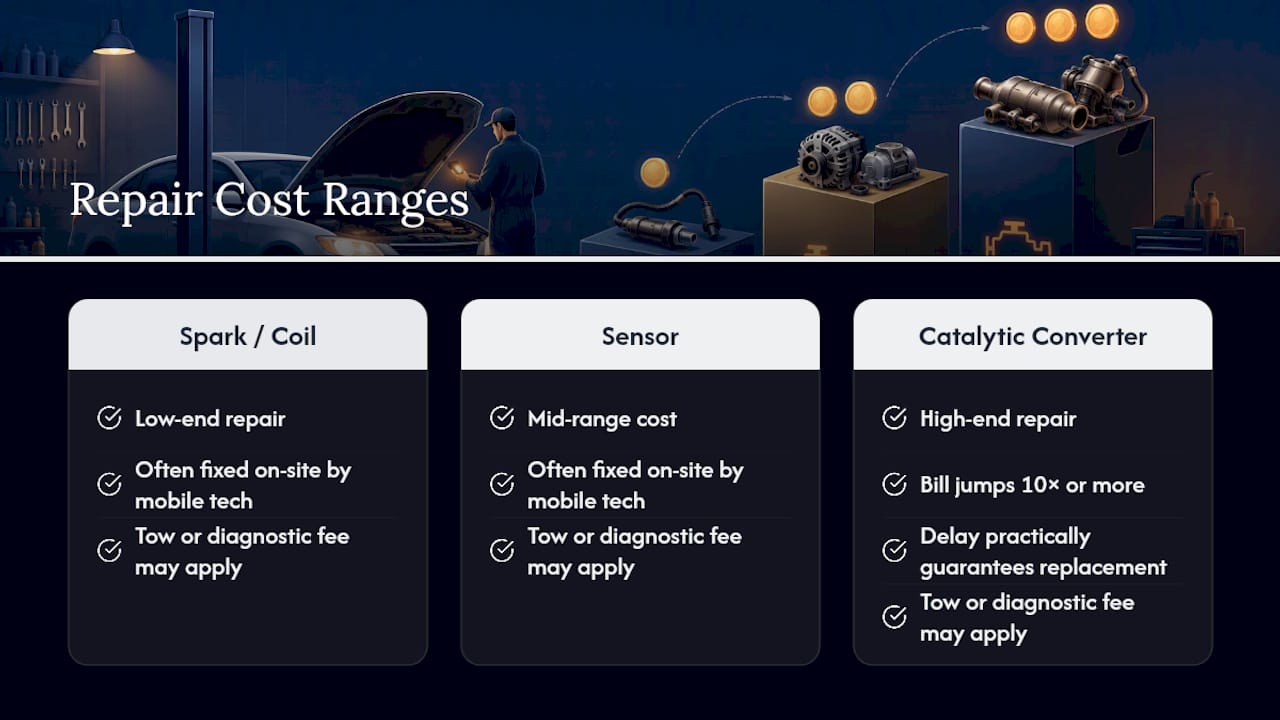
The pattern in that table is the whole point of stopping the car quickly. A spark plug or coil job sits at the low end. Let the same misfire cook the catalytic converter instead, and the bill jumps by a factor of ten or more. Delaying doesn’t just risk a bigger repair, it practically guarantees one if the misfire continues long enough.
Diagnostic fees also matter here. A shop visit usually means a tow first, then a diagnostic fee that may or may not get applied toward the repair. A mobile diagnostic visit skips the tow entirely, since a technician brings the scanner to your location and often completes coil, plug, or sensor repairs on the spot, which can meaningfully cut total cost and downtime.
How Can You Prevent a Check Engine Light From Flashing?
Most flashing-light emergencies are preventable with maintenance most owners already know they should be doing, just not always on schedule.
- Replace spark plugs and inspect ignition coils at the intervals your manufacturer specifies, typically every 30,000 to 100,000 miles depending on plug type.
- Keep up with fuel filter and fuel pump maintenance rather than waiting for symptoms to appear.
- Replace oxygen sensors and mass airflow sensors when they start throwing early warning codes, not after they fail completely.
- Use quality fuel from reputable stations to reduce injector fouling and sensor contamination over time.
- Address a steady check engine light promptly instead of letting it linger for months. Small problems escalate.
A rough mileage guide: check spark plugs and coils around 60,000 miles, inspect the fuel system and sensors around 80,000 to 100,000 miles, and get a full OBD scan at every major service interval even if the light isn’t on. Higher-mileage vehicles benefit from periodic scans because some sensor drift and minor misfires don’t trigger a visible warning until they’re already compounding.
When Is a Mobile Mechanic the Right Call for a Flashing Light?
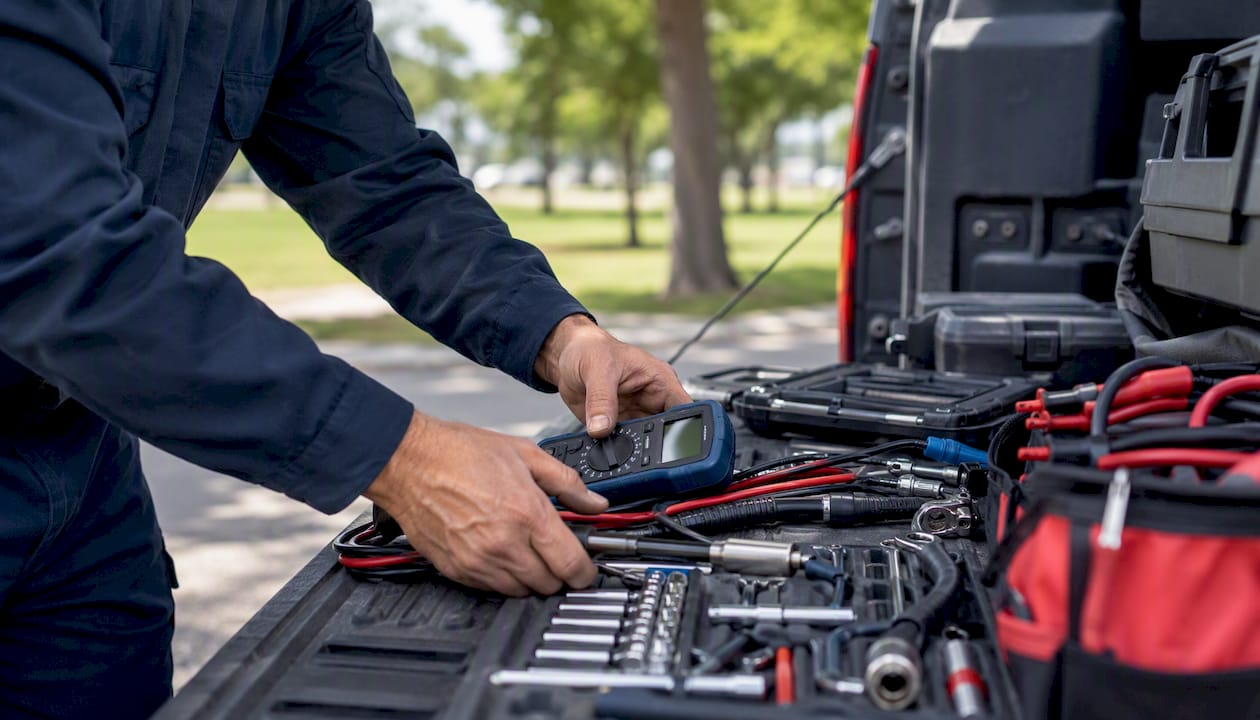
A flashing check engine light is exactly the kind of emergency mobile repair exists to solve. You don’t want to be driving on it, and you don’t want to wait for a tow truck and a shop queue while a misfire keeps running.
An on-site visit typically covers:
- Fast OBD-II code retrieval to identify the misfire cylinder or system within minutes of arrival.
- On-the-spot spark plug and ignition coil replacement for many vehicles, often completed in under an hour.
- Fuel pressure and basic sensor checks to confirm or rule out fuel delivery issues.
- Avoiding the cost and hassle of a tow entirely when the repair can be done where the car sits.
There are limits, and it’s worth being upfront about them. Repairs that need a lift, specialized tools, or extensive teardown, like a full compression test followed by internal engine work, usually require towing to a shop with the right equipment. If a misfire turns out to be a head gasket or deep internal issue, on-site repair isn’t the safe or practical option, and a technician should tell you that plainly rather than attempt something outside safe working conditions.
When you call, having a few details ready speeds everything up: your location, what the car was doing when the light started flashing, any smoke or smell you noticed, and the trouble code if you or a parts store already pulled one. That’s often enough for mobile engine diagnostics to arrive with the right parts already on the truck instead of guessing twice.
Why We Treat a Flashing Check Engine Light Like an Emergency
The reasoning here isn’t complicated once you understand the economics. A misfire repair is cheap. A cooked catalytic converter is not. Every extra mile driven on a flashing light is a bet against fairly predictable damage, and it’s a bet that rarely pays off. Raw fuel igniting inside an exhaust system can push substrate temperatures high enough to melt the converter’s internal honeycomb, and that damage doesn’t reverse itself. It only compounds.
What frustrates me about a lot of generic car advice is how it treats “check engine light” as one category of problem. It isn’t. A steady light and a flashing light call for completely different responses, and conflating them leads people to keep driving when they shouldn’t. The flash pattern exists specifically to communicate urgency, and ignoring that signal is how a $150 spark plug job turns into a $2,000 converter replacement.
Onsite Los Angeles Mobile Mechanic built its diagnostic process around this exact distinction, prioritizing rapid on-site OBD-II scanning and transparent, upfront pricing so drivers aren’t stuck guessing whether a repair estimate is fair. That approach only works because the diagnosis happens fast, before a minor issue has time to become a major one. If you take one thing from everything above, take this: the moment matters more than the mileage. Stop the car, get it checked, and let the diagnosis, not your gut feeling, decide what happens next.
Need Help Right Now? Call for a Mobile Diagnostic Visit
If your check engine light is flashing right now, the fastest path to peace of mind is a phone call, not a search engine. Onsite Los Angeles Mobile Mechanic sends a technician to wherever your car is stopped, whether that’s a parking lot, your driveway, or the shoulder of the freeway, so you skip the tow truck and the shop waiting room entirely.
When you call, have your location, what the car was doing when the light started flashing, and any trouble code you’ve already pulled ready to go. A technician arrives with an OBD-II scanner and can typically diagnose the misfire on the spot, then complete common fixes like spark plug or ignition coil replacement right there, often within the hour. If the issue turns out to need shop equipment, like a lift or extensive internal work, you’ll be told that clearly rather than being sold a repair that can’t safely happen on-site.
Every visit comes with an upfront quote before work begins, so there’s no surprise labor charge tacked onto your bill after the fact. If you’re dealing with a flashing light anywhere in the greater Los Angeles area, call Onsite Los Angeles Mobile Mechanic and get a technician moving toward you instead of waiting for a tow.
Sources
- Gearfixes
- What to do when your check engine light comes on – AAA
- Check Engine Light Meaning: 8 Steps to Diagnose – CarCareRoutine
- Autoupdatezone