Need a mobile mechanic dispatched to your home or office today? Do this now: call ahead instead of waiting on a booking form, have your VIN and license plate ready, snap two photos (dash warning lights and the engine bay), confirm you’re parked on level ground with room to work, and ask about insurance coverage and warranty terms before anyone starts turning a wrench. Each item saves the technician a trip back to the shop. The VIN pulls the exact parts fast. Photos let a mechanic pre-load likely fixes before arrival. A flat surface keeps the job safe and on schedule.
Pro Tip: When you call, skip vague complaints like “it’s making a noise.” Say something specific: “It clicks once when I turn the key, then nothing,” or “check engine light came on Tuesday after I filled up.” Exact words plus your VIN cut diagnosis time in half.
Have ready before you call:
- VIN and license plate number
- Year, make, model, and trim
- Photo of the dashboard warning lights
- Exact address and parking situation
- Recent repair history, if any
Key Takeaways
The fastest, cheapest mobile repair experience comes from preparing your VIN and photos in advance, confirming insurance and a written estimate before work starts, and choosing a garage only when the job genuinely needs a lift or multi-day teardown.
| Point | Details |
|---|---|
| Prep before you call | Gather VIN, photos of the dash and engine bay, and confirm a level parking surface. |
| Describe symptoms precisely | Use specific phrases like “clicks but won’t start” instead of vague descriptions to speed diagnosis. |
| Get a written estimate | Confirm the threshold for additional work in writing before the technician begins. |
| Know the on-site limits | Batteries, brakes, and diagnostics work curbside; engine rebuilds and lift jobs need a shop. |
| Call, don’t wait on an app | Onsite Los Angeles Mobile Mechanic offers phone booking with transparent quotes and most common jobs finished within an hour. |
Table of Contents
- What to Collect Before You Call or Book Online
- How Should You Describe Your Car’s Symptoms?
- What Can a Mobile Mechanic Actually Fix On-Site?
- What Should You Expect From Arrival Windows?
- How Do You Avoid Hidden Fees and Get a Fair Price?
- What Red Flags Should Stop You From Booking?
- When Is a Garage or Tow Truck the Better Call?
- How Do You Track Your Mechanic and Stay Updated?
- What Privacy Considerations Come With App-Based Booking?
- How Do You Handle a Dispute Over the Work Done?
- How Much Should You Trust Online Reviews and Ratings?
- Publisher Perspective: How Onsite Los Angeles Mobile Mechanic Approaches On-Site Service
- A Recommended On-Site Option for Busy LA Drivers
- Sources
What to Collect Before You Call or Book Online
The technician who shows up prepared finishes in one visit. The one who doesn’t ends up ordering a part and coming back tomorrow. That difference starts with what you hand over before the truck even leaves the shop.
Start with vehicle identifiers: VIN, license plate, year, make, model, and trim level. The VIN matters most because two versions of the same model year can use different alternators, belts, or sensors, and a mechanic who orders the wrong part wastes your afternoon and theirs.
Photos help almost as much as the VIN; for guidance on safely cleaning and preparing your engine bay before taking photos, see Clean engine bay: safe steps and ceramic protection. Send a shot of the dashboard warning cluster, the engine bay, and the undercarriage if you can safely get a phone under there. If your parking spot has quirks (narrow alley, steep driveway, gated lot), a photo of that too.
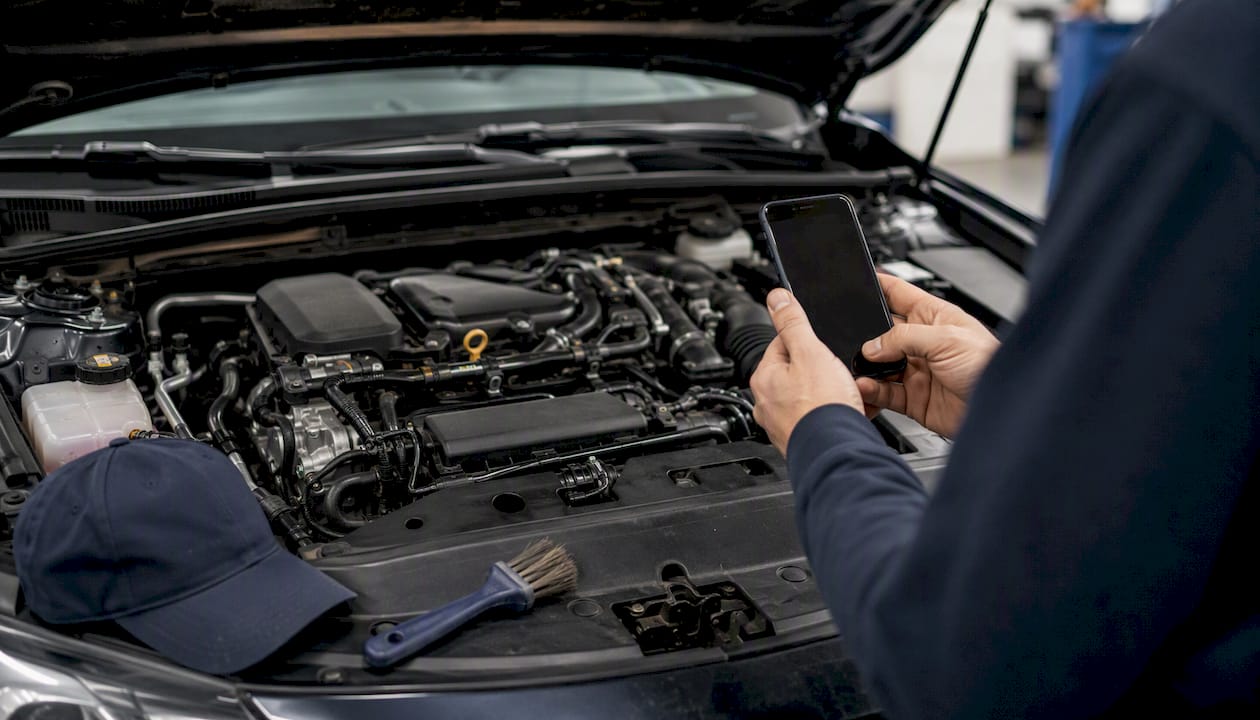
Logistics questions matter before anyone drives out: your exact address, whether street parking or a garage is available, whether the surface is level, and whether your building or HOA restricts outside contractors working in the lot. Confirm the technician’s insurance coverage and ask how estimates and warranties work before you commit. A reputable mobile mechanic carries garage-keeper insurance, holds ASE or equivalent certification, and backs the work with a parts-and-labor warranty, often 12 months or 12,000 miles.
Pro Tip: Text your VIN and a photo of the symptom before you even get someone on the phone. It cuts travel time and drops the odds of a second visit to almost zero. Preparation steps like clearing three to four feet around the vehicle and gathering service records speed things up further. If you want a full breakdown of what to gather before your first appointment, Onsite Los Angeles Mobile Mechanic’s booking guide covers it in detail.
How Should You Describe Your Car’s Symptoms?
Use plain, specific phrases. “Engine stalls at idle,” “battery clicks once but won’t turn over,” “ABS light steady since yesterday,” or “grinding noise when braking below 20 mph.” Vague language like “it sounds weird” forces the mechanic to guess, and guessing means showing up with the wrong tools.
Photos and short videos fill in what words can’t. Send:
- The dashboard warning light cluster, lit up
- The engine bay, ideally with the hood already open
- The VIN plate (usually on the driver’s door frame or dash)
- Where the car is parked, so the technician knows what they’re driving into
A few sample messages you can text or read off the phone:
“2018 Honda Civic, VIN [number]. Battery light came on this morning, car started fine yesterday. No jump-start attempted yet.”
“2015 Ford F-150, VIN [number]. Brakes squeal on the front left only, started about a week ago, no other work done recently.”
“2020 Toyota Camry, VIN [number]. AC blows warm air, worked fine last month, no recent repairs.”
Each message covers the same four things: symptom, timing, recent repair history, and VIN. That combination is what local booking guides consistently recommend to avoid delays, and it’s the fastest way to keep a technician from making a return trip.
What Can a Mobile Mechanic Actually Fix On-Site?
Battery replacements, oil changes, brake pad swaps, alternator and starter repairs, and most diagnostic work happen on-site, often in under an hour. Belt replacements, fluid flushes, and basic electrical troubleshooting fall into the same category. Mobile mechanics handle a wide range of common repairs curbside, but jobs that need a lift, a transmission teardown, or multi-day disassembly still belong in a shop.
Jobs that usually require a garage:
- Engine rebuilds or major internal repairs
- Full transmission overhauls
- Anything requiring a hydraulic lift
- Multi-day teardowns with specialized shop equipment
Safety and logistics can also rule out on-site work. No level surface, a parking restriction that bans outside contractors, or a heat advisory that makes working under a car unsafe are all legitimate reasons a technician might recommend a shop instead.
Pro Tip: If you need more than one thing done, bundle it into a single call. An oil change plus a battery check plus a quick brake inspection often fits into one visit and saves you a second service-call fee. For a fuller picture of what’s realistic in a single appointment, Onsite Los Angeles Mobile Mechanic’s guide to how on-site repair works lays out common jobs and rough timeframes.
What Should You Expect From Arrival Windows?
Most mobile dispatch works on a window, not an exact time, typically a two-hour range rather than a fixed appointment slot. Many visits complete common repairs within an hour once the technician arrives, so the bigger variable is usually traffic, not the repair itself.
Before the visit, confirm:
- A flat, level surface (driveways with a steep grade are a problem)
- Three to four feet of clearance around the vehicle
- Adequate lighting if the appointment runs into evening
- Written permission if you’re in a lot with parking restrictions or an HOA
If the technician offers a text update or a call when they’re on the way, that beats guessing. And if your building genuinely restricts outside contractors working on-site, say so during booking rather than after the technician arrives.
Pro Tip: Ask your building manager about outside contractor rules before you book, not after the mechanic is standing in the lot.
How Do You Avoid Hidden Fees and Get a Fair Price?
Get a written estimate before any work starts, and make sure it spells out what counts as “additional work” and the dollar threshold that triggers a call for your approval. A written estimate should define that threshold clearly; without it, “additional work” becomes whatever the invoice says it was.
Typical mobile pricing includes a service-call fee, a labor rate, parts (often with a markup), and sometimes a travel fee for longer distances. Lower overhead lets many mobile mechanics price routine jobs close to dealer rates once you factor in what you’d otherwise spend on towing.
Statistic Callout: Skipping a tow entirely is often the single biggest hidden savings in mobile repair. Between the tow fee itself and the hours lost waiting for a shop slot, on-site service frequently comes out ahead on total cost, not just convenience.
Keep three documents: the written estimate (text or email works), a final invoice showing parts separately from labor, and a warranty statement with duration and what it covers. Pay by card or a traceable method when possible, and avoid paying in full before you’ve confirmed the repair actually solved the problem.
- Written estimate before work begins
- Final invoice with parts and labor itemized
- Warranty statement in writing
What Red Flags Should Stop You From Booking?
Three things should end a booking immediately: no proof of insurance, cash-only with no receipt offered, or a refusal to provide a written estimate. Any one of those is enough reason to call someone else.
On the phone, ask directly: “Are you insured for on-site work? Are you ASE certified? What’s your warranty policy? What happens if I’m not satisfied?” Checking insurance proof, certification, and recent reviews before you commit is standard advice for a reason.
On arrival, verify:
- Technician ID or clearly marked vehicle branding
- VIN matches what you provided during booking
- Written estimate is in hand before tools come out
When Is a Garage or Tow Truck the Better Call?
Major engine or transmission work, jobs needing a lift, and multi-day teardowns belong in a shop, no exceptions. Severe weather or a location with no legal, flat surface to work on also pushes the job toward a garage.
For emergencies, the line is simple: if you’re immobilized in traffic, facing a safety hazard, or watching an active fluid leak pool under the car, call a tow first. A mobile mechanic is the right call when the car is parked somewhere safe and stable, even if it won’t start.
Complex repairs often cost less per labor hour in a shop, even after the tow fee, because a shop has the lift, the space, and the specialized tools a curb doesn’t.
How Do You Track Your Mechanic and Stay Updated?
Whether you booked by app or by phone, staying informed while you wait matters. A text confirming the arrival window, a call when the technician is fifteen minutes out, and a follow-up message once the job wraps up all reduce the anxiety of not knowing where things stand.
If a platform offers live location tracking for the dispatched technician, use it. It tells you exactly when to come outside and hand over keys, instead of hovering by a window. Photo updates during the repair, showing an old part next to the new one, are worth asking for even if they’re not automatic. They give you proof the work happened and a visual record for your own files.
Booking by phone with Onsite Los Angeles Mobile Mechanic works the same way in practice: you get a direct line to confirm the arrival window, a call when the technician is close, and a plain conversation about what’s happening under the hood rather than a notification feed. Some drivers actually prefer this. A person on the phone can answer a follow-up question immediately; a push notification can’t.
Whatever the communication method, save the confirmation. A text thread or call log documenting the arrival window and the price quoted becomes useful if a dispute ever comes up later.
What Privacy Considerations Come With App-Based Booking?
Sharing your VIN, location, and vehicle photos with a mobile service means sharing data with a third party, and that data trail deserves a second thought before you hit send. Mobile-service pages generally outline how location and vehicle information get handled, and it’s worth a quick read before you attach photos to a booking request.
At minimum, know who sees your address and VIN, how long that information is stored, and whether it’s shared with anyone beyond the technician assigned to your job. A VIN alone reveals your car’s full specification, and combined with a home address, it’s more identifying information than most drivers hand over casually.
If you’re booking through an app rather than a phone call, check whether the platform’s privacy policy is easy to find and specific, not just a generic boilerplate page. Vague privacy language is itself a minor red flag. Booking by phone sidesteps most of this concern entirely: your information goes to the business you’re calling, not into a third-party platform’s database, which is one reason some LA drivers prefer to skip the app step altogether and call directly.
How Do You Handle a Dispute Over the Work Done?
Start with the written estimate. If the final bill matches what was quoted and the threshold for additional work was disclosed upfront, most disputes resolve quickly because there’s a clear document to point to. If it doesn’t match, that mismatch is your strongest leverage.
Contact the business directly first, by phone or through whatever support channel they offer, and reference the estimate, the invoice, and the date of service specifically. Most reputable mobile mechanics want a satisfied customer more than they want to defend an unclear charge, and a direct conversation resolves the majority of billing disagreements without escalation.
If the issue is the quality of the repair rather than the price, ask about the warranty terms you were given in writing. A 12-month or 12,000-mile parts-and-labor warranty means a failed repair should be addressed at no additional cost, and that warranty document is exactly what you pull out if there’s any pushback.
Keep every text, email, and photo from the visit. If a dispute goes further than a phone call, that documentation, timestamped and specific, is what actually settles it. A dispute with no paper trail is just two people disagreeing; a dispute with a written estimate and dated photos is usually a short conversation.

How Much Should You Trust Online Reviews and Ratings?
Reviews are useful, but read them for patterns, not star counts alone. A mechanic with a hundred reviews averaging 4.7 stars and three recent complaints about no-shows tells you more than a flawless 5.0 with only six reviews total.
Look specifically for mentions of punctuality, whether the final price matched the quote, and whether the technician explained the repair clearly. Those three details predict your experience far better than a generic “great service” comment does.
Recent reviews matter more than old ones. A mechanic who was excellent two years ago under different ownership or staffing tells you less than what customers said last month. Weight your read of the rating toward the last few weeks of feedback, especially for a business that’s grown or changed hands.
Reviews also work in reverse: they’re one of the fastest ways to spot the red flags mentioned earlier, unclear pricing, no-shows, or a technician who pressured for cash payment. If multiple reviews independently mention the same issue, treat it as a pattern rather than a one-off complaint.
Publisher Perspective: How Onsite Los Angeles Mobile Mechanic Approaches On-Site Service
Call, and you get a straight answer: a clear quote, a real arrival window, and a technician ready to knock out common jobs, batteries, oil changes, diagnostics, in about an hour. What backs that up is transparent pricing with no hidden add-ons, a parts-and-labor warranty, certified technicians, and coverage across the greater Los Angeles area. Gather your VIN and a couple of photos before you dial. It genuinely shortens the visit.
A Recommended On-Site Option for Busy LA Drivers
Skip the app entirely and call. Onsite Los Angeles Mobile Mechanic dispatches a technician to your home, office, or curb anywhere in greater Los Angeles, with a transparent quote given over the phone before anyone drives out, no app download, no account setup, no waiting on a chat window for a price.
The most-booked jobs, oil changes, battery replacements, alternator swaps, and diagnostic checks, typically wrap up in about an hour once the technician arrives. Every job comes with an upfront quote and a written warranty, so you know the cost and the coverage before work starts. Call 213-583-4159 or check Onsite Los Angeles Mobile Mechanic’s services page to see what’s covered in your area, then have your VIN and a couple of photos ready when you dial. That’s the whole booking process.
Sources
- How to Find a Mobile Mechanic Near You (2026 Guide) | AmpAuto
- Mobile Mechanics: What You Need to Know | Capital One Auto Navigator
- Hiring a Mobile Mechanic: What to know | Jalopnik
- Tesla — Mobile service — Support