Flat-rate mechanic pricing gives you a fixed, upfront cost for a repair before any work starts, so a $200 brake job stays $200 regardless of how long the technician takes. That matters more than it may sound: median one-time repair spend sits at a moderate amount, yet a significant portion of drivers say they’ve paid more than what they personally consider reasonable for a single repair. Flat-rate pricing applies cleanly to the jobs most drivers actually need on-site: oil changes, battery swaps, brake pads, and basic diagnostics.
Key Takeaways
Flat-rate mechanic pricing works because it converts an unpredictable repair bill into a fixed number you approve before any work begins.
| Point | Details |
|---|---|
| Price certainty first | A flat-rate quote locks in the cost before work starts, protecting you from hourly overruns. |
| Diagnostics are the exception | Confirm how many diagnostic hours are included before assuming the flat rate covers everything. |
| Ask for itemization | Request parts, labor, and fees broken out separately, plus photo or video proof of the problem. |
| Complex jobs may shift pricing | Ambiguous faults or pre-existing damage often require diagnosis before a fixed price applies. |
| Onsite Los Angeles Mobile Mechanic delivers on-site flat rates | Quotes cover parts, labor, and fees upfront, with technicians dispatched directly to your location. |
Table of Contents
- What Is Flat-Rate Pricing, and How Does It Differ From Time-and-Materials?
- What Are the Real Benefits of Flat-Rate Pricing for Car Owners?
- How Is a Flat-Rate Quote Actually Built?
- Can a Membership Plan Make Flat-Rate Pricing Even More Predictable?
- What Questions Should You Ask to Compare Flat-Rate Quotes?
- When Does Flat-Rate Pricing Stop Making Sense?
- How Does Onsite Los Angeles Mobile Mechanic Put This Into Practice?
- Why Predictable Pricing Matters More Than Ever
- Get an Upfront Flat-Rate Quote Without Leaving Home
- Sources
What Is Flat-Rate Pricing, and How Does It Differ From Time-and-Materials?
Flat-rate pricing means a shop quotes one fixed number for labor on a specific job, usually built from a standardized time estimate for that repair rather than however long the technician on your driveway actually takes. Time-and-materials billing, by contrast, charges you for every hour logged, so a slow diagnostic morning becomes your problem, not the shop’s.
The distinction that trips up most car owners is “book time.” AAA explains that book time is an industry-standard labor estimate, not a stopwatch on your specific technician:
- Flat-rate: the price is fixed no matter how long the actual repair takes.
- Time-and-materials: you pay for logged hours, which can run over the original estimate.
- Book time: the standardized figure (from guides like Mitchell 1 or ProDemand) that shops use to calculate the flat-rate labor charge in the first place.
Diagnostics are the common exception. Because troubleshooting an intermittent electrical fault or a check-engine light can take anywhere from ten minutes to two hours, many shops quote diagnostic time separately or cap it, then convert to flat-rate once they know what’s actually wrong.
What Are the Real Benefits of Flat-Rate Pricing for Car Owners?
The biggest benefit is simple: you know the number before you say yes. That single fact changes how you experience the entire repair, not just the invoice at the end.
- Price certainty. The quote you approve is the quote you pay, barring newly discovered problems.
- Faster approval decisions. No back-and-forth waiting on an hourly estimate to firm up.
- Easier budgeting. You can compare a flat-rate quote against your bank balance instead of guessing at a range.
- Fewer disputes. Shops that disclose mandatory fees upfront see fewer billing disputes and higher approval rates on the spot.
- Built-in trust. About 70% of consumers say transparency is the deciding factor when picking a repair shop in the first place.
Pro Tip: Ask any shop to show you photos or video of the actual problem, along with an itemized breakdown of parts versus labor. Research on trust signals in auto repair found this combination builds more confidence than a low price ever does on its own.

How Is a Flat-Rate Quote Actually Built?
Shops build flat-rate quotes by combining the parts cost with a standardized labor time for that specific job, pulled from book-time guides used across the industry. That’s why two shops quoting the same brake job often land close to each other on labor, even with different hourly rates baked in.
Here’s what that typically looks like for three common on-site jobs:
| Job | Parts | Labor (book time) | Common exclusions |
|---|---|---|---|
| Oil change | Filter + oil | Fixed | Disposal/environmental fee, specialty oil upcharge |
| Battery replacement | Battery + terminals | Fixed | Core charge, corrosion cleanup if severe |
| Brake pad replacement | Pads (rotors if needed) | Fixed, per axle | Rotor resurfacing or replacement, caliper issues |
A few things to confirm before you approve any quote:
- Whether diagnostic time is included, capped, or billed separately.
- Whether the parts listed are OEM, aftermarket, or your choice.
- Whether shop fees or disposal charges are baked into the total or added afterward.
Can a Membership Plan Make Flat-Rate Pricing Even More Predictable?
Some repair providers now bundle flat-rate work into subscription-style plans, borrowing a page from the car wash and quick-lube industry. L.E.K.’s analysis of pricing architecture in auto repair describes this shift as a way to turn unpredictable, one-off repair visits into recurring, planned revenue, which benefits the shop’s scheduling as much as your wallet.
A tiered structure might look like this:
- Basic: discounted flat rates on routine jobs like oil changes and fluid top-offs, no priority scheduling.
- Standard: basic tier benefits plus a locked-in labor rate for a full year and reduced diagnostic fees.
- Priority: everything in standard, plus guaranteed same-day or next-day on-site booking windows.
Pro Tip: If you get your car serviced more than twice a year, ask whether a membership locks your labor rate against future increases. A frozen rate protects you the same way flat-rate pricing does on a single job, just stretched across the whole year.
What Questions Should You Ask to Compare Flat-Rate Quotes?
A flat-rate number by itself doesn’t tell you much. What it includes tells you everything.
- Is this price labor only, or does it bundle labor, parts, and shop fees together?
- How many diagnostic hours are included, and what’s the rate if more time is needed?
- Are there mandatory fees, like disposal or environmental charges, disclosed in the total?
- How long is this estimate valid before prices can change?
- Will you call before doing any work beyond what’s quoted?
Watch for these red flags when a quote doesn’t add up:
- A single vague total with no breakdown between parts and labor.
- Fees that appear for the first time at pickup, not on the original estimate.
- An estimate that shifts once the car is already on the lift.
- Reluctance to put the quote in writing before you commit.
Our guide to comparing auto repair estimates fairly walks through side-by-side comparisons in more detail, and the auto repair pricing checklist covers additional red flags worth screening for before you approve anything.
When Does Flat-Rate Pricing Stop Making Sense?
Flat-rate pricing works best on well-defined jobs with predictable parts and labor. It works less well when a repair is genuinely open-ended.
- Multiple potential fault sources. An electrical gremlin that could be a bad ground, a failing alternator, or a corroded connector needs diagnosis before any fixed price means anything.
- Pre-existing damage. Rusted bolts, stripped threads, or prior botched repairs can turn a routine job into something longer and messier.
- Unknown internal condition. A transmission or engine with an unclear history may reveal additional problems once it’s opened up.
In these cases, an honest shop should quote a diagnostic fee first, then convert to a flat rate once the actual scope is clear, with your explicit approval before any additional work begins.
How Does Onsite Los Angeles Mobile Mechanic Put This Into Practice?
Here’s what that looks like in the field: you call to book a battery replacement, get a flat-rate quote over the phone, and a technician arrives at your home or office within the scheduled window. Before starting, they confirm the diagnosis, show you the failing part, and complete the job at the quoted price, not a penny more unless something new turns up and you approve it first.
Every quote from Onsite Los Angeles Mobile Mechanic spells out:
- Parts cost, separate from labor.
- The flat labor charge for the job you’re booking.
- Any mandatory fees, disclosed before you agree to anything.
- A clear diagnostic policy, so you know what happens if the issue turns out to be bigger than expected.
To book a battery replacement, oil change, brake job, or diagnostic visit, call 213-583-4159, or check the full list of mobile repair services for pricing details on common jobs.
Why Predictable Pricing Matters More Than Ever
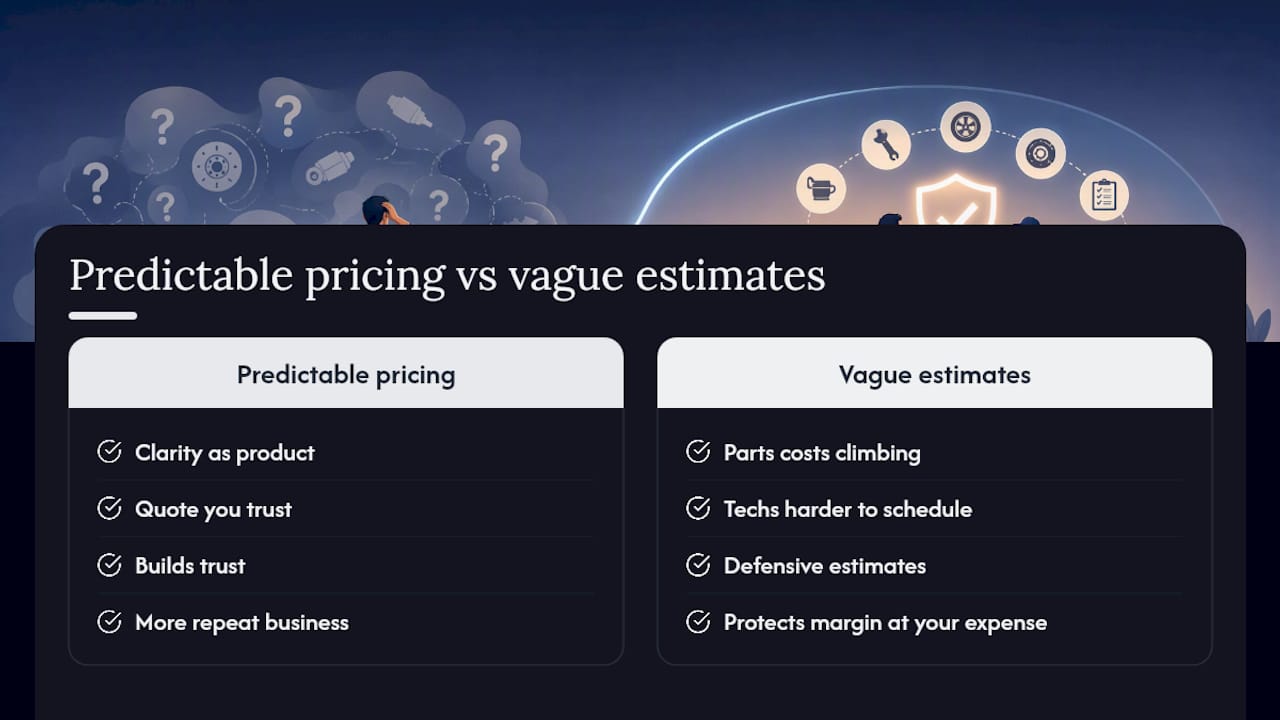
Parts costs keep climbing and qualified technicians are harder to schedule, which pushes some shops toward vague, defensive estimates that protect their margin at your expense. That’s backwards. L.E.K.’s research on repair-industry pricing shows the shops converting more one-time visits into repeat business are the ones treating clarity as the product, not an afterthought.
A quote you can trust the first time is why you come back the second time.
Get an Upfront Flat-Rate Quote Without Leaving Home
Towing your car to a shop and waiting on an hourly estimate is one option. Onsite Los Angeles Mobile Mechanic is the alternative for drivers across the Los Angeles area who want a fixed price and a technician who comes to them instead. You get a flat-rate quote over the phone before any work starts, and most jobs like oil changes, battery swaps, and brake pad replacements wrap up in about an hour at your home, office, or curb.
No app to download, no guessing what the final bill will look like. Call 213-583-4159 to get your flat-rate quote, or browse the mobile mechanic services page to see typical pricing for your specific repair before you pick up the phone.
Sources
- Car repair labor rates explained | AAA
- Trust Signals in U.S. Auto Repair | InnResearch
- Transparent auto repair estimates that build trust | AutoQbot
- 70% of Consumers Demand Transparency When Choosing a Repair Shop | RepuClinic