Mobile mechanics use digital tools because operating without a fixed shop demands a fully mobile-first software system to manage every step of the job, from booking to payment, in real time. The industry term for this approach is field service management, and it covers scheduling, digital inspections, parts tracking, customer communication, and on-site payment collection. Platforms like Shopmonkey, Torque360, and Vonigo have built entire product lines around this need. The result for car owners is faster service, fewer surprises, and a repair experience that is far more transparent than the traditional shop model.
Why mobile mechanics use digital tools for workflow efficiency
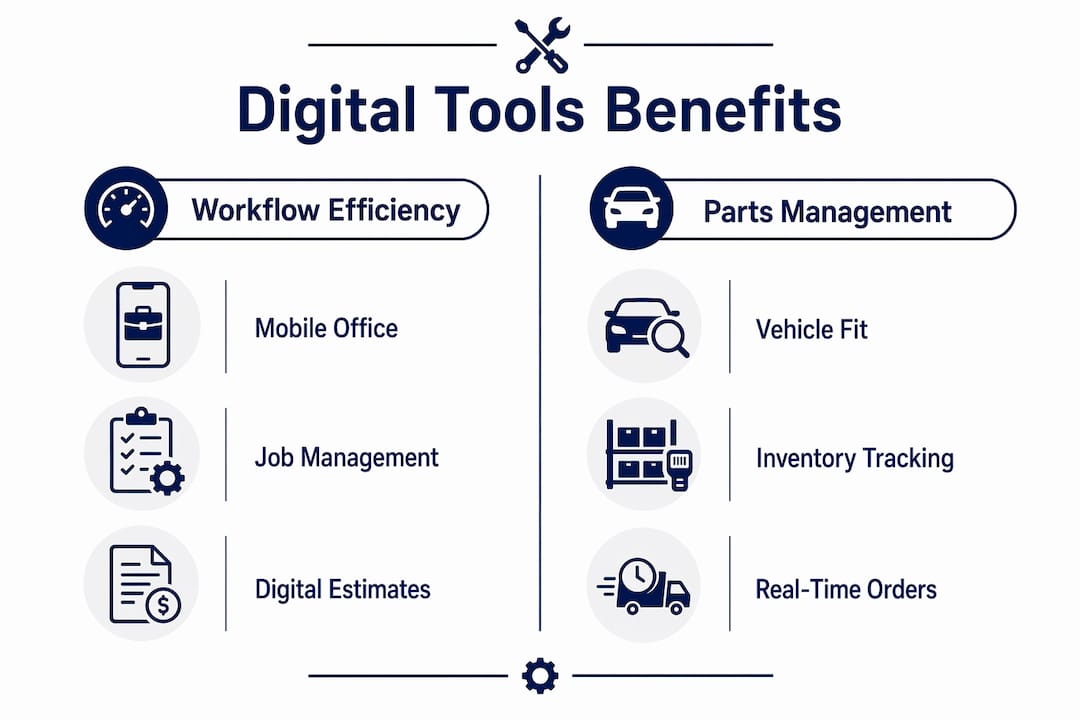
The single biggest reason why mobile mechanics use digital tools is that their office travels with them. A traditional shop has a front desk, a parts room, and a dispatcher. A mobile mechanic has a phone and a van. Mobile-first job management software eliminates front-desk bottlenecks by keeping service records accurate and current during on-site work. Without it, a technician would spend the first and last 20 minutes of every job on paperwork that could have been captured in seconds.
Scheduling automation is where the efficiency gains are most visible. Platforms like Torque360 and Shopmonkey let mechanics send estimates and repair orders in a few clicks, push customer updates via text or email, and collect payments before leaving the driveway. AI voice agents answer calls 24/7 and write directly into shop management software, increasing booked repair orders by 30 to 50 percent within 30 days and recovering 25 to 40 percent of cold estimates. That is the difference between a full schedule and a half-empty one.
Real-time job tracking keeps technicians, dispatchers, and customers aligned without a single phone call. When a job runs long or a part is delayed, the system updates automatically. This matters especially in Los Angeles, where traffic alone can shift an entire day’s schedule by an hour.
- Automated booking intake captures customer requests around the clock
- Text and email updates replace manual status calls
- Digital job cards sync from the technician’s phone to the back office instantly
- Automated reminders reduce no-shows and last-minute cancellations
Pro Tip: If you book a mobile mechanic and they send you a digital estimate before arrival, that is a sign they are using a structured job management system. It means your repair is already logged, tracked, and accountable before the technician pulls up.
How digital inspections build trust you can actually see
Digital vehicle inspections replace vague verbal explanations with concrete visual evidence. When a mechanic tells you your brake pads are worn, that means little without context. When they send you a timestamped photo of the pad thickness next to a measurement reference, you understand exactly what you are paying for. Digital inspections with photo and video capture build customer trust and link findings directly to estimates and work orders for immediate authorization.
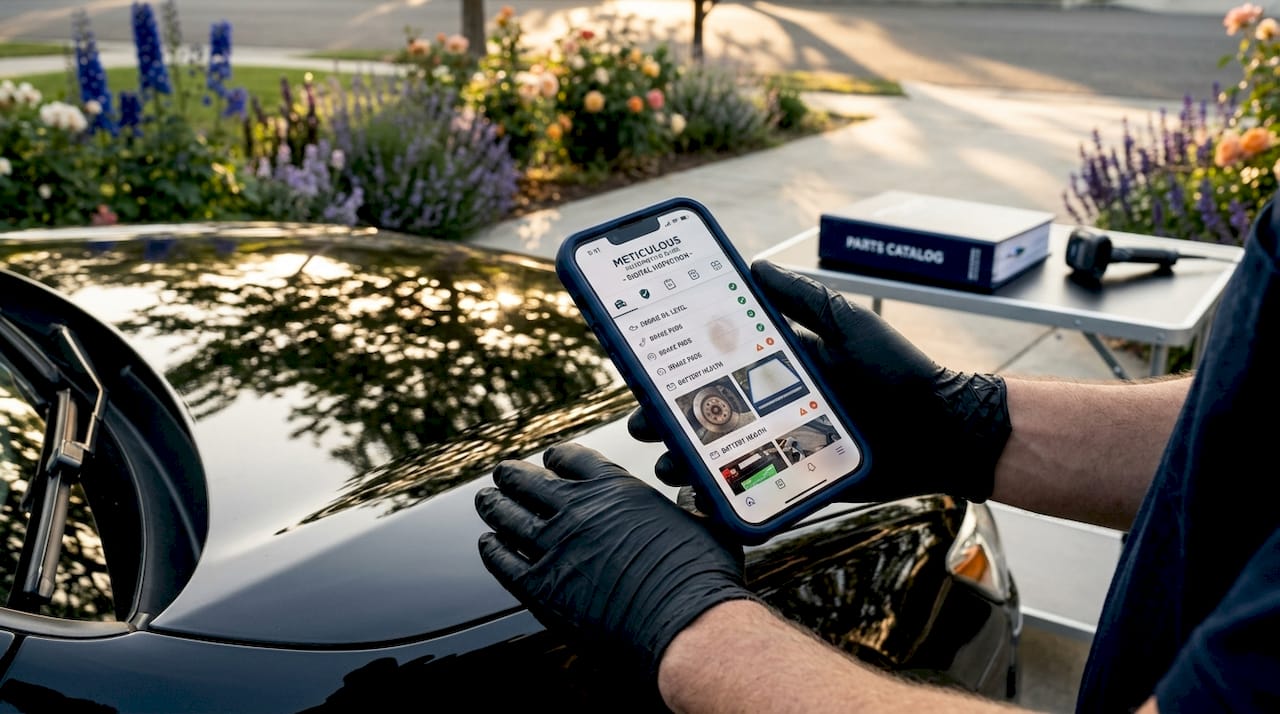
Platforms like Shopmonkey, GarageBox, and ARI structure these inspections as approval-ready reports. Technicians link photos and notes directly to estimates, enabling customers to authorize work remotely without a phone call. This speeds up the approval process and eliminates the “I didn’t know that was going to cost extra” dispute that plagues traditional shops.
E-signatures on digital work orders add another layer of protection. The customer signs off on the scope of work before the mechanic turns a wrench. That record is timestamped, stored, and retrievable if any question arises later.
- Structured checklists cover every inspection point consistently
- Photos and videos are attached directly to the relevant line item
- Customers review and approve work orders from their phone
- E-signatures create a legally defensible record of authorization
Pro Tip: Ask your mobile mechanic to share the digital inspection report after the job. A good system like Shopmonkey or GarageBox will produce a branded PDF you can keep with your vehicle records. This is more useful than any paper receipt.
What digital parts management prevents in the field
Parts logistics is the hidden challenge of mobile auto repair. A traditional shop has a parts room and a counter person. A mobile mechanic carries a limited inventory and orders the rest from distributed suppliers, often on the same day as the repair. Without a digital system, wrong parts, duplicate orders, and stockouts are common. Van-by-van inventory dashboards and low-stock alerts help maintain parts readiness in the field where no fixed parts room exists.
VIN and license plate checks integrated into parts tracking enforce vehicle fit validation before an order is placed. Enforcing vehicle fit through VIN checks and logging parts in real time avoids the errors that cause rework and wasted trips. For a mobile mechanic, a wrong part means a second visit, which costs time for both the technician and the customer.
| Feature | Traditional shop | Mobile with digital tools |
|---|---|---|
| Parts room | Fixed, on-site | Van inventory tracked digitally |
| Parts ordering | Counter person handles it | Technician orders via mobile app |
| Vehicle fit check | Manual lookup | VIN-integrated automatic validation |
| Stock alerts | Visual check | Automated low-stock notifications |
| Parts-to-job linking | Paper ticket | Real-time digital work order sync |
ReadySystems and similar platforms built specifically for mobile field service close this gap by treating the van as a mobile warehouse with its own digital inventory record.
What role do real-time documentation and payments play?
Digital documentation and on-site payment collection solve two problems that have historically made mobile repair feel risky for customers. First, they create an unbroken record of what was done, when, and by whom. Second, they allow payment to happen the moment the job is complete, without invoices getting lost in email or checks that take days to clear.
- The technician captures job notes, photos, and parts used directly on their mobile device during the repair.
- The customer reviews the completed work order and signs digitally before payment is requested.
- Payment is collected on-site via Google Pay, PayPal, or a card reader, with a receipt sent instantly.
- The completed record syncs to the CRM, updating the customer’s vehicle history for future service.
Offline-first data capture allows technicians to record job details and collect digital signatures even without internet connectivity, syncing data later to prevent loss. This matters in parking structures, underground garages, and rural areas where signal is unreliable. Platforms like Torque360 and ReadySystems both support offline workflows for exactly this reason.
Pro Tip: Before your mobile mechanic leaves, confirm that your payment receipt includes a line-item breakdown of parts and labor. Digital systems make this automatic, but it is worth checking. That document is your warranty record if anything needs follow-up.
How post-service dashboards keep your vehicle history intact
The benefits of mobile mechanic technology do not end when the technician drives away. Web dashboards and AI-generated diagnostic reports allow customers to view branded reports and scan history remotely from any browser. This is a significant shift from the traditional model, where your repair history lived in a shop’s internal system and you had no direct access to it.
Platforms like OBDAI and Shopmonkey give customers a portal to review past diagnostics, upcoming maintenance reminders, and repair records tied to their specific vehicle. AI-generated reports translate technical diagnostic codes into plain language, so you understand what was found without needing a mechanical background. This supports ongoing vehicle maintenance continuity between service visits.
| Dashboard feature | Customer benefit |
|---|---|
| Scan history access | Review past diagnostics from any device |
| AI-generated reports | Technical findings explained in plain language |
| Maintenance reminders | Proactive alerts for upcoming service needs |
| Repair record storage | Full vehicle history available without calling the shop |
For car owners who use mobile mechanics regularly, this kind of record keeping is the equivalent of a digital logbook. It adds resale value, supports warranty claims, and makes every future service appointment more informed.
Key takeaways
Mobile mechanics use digital tools because field service management software is the only way to run a complete, accountable repair operation without a fixed location.
| Point | Details |
|---|---|
| Workflow efficiency | Job management platforms like Shopmonkey and Torque360 eliminate paperwork and automate scheduling. |
| Customer trust | Digital inspections with photos and e-signatures replace verbal explanations with verifiable evidence. |
| Parts accuracy | VIN-integrated inventory tracking prevents wrong parts and wasted return visits. |
| Documentation integrity | Offline-first capture ensures job records and signatures are never lost due to connectivity gaps. |
| Post-service access | Customer-facing dashboards give car owners permanent access to their vehicle’s diagnostic and repair history. |
The case for digital tools is stronger than most people realize
Working in mobile automotive repair, the most consistent friction point is not the repair itself. It is everything around the repair: the missed call that never became a booking, the verbal estimate that turned into a dispute, the wrong part that arrived because nobody checked the VIN. Digital tools do not make mechanics better at fixing cars. They make the entire operation around the repair reliable enough that the mechanic’s skill is the only variable that matters.
What surprises most car owners is how much the digital inspection alone changes the dynamic. When a customer can see a photo of exactly what is wrong, attached to the line item they are being charged for, the conversation shifts from skepticism to collaboration. That is not a small thing. It is the difference between a one-time transaction and a customer who calls back.
The future direction here is AI-assisted scheduling and AI-driven quality platforms that automate intake, follow-up, and quality checks without adding headcount. Mobile mechanics who adopt these tools early will run tighter operations and build stronger customer relationships than those who rely on phone calls and paper receipts. The technology is not experimental. It is already in use, and the gap between shops that use it and those that do not is widening every year.
— Aaron
How Onsite Los Angeles Mobile Mechanic puts this into practice
Onsite Los Angeles Mobile Mechanic uses digital tools at every stage of your repair, from the moment you call to the second the job is complete. Upfront quotes are provided before any work begins, and the entire repair process is documented so you know exactly what was done and why. Services across the greater Los Angeles area, including Long Beach and Burbank, are backed by transparent pricing with no hidden fees. To schedule a repair at your home, office, or parking lot, call 213-583-4159 or visit the services page to see what is covered. No towing, no waiting rooms, and no surprises on the invoice.
FAQ
Why do mobile mechanics rely on digital tools instead of paper?
Mobile mechanics have no fixed office, so digital job management replaces the front desk entirely. Paper records cannot sync in real time, trigger automated reminders, or attach photos to a work order.
What is a digital vehicle inspection?
A digital vehicle inspection is a structured checklist completed on a mobile device, with photos and videos attached to each finding and sent directly to the customer for review and approval before work begins.
How do mobile mechanics collect payment on-site?
Mobile mechanics use card readers and digital payment platforms like Google Pay and PayPal to collect payment the moment a job is complete, with an itemized receipt sent instantly to the customer.
Can I access my repair history after a mobile mechanic visit?
Yes. Platforms like OBDAI and Shopmonkey provide customer-facing web portals where you can review diagnostic reports, repair records, and maintenance reminders from any browser.
Does digital documentation protect me as a customer?
Digital work orders with timestamped photos and e-signatures create a verifiable record of exactly what was authorized and completed. This protects both the customer and the mechanic if any question about the repair arises later.