Mobile mechanics cost significantly less than dealerships for most common vehicle repairs, with labor rates running 25% to 67% lower depending on the job and location. Comparing dealer vs mobile mechanic costs reveals a consistent pattern: dealerships charge more because they carry more overhead, not because they deliver better work on routine services. This 2026 breakdown covers the real cost drivers, side-by-side price examples, and a clear framework for deciding which option fits your repair needs and budget.
1. Comparing dealer vs mobile mechanic costs: the core price gap
The single biggest factor separating dealership and mobile mechanic pricing is overhead. Dealership overhead includes franchise fees, large facilities, higher payrolls, and costly OEM parts that raise prices across every service category. A mobile mechanic operates out of a van, carries no franchise obligations, and passes those savings directly to you.
Labor rates reflect this gap clearly. Independent shops charge $75 to $125 per hour while dealerships bill $125 to $175 per hour, according to AAA’s 2026 labor rate survey analyzed by Motor1. That means for a two-hour job, you could pay $100 to $200 more at a dealership before parts are even factored in.
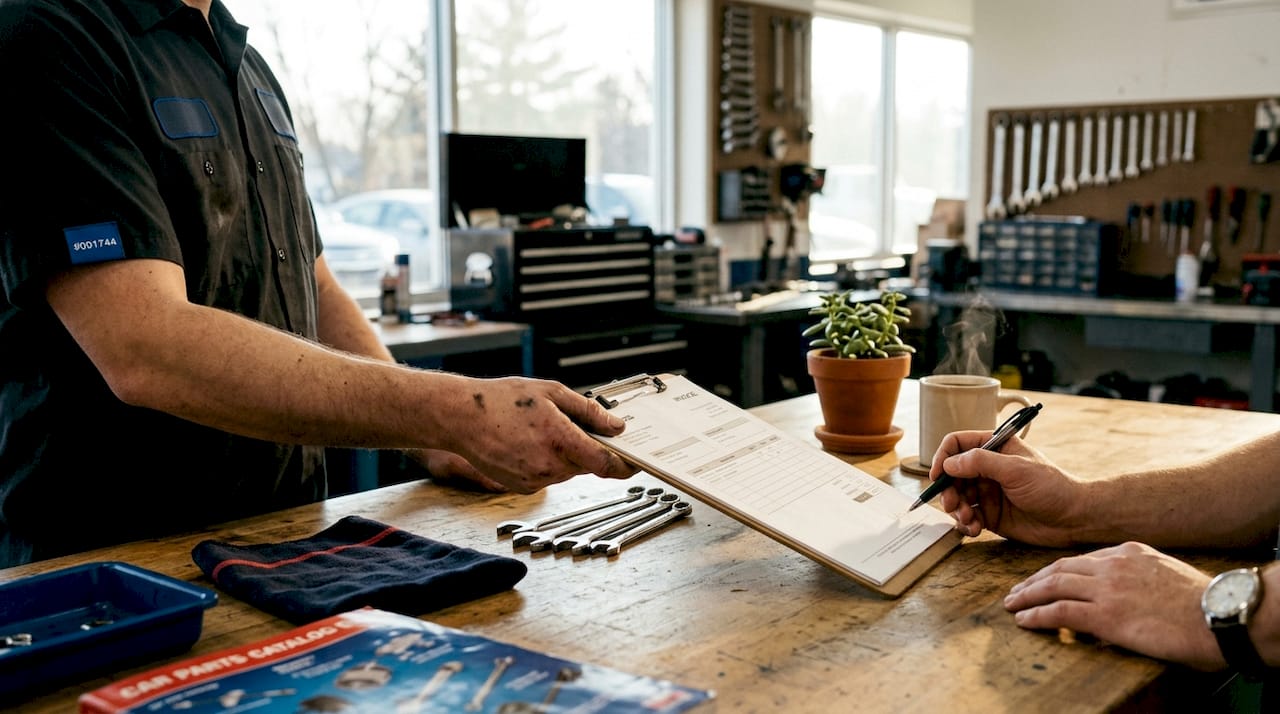
The so-called “dealer premium” mostly reflects overhead and guaranteed OEM parts rather than higher quality labor or more skilled technicians. For routine maintenance and common repairs, the work itself is often identical. The address where it happens is the only real difference.
Pro Tip: Ask any mechanic, mobile or otherwise, for their hourly labor rate before agreeing to a quote. A flat-rate quote can obscure an inflated labor charge buried inside the total.
2. What drives dealership prices higher than mobile mechanic rates
Dealerships operate under a cost structure that makes lower prices nearly impossible without cutting corners. Franchise agreements with manufacturers require dealerships to maintain certified facilities, employ factory-trained staff, and stock OEM parts. All of that costs money, and that cost flows to you.
Parts pricing is another major variable. Mechanics mark up parts prices to cover overhead and warranty support, and dealerships typically apply higher markups because their baseline costs are higher. A dealership sourcing an OEM brake rotor from the manufacturer’s supply chain will charge more than a mobile mechanic sourcing an OEM-equivalent part from NAPA or AutoZone.
Mobile mechanics have minimal overhead. They work from a service vehicle, carry targeted inventory, and schedule jobs efficiently without the cost of maintaining a physical shop. That structure allows them to price labor and parts more competitively while still covering their costs and offering warranties on completed work.
Transparency in part sourcing separates good mobile mechanics from unreliable ones. Always ask whether quoted parts are OEM, OEM-equivalent, or aftermarket. That single question gives you the information needed to make a valid cost comparison between any two repair quotes.
3. Real-world repair cost examples: dealer quotes vs mobile mechanic prices
Numbers make this concrete. Motor1’s 2026 real-world example showed a brake job quoted at $850 by a dealership completed by a mobile mechanic for $395, including parts and warranties on front pads and rotors. That is a $455 difference on a single repair.
Here is how common repair types typically compare in 2026:
| Repair Type | Dealership Estimate | Mobile Mechanic Estimate |
|---|---|---|
| Front brake pads and rotors | $750 to $950 | $350 to $500 |
| Oil change (synthetic) | $120 to $180 | $65 to $100 |
| Battery replacement | $250 to $400 | $130 to $220 |
| Alternator replacement | $700 to $1,100 | $400 to $650 |
| Spark plug replacement | $300 to $500 | $150 to $280 |
These ranges reflect typical 2026 market pricing and will vary by vehicle make, model, and location. The pattern holds across categories: mobile mechanic pricing runs materially lower on every common repair type.
Mobile mechanics often charge $75 to $150 per hour, with typical job pricing consistently below dealership rates for the same scope of work, according to a 2026 mobile mechanic pricing guide.
The warranty point matters as much as the price. Reputable mobile mechanics include parts and labor warranties on completed jobs, which removes the assumption that paying more at a dealership automatically buys you better protection.
4. What mobile mechanics can and cannot do compared to dealerships
Mobile mechanics handle a wider range of repairs than most car owners realize. Over 4,000 job types can be completed without a shop ramp, according to RAC’s 2026 mobile mechanics program report, with average completion lead times of 48 hours. That covers the vast majority of repairs the average driver will ever need.
Services mobile mechanics perform routinely include:
- Oil and filter changes
- Brake pad and rotor replacement
- Battery testing and replacement
- Alternator and starter replacement
- Spark plug and ignition coil service
- Serpentine belt replacement
- Coolant flushes and thermostat replacement
- Fuel filter and air filter service
- Pre-purchase vehicle inspections
- Diagnostic scans and check engine light diagnosis
Dealerships retain an advantage in specific situations. Manufacturer warranty and recall work requires dealership service because manufacturers mandate proprietary diagnostic equipment and certified processes. Complex transmission rebuilds, frame repairs, and jobs requiring a full lift and specialized tooling also favor a shop environment.
Pro Tip: If your vehicle is still under the manufacturer’s warranty, always confirm whether a mobile mechanic repair could affect your coverage before proceeding. For out-of-warranty vehicles, this concern largely disappears.
The time savings from mobile service are significant for busy drivers. Dropping a car at a dealership often means arranging a ride, waiting hours, and returning to pick up the vehicle. A mobile mechanic comes to your home or office and completes the work while you continue your day.
5. When to choose a mobile mechanic and when to use a dealership
The decision comes down to three factors: warranty status, repair complexity, and cost priority.
Choose a dealership when your vehicle is under the manufacturer’s warranty or subject to an active recall. Dealerships are preferable for warranty and recall work because manufacturers require their certified processes and proprietary diagnostic tools. Attempting to substitute a third-party repair for covered warranty work can create complications with future claims.
Choose a mobile mechanic when:
- Your vehicle is out of the manufacturer’s warranty period
- The repair is a common maintenance item or standard replacement job
- You want to avoid dealership wait times and scheduling friction
- Cost is a priority and you want transparent, upfront pricing
- You need service at your home, office, or roadside location
The 2026 J.D. Power Aftermarket Service Index Study confirms that many vehicle owners prioritize affordability and convenience, increasingly choosing aftermarket and mobile mechanics for routine maintenance. Dealerships win on brand trust but consistently lose on price, and for out-of-warranty repairs, trust in a skilled independent technician is equally achievable.
Getting multiple quotes is always worth the time. Call a dealership, call a mobile mechanic, and ask both for an itemized breakdown showing labor hours and part numbers. When you ask about part sourcing explicitly, including whether parts are OEM, OEM-equivalent, or aftermarket, you get the information needed to compare quotes on equal terms.
Geographic location affects mobile mechanic availability. In a city like Los Angeles, mobile mechanics are widely available with fast scheduling. In rural areas, options may be more limited, which can shift the calculus toward a local shop or dealership.
Key takeaways
Mobile mechanics deliver lower costs than dealerships on most common repairs because their overhead is structurally lower, not because they cut corners on quality or parts.
| Point | Details |
|---|---|
| Labor rate gap | Dealerships charge $125 to $175/hr versus $75 to $125/hr for independent and mobile mechanics. |
| Real-world savings | A brake job costing $850 at a dealership ran $395 with a mobile mechanic, including parts and warranties. |
| Part sourcing matters | Always ask whether quoted parts are OEM, OEM-equivalent, or aftermarket before accepting any repair quote. |
| Use dealerships for warranty work | Manufacturer warranty, recall repairs, and complex diagnostics requiring proprietary tools belong at a dealership. |
| Mobile mechanics cover most repairs | Over 4,000 job types are completable without a shop ramp, covering the majority of routine repair needs. |
What I’ve learned from watching drivers choose between these two options
The cost difference between dealerships and mobile mechanics is real, but the more interesting observation is how rarely the higher dealership price reflects a meaningful quality difference for routine work. A brake job is a brake job. An oil change is an oil change. The technician’s skill and the quality of the parts determine the outcome, not the address of the building where the work happens.
What I see consistently is that drivers who have never used a mobile mechanic default to the dealership out of habit and a vague sense that paying more means getting more. That assumption holds for some things in life. Car repair is not one of them, at least not for the services most drivers need most often.
The transparency factor is where mobile mechanics genuinely earn their reputation. When a mobile mechanic gives you an upfront quote, shows up on time, and completes the work in your driveway while you watch, the experience is fundamentally different from dropping your car off and hoping for the best. That visibility builds trust faster than any brand name on a dealership sign.
The one area where I would not push back on dealership value is complex diagnostics. Modern vehicles carry software and sensor systems that sometimes require manufacturer-specific scan tools to read accurately. For a check engine light tied to an obscure module, a dealership’s proprietary equipment can save hours of guesswork. For everything else, the mobile mechanic vs dealership comparison almost always favors the mobile option on both cost and convenience.
— Aaron
Save money on your next repair with Onsite Los Angeles Mobile Mechanic
Onsite Los Angeles Mobile Mechanic provides upfront, transparent pricing on repairs and maintenance throughout the greater Los Angeles area, with no hidden fees and no dealership markup. Service comes to your home, office, or wherever your vehicle is located.
Whether you need a brake job, battery replacement, oil change, or diagnostic scan, Onsite Los Angeles Mobile Mechanic delivers the same quality work at a fraction of typical dealership costs. Parts and labor warranties are included on completed jobs. Scheduling is straightforward: call 213-583-4159 for a quote and to book your appointment. You can also explore the full range of mobile mechanic services available across Los Angeles to find exactly what your vehicle needs.
FAQ
How much cheaper is a mobile mechanic than a dealership?
Mobile mechanics typically charge 25% to 67% less than dealerships on labor alone, based on AAA’s 2026 labor rate survey. Real-world repair examples show savings of $300 to $500 or more on common jobs like brake replacements.
Do mobile mechanics use quality parts?
Reputable mobile mechanics use OEM, OEM-equivalent, or quality aftermarket parts depending on the job and your preference. Always ask for the part number and sourcing details before approving any repair quote.
Can a mobile mechanic handle my car’s warranty repairs?
Manufacturer warranty and recall work must be completed at a franchised dealership using proprietary processes and diagnostic tools. For out-of-warranty vehicles, a qualified mobile mechanic can perform the same repairs at lower cost.
How do I get a quote from a mobile mechanic in Los Angeles?
Call Onsite Los Angeles Mobile Mechanic at 213-583-4159 for an upfront quote with no hidden fees. Service is available throughout the greater Los Angeles area with flexible scheduling at your location.
Are mobile mechanic repairs as reliable as dealership repairs?
For routine maintenance and common repairs, mobile mechanic work is equally reliable when performed by a qualified technician using quality parts. The onsite repair process at reputable providers includes parts and labor warranties comparable to what dealerships offer.