Modern car repair fits a busy work schedule because flexible scheduling systems, mobile mechanics, and AI-powered booking tools have fundamentally changed when and where service happens. Professionals no longer need to choose between vehicle maintenance and a full workday. Services like those offered by Onsite Los Angeles Mobile Mechanic bring the repair to your location, while digital scheduling platforms make booking faster than a phone call. Understanding why car repair fits work schedule demands starts with knowing which tools and service models are now available to you.
Why car repair fits work schedule: the role of AI booking
AI scheduling is the single biggest shift in how repair shops serve busy professionals. Shops using AI scheduling see a 15-25% increase in appointment volume and reduce no-shows by 30-40%. That means more available slots for you, and fewer instances where a shop is backed up because someone failed to show.
The after-hours booking window is where this technology pays off most directly for working professionals. Between 25% and 40% of all bookings now happen outside traditional business hours, meaning you can schedule car repair and work hours around each other without taking time away from your job. You book at 10 p.m. after the kids are in bed, and the appointment is confirmed before you wake up.
Automated SMS and email reminders are a key part of why this system works. Automated reminders reduce no-show rates by 30-40%, recovering thousands in monthly revenue for shops. For you, that translates to a shop that runs on time because other customers actually show up, which keeps your appointment predictable.
Scheduling software that links appointments to work orders and vehicle history can increase daily job capacity by 25% by eliminating double-booking. That capacity gain means the shop can fit you in during a lunch break or early morning slot that previously would have been unavailable. Platforms like Mistree apply AI-driven logic to this exact problem, matching technician availability with customer time preferences in real time.
Pro Tip: When booking online, look for shops that show real-time bay availability rather than just a generic “request appointment” form. Real-time availability means the slot is actually open, not just a placeholder that gets called back to reschedule.
Customers prefer online scheduling at a rate of 60%, yet only 30-35% of shops currently offer it. That gap is closing fast in 2026, and the shops closing it are the ones worth your business.
Mobile mechanics vs. traditional shops for busy professionals
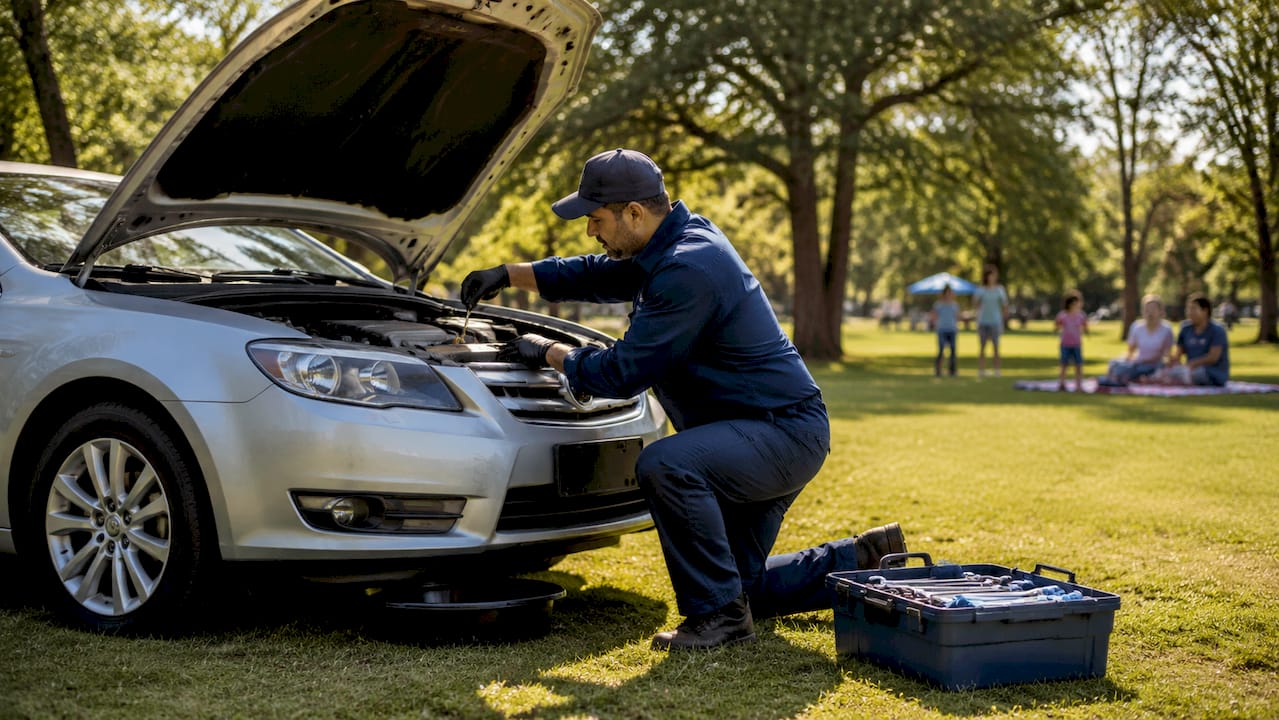
The core difference between a traditional shop visit and a mobile mechanic is who absorbs the time cost. At a traditional shop, you drive there, wait, arrange a ride, and return later. With a mobile mechanic, that entire sequence disappears.
| Factor | Traditional shop | Mobile mechanic |
|---|---|---|
| Travel required | Yes, both ways | None |
| Wait time on-site | 1-4 hours typical | Zero |
| Service location | Fixed shop address | Your home or office |
| After-hours availability | Rare | Common |
| Scheduling flexibility | Limited by shop hours | Broad, including weekends |
Mobile repair services perform maintenance during off-hours, weekends, or early mornings, turning vehicle downtime into a non-factor for gig workers and small fleet operations. For an urban commuter in Los Angeles, this means an oil change happens in your apartment parking lot on a Saturday morning while you drink coffee. The car is ready before you would have finished the drive to a traditional shop.
The benefits of home-based car service extend beyond convenience. You stay productive at your desk while the work happens outside. There is no shuttle to arrange, no Uber to book, and no hour lost sitting in a waiting room watching cable news.
Mobile mechanics are increasingly essential for busy drivers because they align service timing with real life rather than shop hours. The model works especially well for routine maintenance: oil changes, brake pad replacements, battery swaps, and filter changes. These are the jobs that pile up when scheduling feels like too much friction.
Pro Tip: When calling to book a mobile mechanic, ask specifically whether travel time is factored into your appointment window. A good mobile service accounts for drive time between jobs so your slot starts when they arrive, not when they leave the previous customer.
How bay scheduling reduces your wait time
Bay scheduling is the internal system repair shops use to coordinate technician availability, physical bays, and shared equipment simultaneously. Most customers never hear the term, but it directly determines whether your car sits idle for two hours or gets pulled in the moment you drop it off.
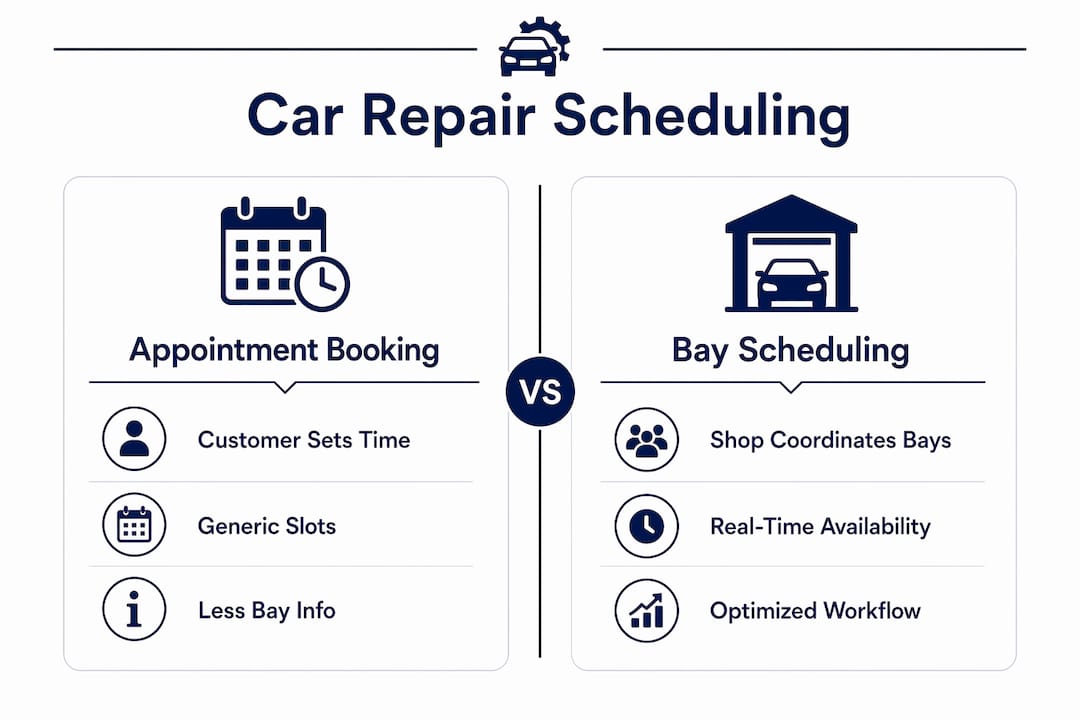
The distinction between appointment scheduling and bay scheduling matters. Appointment scheduling tells the shop when you are arriving. Bay scheduling determines which technician, which bay, and which lift or alignment rack will be ready for your vehicle at that exact time. A shop can be fully booked on appointments and still run late if bay scheduling is mismanaged.
Efficient bay scheduling matches technician availability, bays, and bottleneck equipment to avoid service delays. Bottleneck equipment like alignment racks or diagnostic computers is shared across multiple bays, and poor scheduling creates queues around those single points. A shop that manages this well gives you a realistic time estimate you can actually plan around.
Here is what good bay scheduling looks like from the customer side:
- The service advisor gives you a specific pickup time, not a range like “sometime this afternoon.”
- The shop calls or texts if a job ahead of yours runs long, before you show up expecting a finished car.
- Your vehicle moves from drop-off to bay within 30 minutes of your appointment time.
- The advisor can tell you which technician is assigned to your car and what their current workload looks like.
When you call to book, ask the service advisor directly: “How do you handle bay scheduling?” A shop that can answer that question clearly is a shop that respects your time. One that responds with confusion is telling you something important about how your afternoon will go.
Practical strategies to fit car repairs into your workday
Scheduling car repair around work hours is a skill, and the professionals who do it well follow a consistent set of practices. These are not theoretical suggestions. They are the moves that actually protect your time.
- Book the first appointment of the day. The 7 a.m. or 8 a.m. slot is the only one guaranteed to start on time. Every appointment after that carries the accumulated delay of every job that ran long before it.
- Use digital booking systems. Online scheduling lets you compare available slots across multiple days without spending 15 minutes on hold. Shops with real-time digital booking are also more likely to have organized bay scheduling behind the scenes.
- Ask about drop-off lockers and shuttle services. Many shops now offer key drop-off lockers for early morning arrivals and shuttle service to nearby offices. This turns a repair appointment into a zero-disruption event.
- Consider a mobile mechanic for routine maintenance. Services like Onsite Los Angeles Mobile Mechanic handle oil changes, battery replacements, and brake work at your location. The time savings for professionals are measurable and consistent.
- Never approve repairs under time pressure. Urgency increases the likelihood of approving unnecessary repairs by 70%. The “Time Tax” is real: when you feel rushed, you say yes to things you would otherwise question. Slowing down to read the estimate carefully costs you five minutes and can save you hundreds of dollars.
Pro Tip: Request a Digital Vehicle Inspection report with photos before approving any repair. Shops that send photo documentation give you the ability to review the work from your desk, approve remotely, and avoid the back-and-forth phone calls that eat into your workday.
Key takeaways
Flexible scheduling technology and mobile service models make car repair compatible with demanding work schedules by eliminating the time costs that traditionally made maintenance feel impossible.
| Point | Details |
|---|---|
| AI scheduling opens after-hours slots | Between 25-40% of bookings now happen outside business hours, giving professionals genuine flexibility. |
| Mobile mechanics eliminate travel time | Service at your home or office removes the drive, wait, and return trip entirely. |
| Bay scheduling predicts your wait time | Shops with organized bay scheduling give accurate pickup times you can build your day around. |
| Time pressure increases unnecessary costs | Urgency raises the chance of approving unneeded repairs by 70%; reviewing estimates carefully protects your budget. |
| First appointment of the day is the most reliable | Early slots carry no accumulated delay from previous jobs, making them the safest choice for time-sensitive schedules. |
The real cost of treating car repair as an interruption
Most professionals treat car repair as an interruption to their schedule rather than a service that can be designed around it. That framing is the actual problem. When you approach a repair appointment with urgency and frustration, you make worse decisions. You approve the first estimate without reading it. You skip the photo inspection because you want to get back to work. You end up paying for repairs you may not have needed.
Mechanics on flat-rate pay are incentivized to complete jobs quickly. That is not a criticism. It is a structural reality. When you add your own time pressure to theirs, the dynamic shifts in a direction that does not serve you. Taking an extra ten minutes to understand what is being recommended, and why, is the single highest-return habit in car ownership.
The shops and services worth your loyalty are the ones that communicate proactively, send photo documentation, and do not manufacture urgency. Mobile mechanics, by design, tend to operate this way because their business model depends on repeat customers who trust them. A technician who comes to your driveway cannot hide behind a waiting room and a service counter.
The technology exists in 2026 to make car maintenance nearly invisible in your week. AI scheduling, mobile service, and transparent digital inspections are not premium features. They are the baseline you should expect. If your current shop cannot offer online booking, real-time updates, or flexible hours, that is a scheduling problem you are absorbing on their behalf.
— Aaron
Schedule your next repair without leaving work
Onsite Los Angeles Mobile Mechanic brings certified repair and maintenance directly to your home, office, or parking structure anywhere in the greater Los Angeles area. Oil changes, battery replacements, brake service, and diagnostics are completed on-site, often within an hour, so your workday stays intact.
Every job starts with an upfront quote and no hidden fees. Photo documentation is standard, so you can review and approve work from your desk rather than standing in a shop. There is no app required. Call 213-583-4159 to book your appointment and get a same-day estimate. Explore the full range of mobile mechanic services and find the option that fits your schedule.
FAQ
Why does car repair fit a busy work schedule better now than before?
AI scheduling tools now fill after-hours booking slots, with 25-40% of appointments booked outside business hours. Mobile mechanics add another layer by performing service at your location, removing travel and wait time entirely.
What is the best time to schedule a car repair around work?
The first appointment of the day is the most reliable option because it carries no delay from earlier jobs. After-hours digital booking lets you lock in that slot without taking time away from your workday.
How do mobile mechanics save time compared to traditional shops?
Mobile mechanics eliminate the drive to the shop, the on-site wait, and the return trip. For routine maintenance like oil changes or battery replacements, the entire service is completed at your home or office, often in under an hour.
What is the “Time Tax” in car repair?
The Time Tax refers to the cost of rushed decisions made under scheduling pressure. Urgency increases the likelihood of approving unnecessary repairs by 70%, meaning that feeling pressed for time directly increases what you pay.
How can I tell if a shop has good bay scheduling?
Ask the service advisor for a specific pickup time and whether they send updates if a job runs long. Shops with organized bay scheduling can answer both questions clearly and will contact you proactively rather than leaving you to follow up.