Auto repair parts pricing is determined by a tiered markup system where shops apply higher percentage markups to low-cost consumables and lower markups to expensive assemblies. This is the industry standard known as a parts markup matrix, and understanding it is the first step to reading any repair quote with confidence. The average repair bill in 2026 sits around $838 per visit, and parts inflation has climbed 25% in recent years. Knowing how parts pricing works in auto repair protects you from overpaying and helps you ask the right questions before approving any work.
How parts pricing works in auto repair shops
The core mechanism behind auto repair parts cost is the markup matrix. A markup matrix is a tiered pricing table that assigns different markup percentages based on what a part costs at wholesale. Shops use it to set consistent, strategic prices rather than guessing on every job.
Here is how a typical tiered markup matrix breaks down by part cost:
| Wholesale part cost | Typical markup | Example sale price |
|---|---|---|
| Under $10 (consumables) | 150–300% | $10 part sold for $25–$40 |
| $10–$100 (mechanical parts) | 70–100% | $50 part sold for $85–$100 |
| $100–$500 (mid-range parts) | 40–70% | $200 part sold for $280–$340 |
| Over $1,500 (major assemblies) | 20–30% | $2,000 part sold for $2,400–$2,600 |
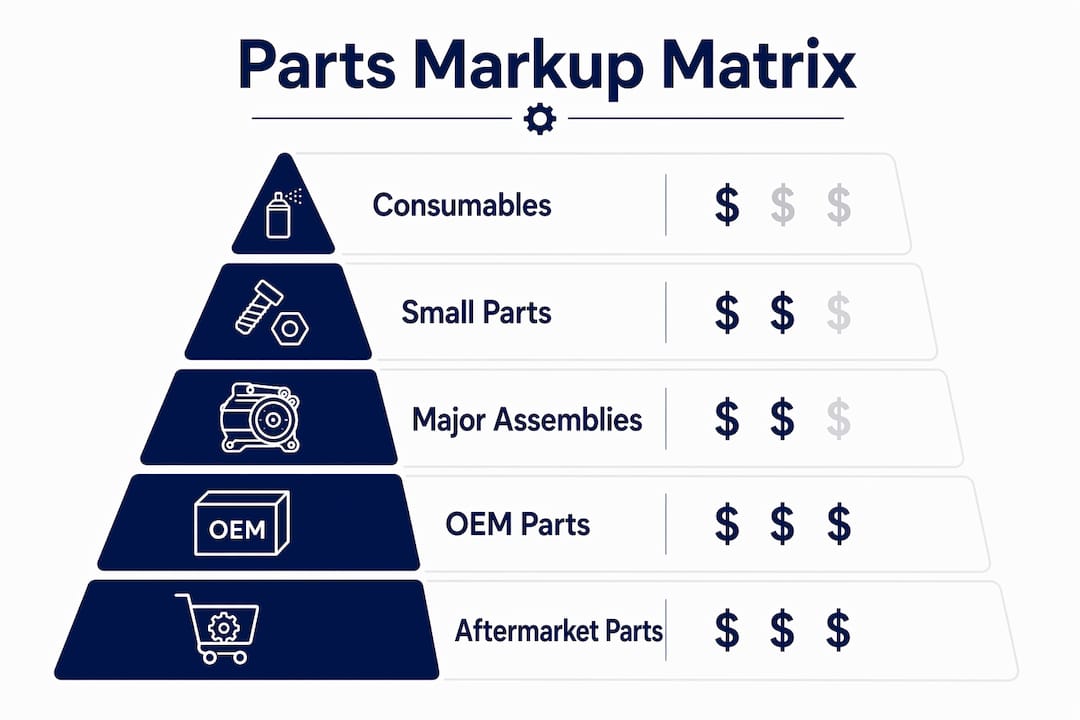
The logic is straightforward. A flat markup across all parts would either price small items too low to cover handling costs or price large assemblies so high that customers walk out. Tiered pricing solves both problems at once.
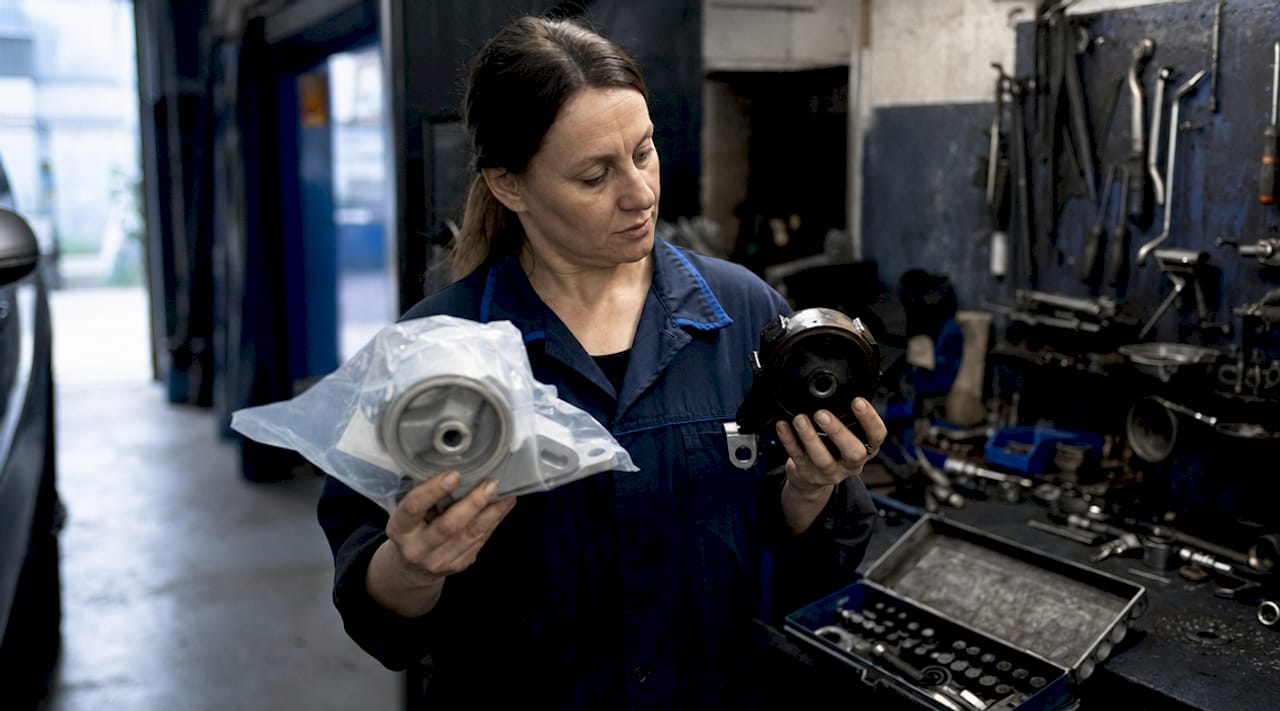
Part source also affects where a part lands in the matrix. OEM parts from manufacturers like Toyota, Ford, or Bosch carry a higher baseline cost, so shops often apply a lower percentage markup to stay competitive. Aftermarket parts from brands like Dorman or ACDelco come in cheaper, which can allow a slightly higher markup while still offering the customer a lower final price.
Pro Tip: Ask your shop which tier your part falls into. A shop using a transparent matrix should be able to tell you the wholesale cost and the markup percentage applied, not just the final price.
67% of independent shops underprice their parts, losing between $40,000 and $70,000 annually. That figure matters to you as a customer because shops that underprice often compensate by inflating labor rates or adding shop supply fees, making quotes harder to compare.
How the supply chain affects what you pay for parts
Parts do not travel directly from a factory to your mechanic’s toolbox. The pricing waterfall across the supply chain adds margin at every step, and that accumulation is baked into the price you see on your invoice.
The typical parts journey looks like this:
- Manufacturer produces the part and sells to a national wholesaler at the lowest price point.
- Wholesaler (such as LKQ Corporation or Genuine Parts Company) adds a distribution margin and sells to regional jobbers.
- Jobber (your local parts store like AutoZone or O’Reilly Auto Parts) adds another margin and sells to repair shops.
- Repair shop applies its markup matrix and sells to you.
By the time a part reaches your vehicle, it has passed through three to four margin layers. This is why the same brake rotor that lists for $45 on a retail shelf might appear on your invoice at $90 or more. The shop did not invent that price. It reflects real costs accumulated across the chain.
Tariffs compound this further. The 2026 auto parts tariff environment has pushed parts prices up significantly, with some imported components seeing cost increases that flow directly through the supply chain to the shop level. Volume purchasing matters here. A large shop buying 500 brake pads a month from a jobber gets a better unit price than a small shop buying 20. Strong supplier partnerships and regular margin tracking are what separate profitable shops from those quietly losing money on parts.
Shops with preferred supplier relationships can access volume pricing tiers unavailable to the general public, which is one reason mobile mechanics and independent shops often price parts differently than dealerships.
Pro Tip: When comparing quotes from two shops, ask each one whether the part is sourced from a local jobber or a national distributor. The answer often explains a $30 to $80 price gap on the same part.
OEM vs. aftermarket vs. remanufactured: what the price difference actually means
Three main categories of parts exist in auto repair, and each carries a different price point, quality profile, and warranty implication.
Aftermarket parts cost 20–50% less than OEM, and remanufactured parts run 30–60% below OEM pricing. That spread represents real money on a complex repair, but the savings come with trade-offs worth understanding.
| Part type | Cost vs. OEM | Warranty | Best use case |
|---|---|---|---|
| OEM (Original Equipment Manufacturer) | Baseline | Full manufacturer warranty | Safety systems, newer vehicles |
| Aftermarket (e.g., Dorman, ACDelco) | 20–50% less | Varies by brand | Most mechanical repairs |
| Remanufactured (e.g., rebuilt alternators) | 30–60% less | Limited, often 90 days to 1 year | Starters, alternators, calipers |
| Used/salvage | 50–75% less | None or very limited | Body panels, non-critical parts |
OEM parts are manufactured to the exact specification of your vehicle’s original components. For safety-critical systems like ABS modules, airbag sensors, or steering racks, OEM is the standard most shops and manufacturers recommend. For a water pump on a 2012 Honda Civic, a reputable aftermarket brand like Gates or Dayco performs comparably at a lower price.
Remanufactured parts occupy a middle ground. A remanufactured alternator from a brand like Remy has been disassembled, inspected, and rebuilt to factory specs. The quality is generally reliable, but the warranty period is shorter than OEM. Used or salvage parts carry the most risk because their service history is unknown.
When reviewing a quote, always ask which part category is being used and what warranty covers it. A shop that cannot answer this question clearly is one worth reconsidering.
Why shops mark up parts beyond the wholesale price
Markup covers far more than profit. This is the most common misconception car owners carry into repair conversations, and it creates unnecessary friction between customers and shops.
Here is what the markup on a single part actually pays for:
- Sourcing and ordering time: A technician or service advisor spends time identifying the correct part, placing the order, and confirming fitment.
- Inventory carrying costs: Parts ordered and stocked before a job cost money to store and manage.
- Warranty administration: If a part fails under warranty, the shop replaces it at no charge to you. That labor cost comes out of the original markup.
- Return handling: Incorrect or defective parts must be returned, which takes time and sometimes incurs restocking fees.
- Labor risk coverage: If a part fails prematurely and causes secondary damage, the shop absorbs liability.
Markup is not a surcharge on top of a part’s value. It is the mechanism that funds the entire support structure around that part, from procurement to post-installation warranty coverage.
The recommended gross margin for parts in a healthy auto repair business is 40–50%. A shop operating below that threshold is likely cutting corners somewhere, whether on part quality, technician pay, or warranty coverage.
Bringing your own parts to a shop changes this equation entirely. Shops often forfeit the labor warranty when customer-supplied parts are installed, and many charge a higher labor rate to offset the risk. You save on the part but absorb all the risk if it fails.
How to evaluate and compare parts prices in repair quotes
Reading a repair quote is a skill, and most car owners are never taught it. Repair quotes should break down labor, parts type, warranty, fees, and taxes as separate line items. A quote that bundles everything into one number gives you nothing to evaluate.
Follow these steps when reviewing any auto repair estimate:
- Separate parts from labor. Each should appear as its own line. If they are combined, ask for an itemized breakdown before approving the work.
- Identify the part type. OEM, aftermarket, or remanufactured. Each carries different cost and warranty implications, as covered above.
- Check the warranty terms. A 12-month or 12,000-mile parts and labor warranty is a reasonable baseline. Anything shorter deserves a question.
- Look for shop supply fees. These are legitimate charges covering rags, fluids, and disposal, but they should be disclosed, not buried.
- Compare the markup, not just the total. A $90 part with a 50% markup means the shop paid $60 wholesale. A $90 part with a 200% markup means the shop paid $30. Both are legal, but the second signals a consumable or low-cost item where the markup is expected.
Pro Tip: Ask for the part number on any major component. You can cross-reference it on sites like RockAuto or AutoZone to get a retail price baseline. The shop’s price will be higher, but the gap should be explainable by the markup matrix logic above.
Comparing parts and labor separately gives you a clearer picture of where the value lies in any quote. A shop charging $20 more for a part but offering a two-year warranty is often the better deal than one offering the lowest sticker price with no coverage.
You can also review how mobile mechanic vs. dealership pricing differs to understand why the same part can carry a different markup depending on the business model.
Key takeaways
Auto repair parts pricing follows a tiered markup matrix where consumables carry the highest percentage markups and major assemblies carry the lowest, with every markup tier covering overhead, warranty, and supply chain costs.
| Point | Details |
|---|---|
| Tiered markup matrix | Shops apply 150–300% on small parts and 20–30% on major assemblies to balance margins. |
| Supply chain layers | Parts pass through manufacturer, wholesaler, jobber, and shop before reaching your vehicle. |
| Part type affects price | Aftermarket parts cost 20–50% less than OEM; remanufactured parts cost 30–60% less. |
| Markup funds more than profit | Markup covers warranty, sourcing, inventory, and labor risk, not just shop revenue. |
| Evaluate quotes line by line | Always separate parts, labor, warranty, and fees to compare quotes accurately. |
The transparency gap most car owners never close
Most pricing frustration in auto repair comes from a single gap: the customer sees a number and the shop sees a cost structure. Neither explains itself to the other. I have seen this play out hundreds of times. A customer balks at a $120 alternator bracket because they found it for $40 online. The shop paid $55 wholesale, applied a 120% markup to cover warranty and handling, and priced it at $121. That math is completely defensible. But if no one explains it, the customer leaves feeling cheated.
The shops that earn long-term loyalty are the ones that show their work. Not every customer wants a breakdown of the markup matrix, but every customer wants to feel that the price is fair and explainable. Transparency is not just good ethics. It is the most effective pricing strategy a shop can use, because it converts skeptical customers into repeat ones.
My honest advice: stop comparing part prices in isolation. A $60 part with a 90-day warranty and no labor coverage is not the same product as a $90 part with a 24-month parts and labor guarantee. The $30 difference buys you 21 months of protection. That is a good deal. The shops that understand this and communicate it clearly are the ones worth your business. For a deeper look at how onsite car repair works and how pricing is structured in a mobile context, the comparison is worth reading before your next repair.
— Aaron
Transparent parts pricing from Onsite Los Angeles Mobile Mechanic
Understanding parts pricing is one thing. Finding a shop that actually applies it honestly is another.
Onsite Los Angeles Mobile Mechanic uses a transparent pricing model with upfront quotes that break down parts and labor separately, so you always know what you are paying for and why. Parts are sourced from trusted suppliers, and every repair comes with clear warranty terms. No hidden shop fees, no bundled totals that obscure the markup. The service comes directly to your location across the greater Los Angeles area, including Long Beach and Pasadena. To book a repair or get an upfront quote, call 213-583-4159 or visit the services page to see what is covered.
FAQ
What is a parts markup matrix in auto repair?
A parts markup matrix is a tiered pricing table that assigns different markup percentages based on a part’s wholesale cost. Shops use it to apply higher markups on low-cost consumables and lower markups on expensive assemblies, keeping pricing consistent and margins healthy.
How much do auto repair shops mark up parts?
Auto repair shops apply a blended markup of 60–100% on average, with small consumables marked up 150–300% and major assemblies marked up only 20–30%. The range depends on part cost, type, and the shop’s pricing strategy.
Is it cheaper to bring your own parts to a mechanic?
Bringing your own parts often results in a forfeited labor warranty and a higher labor rate, because the shop cannot guarantee the quality of parts it did not source. The upfront savings on the part can be offset by the added risk and cost.
What is the difference between OEM and aftermarket parts pricing?
OEM parts are the most expensive baseline option. Aftermarket parts cost 20–50% less, and remanufactured parts run 30–60% below OEM pricing. The right choice depends on the repair type, vehicle age, and warranty requirements.
How should I compare two repair quotes on the same job?
Always separate parts from labor in each quote and confirm the part type and warranty for each line item. A higher parts price with a longer warranty often represents better value than a lower price with no coverage.