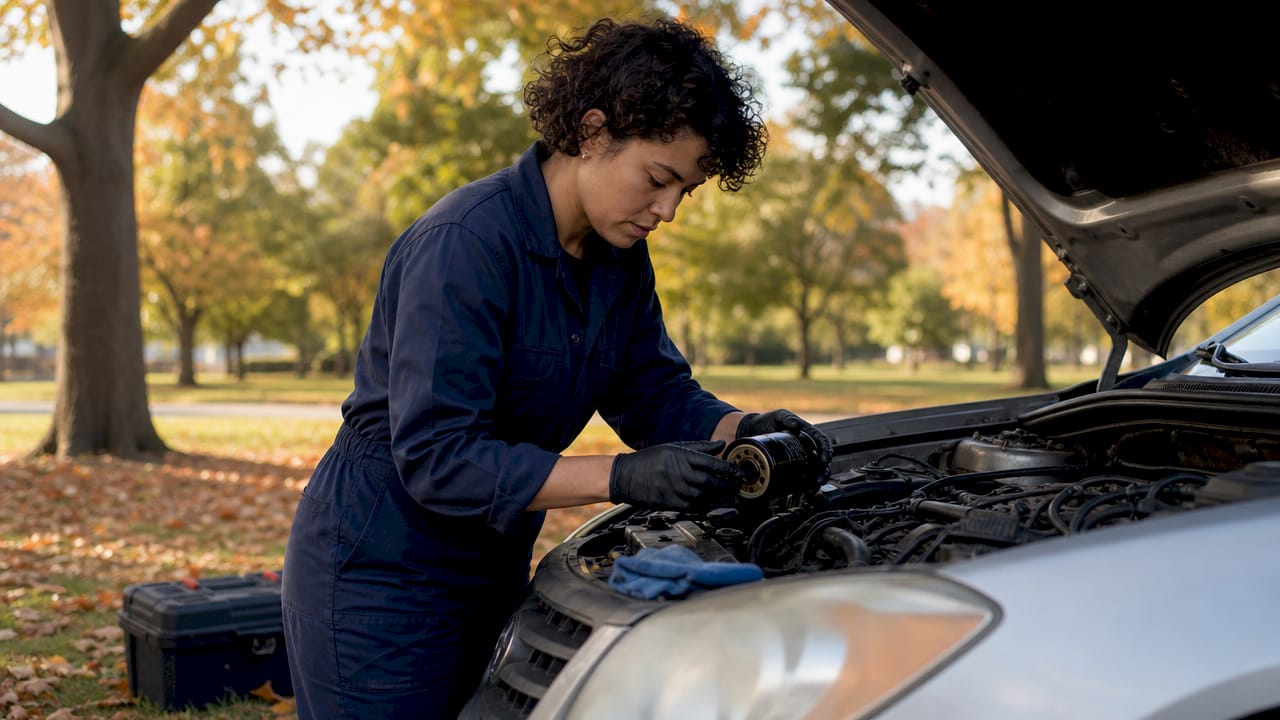
On-demand auto service is defined as a mobile mechanic model where a certified technician drives to your location, whether that’s your driveway, office parking lot, or apartment complex, and performs car repairs and maintenance on the spot. About 90% of common automotive repairs can be completed safely in a standard driveway or parking lot without specialized shop equipment. That figure covers brake pad replacements, oil changes, battery swaps, and dozens of other routine jobs. Onsite Los Angeles Mobile Mechanic operates exactly on this model, bringing professional tools and upfront pricing directly to car owners across the greater Los Angeles area. The result is faster service, lower cost, and zero waiting room time.
What is on-demand auto service and what can mechanics fix?
Mobile mechanics handle a wider range of jobs than most car owners expect. The industry term for this model is “mobile auto repair,” and it covers both scheduled maintenance and unplanned repairs. Repair and maintenance services dominate the on-demand market, driven largely by aging vehicles that need consistent, routine care.
Routine maintenance tasks a mobile mechanic handles:
- Oil and filter changes
- Battery testing and replacement
- Brake pad and rotor inspection and replacement
- Fluid top-offs (coolant, power steering, transmission)
- Air filter replacement
- Spark plug replacement
- Serpentine belt and hose inspection and swap
- Headlight and taillight bulb replacement
Diagnostic and inspection services:
- OBD-II engine diagnostics
- Pre-purchase vehicle inspections
- Electrical system checks
Mobile mechanics prioritize routine maintenance like oil changes and brake inspections as their core offering, not just emergency roadside calls. That distinction matters. Many car owners assume mobile mechanics are only for breakdowns. The reality is that proactive, scheduled maintenance is the backbone of the service.
There are limits. Engine rebuilds, transmission overhauls, and repairs requiring a hydraulic lift or alignment rack still belong in a traditional shop. Even complex repairs can be staged on-site for diagnostics, with the mechanic referring you to a shop only when heavy equipment is genuinely required. That staged approach saves you a diagnostic fee at the dealership.
Pro Tip: Before booking, ask your mechanic to confirm your specific repair is doable at your location. A quick phone call prevents scheduling a job that needs a lift.
How does on-demand auto service save time and money?
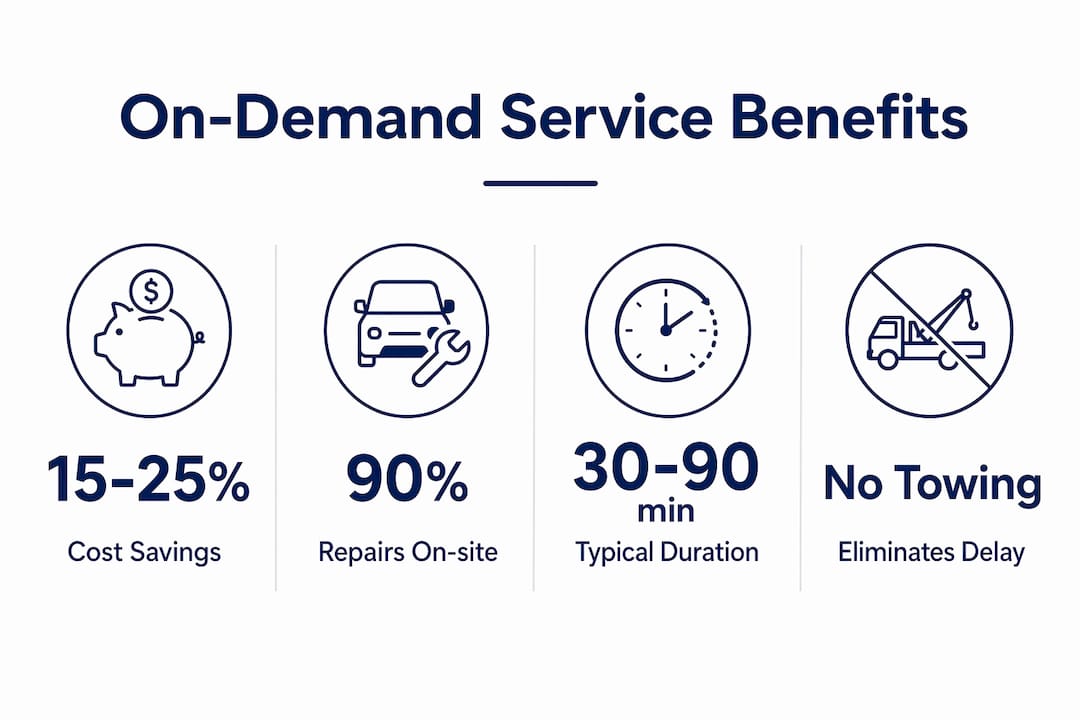
The cost advantage is real and measurable. Mobile auto repair runs 15–25% less expensive than traditional shop rates because the mechanic carries no facility rent, no large utility bills, and no service advisor salary to pass on to you. That overhead reduction translates directly into lower labor rates without any drop in quality.
| Service | Typical On-Site Duration | Key Cost Driver |
|---|---|---|
| Oil change | 30–45 minutes | Labor only, no shop fee |
| Battery replacement | ~30 minutes | Parts plus minimal labor |
| Brake pad replacement | ~1.5 hours | Labor savings vs. dealership |
| Spark plug replacement | 45–60 minutes | No shop markup on parts |
| Pre-purchase inspection | 45–60 minutes | Flat diagnostic fee |
Battery replacements take about 30 minutes and brake pad replacements about 1.5 hours in a typical mobile appointment. Those durations let you plan your day around the visit rather than surrendering your car for an entire afternoon.
The transparency factor adds another layer of savings. Mobile mechanics enable direct communication between the technician and the car owner, cutting out the service advisor layer found in most dealerships and chain shops. That direct line eliminates the upsell pressure and the vague “additional work recommended” line items that inflate traditional shop bills. You see what is being done, you approve the work, and you pay what was quoted. Onsite Los Angeles Mobile Mechanic builds this model into every appointment with upfront quotes and no hidden fees.
Towing costs disappear entirely. A car that won’t start at your office no longer means a $150 tow to the nearest shop. The mechanic comes to the car. That single change in logistics can save hundreds of dollars per incident, especially for car owners in a city like Los Angeles where tow truck wait times and mileage fees add up fast.
Pro Tip: Get a written or texted quote before the mechanic arrives. Reputable mobile services provide this automatically. If a provider won’t give you a price upfront, that’s a signal to look elsewhere.
What do you need to prepare for a mobile mechanic visit?
Preparation is straightforward, but a few details determine whether the appointment runs smoothly. Mobile mechanics require a flat, stable surface and enough clearance around the vehicle to safely access all four sides and the undercarriage. A standard residential driveway or open parking space works in most cases.
Location checklist before you book:
- Confirm the surface is level and paved or compacted gravel
- Check that your building or complex allows on-site mechanical work
- Verify there is enough overhead clearance if the mechanic needs to use a jack
- Make sure the vehicle is accessible, not blocked in by other cars
Gated communities and some apartment complexes restrict commercial vehicle access or prohibit repair work on the premises. Confirming site permissions before scheduling prevents a wasted trip for both you and the technician. A quick call to your building manager takes two minutes and avoids a rescheduled appointment.
On the day of service, you do not need to be present for every minute of the job. Most car owners hand over the keys, go back to work or home, and check in when the mechanic texts that the job is done. On-demand mobile mechanics bring dealership-quality diagnostic tools directly to your location, so the service quality does not depend on a shop environment.
Pro Tip: Take a photo of your parking spot and send it to your mechanic when you book. It removes any ambiguity about access and helps the technician arrive with the right equipment.
How on-demand services are changing the auto repair industry
The shift toward mobile auto repair reflects a broader change in how car owners think about vehicle maintenance. Mobile mechanic services fundamentally change car care by placing time savings and personal convenience at the center of the transaction, not the shop’s schedule.
Several trends are accelerating this shift:
- Aging vehicle fleet. Older vehicles need more frequent maintenance. Car owners with high-mileage cars benefit from scheduled mobile visits that catch small problems before they become expensive ones.
- Subscription and scheduled maintenance plans. Some mobile services now offer recurring maintenance packages, similar to a subscription, so oil changes and inspections happen automatically without the owner having to remember to book.
- Fleet management adoption. Small business owners with delivery vehicles or service fleets use mobile mechanics to service multiple vehicles at one location, cutting the downtime that comes from rotating cars through a shop.
- Emergency and same-day repair demand. The ability to get instant car service for a dead battery or a brake warning light without towing is a major driver of consumer adoption.
The elimination of wait times and transparent pricing lead many busy car owners to prefer mobile mechanics for regular maintenance, not just emergencies. That preference is reshaping how the auto repair industry prices and delivers its services. Traditional shops are responding by extending hours and offering pickup and drop-off, but the core convenience of a mechanic coming to you remains a structural advantage that a fixed-location shop cannot fully replicate.
Routine maintenance via mobile service also prevents small issues from escalating into costly major repairs. A mobile oil change every 5,000 miles costs far less than an engine repair caused by neglect. The math is simple, and the convenience removes the most common excuse for skipping maintenance: not having time to get to a shop.
Key Takeaways
On-demand auto service is the most practical maintenance option for busy car owners because it combines lower cost, faster turnaround, and direct technician communication into a single appointment at your location.
| Point | Details |
|---|---|
| Service scope is broad | About 90% of common repairs are doable on-site, including brakes, batteries, and oil changes. |
| Cost savings are real | Mobile mechanics typically charge 15–25% less than traditional shops due to lower overhead. |
| Preparation matters | Confirm a flat surface, site permissions, and vehicle access before scheduling your appointment. |
| Transparency is built in | Direct mechanic-to-owner communication eliminates hidden fees and upsell pressure. |
| Routine care is the core use case | Mobile mechanics are not just for emergencies; scheduled maintenance is their primary service. |
Why I think most car owners are using mobile mechanics wrong
The biggest mistake I see is car owners treating mobile mechanics as a last resort. They call when the car won’t start, get the battery replaced, and then go back to ignoring maintenance until the next crisis. That reactive pattern is exactly what costs people the most money over time.
The real value of on-demand auto service shows up when you use it proactively. Schedule an oil change at your office every 5,000 miles. Book a brake inspection before a long road trip. Have a pre-purchase inspection done in the seller’s driveway before you hand over a check. These are the situations where mobile mechanics deliver disproportionate value, because you are getting professional service without rearranging your day.
I also think car owners underestimate how much the direct communication changes the experience. When you are standing next to your car while the mechanic works, you can ask questions, see the worn brake pad, and understand exactly why a part needs replacing. That transparency builds confidence in a way that a service advisor handing you a printed estimate never does.
The one area where I tell people to be careful is vetting the mechanic’s credentials. Not every mobile mechanic carries the same level of training or equipment. Look for ASE certification, ask about warranty coverage on parts and labor, and check reviews that mention specific repairs rather than just general praise. A mechanic who can explain what they found and why it matters is worth every dollar of their rate.
— Aaron
Onsite Los Angeles Mobile Mechanic: expert auto repair at your location
Onsite Los Angeles Mobile Mechanic sends ASE-certified technicians to your home, office, or anywhere your vehicle is parked across the greater Los Angeles area. Every appointment includes an upfront quote with no hidden fees, quality parts, and warranty coverage on both labor and parts.
From oil changes and brake services to battery replacements and full diagnostics, the full range of mobile auto repair services is available without a shop visit or a tow truck. Most common jobs are completed within an hour. Call 213-583-4159 to schedule your appointment and get a quote before the technician arrives.
FAQ
What is on-demand auto service in simple terms?
On-demand auto service is a mobile mechanic model where a certified technician comes to your location and performs car repairs or maintenance on the spot. No shop visit, no towing, and no waiting room required.
What repairs can a mobile mechanic actually do on-site?
About 90% of common repairs are doable on-site, including oil changes, battery replacements, brake pad swaps, spark plugs, and engine diagnostics. Repairs requiring a hydraulic lift or alignment rack still need a traditional shop.
How much cheaper is a mobile mechanic compared to a shop?
Mobile mechanics are typically 15–25% less expensive than traditional repair shops because they carry no facility rent or large overhead costs. That savings passes directly to the car owner through lower labor rates.
How do I prepare my location for a mobile mechanic visit?
You need a flat, stable surface with enough clearance around the vehicle for the technician to work safely. Check with your building or complex in advance to confirm on-site repair work is permitted.
Can I use a mobile mechanic for regular scheduled maintenance?
Yes. Mobile mechanics focus heavily on preventative care like oil changes, brake inspections, and fluid checks, not just emergency repairs. Scheduling routine maintenance through a mobile service is one of the most time-efficient ways to keep your car in good condition.