Tech-enabled auto diagnostics is the industry term for systems that use artificial intelligence, digital communication protocols, and cloud connectivity to analyze vehicle health faster and more accurately than traditional methods. The best examples of tech-enabled auto diagnostics combine AI-powered fault code interpretation, bidirectional scan tools, and cloud-based monitoring to give car owners real answers without a costly shop visit. AI-enabled OBD2 tools now explain complex fault codes in plain English and estimate repair costs ranging from $100 to $800 depending on the component. That shift from cryptic codes to plain-language guidance changes what car owners can do before they ever call a mechanic.
1. Examples of tech-enabled auto diagnostics: AI-powered OBD2 scanners
AI-powered OBD2 scanners are the most accessible entry point into modern vehicle diagnostics. You plug the scanner into your car’s OBD2 port, and the AI interprets the fault codes your vehicle’s computer throws. Instead of a raw code like “P0420,” you get a plain-English explanation, a list of likely causes, and an estimated repair cost.
Key features these tools deliver include:
- Plain-language fault code explanations that skip the jargon
- Repair cost estimates so you know if a fix is $100 or $800 before calling a shop
- Safety advice flagging whether the car is safe to drive
- Diagnostic checklists guiding you through next steps
- Live sensor data showing real-time readings from your engine
AI diagnostic tools have evolved from static fault code lookups to adaptive diagnostic trees that adjust test steps based on your specific symptoms in real time. That adaptability is what separates modern AI scanners from the basic code readers sold a decade ago.
Pro Tip: Always clear the fault code after a repair and drive at least one full cycle before assuming the fix worked. The AI needs fresh data to confirm the repair resolved the underlying issue.
2. Bidirectional scan tools with large language model integration
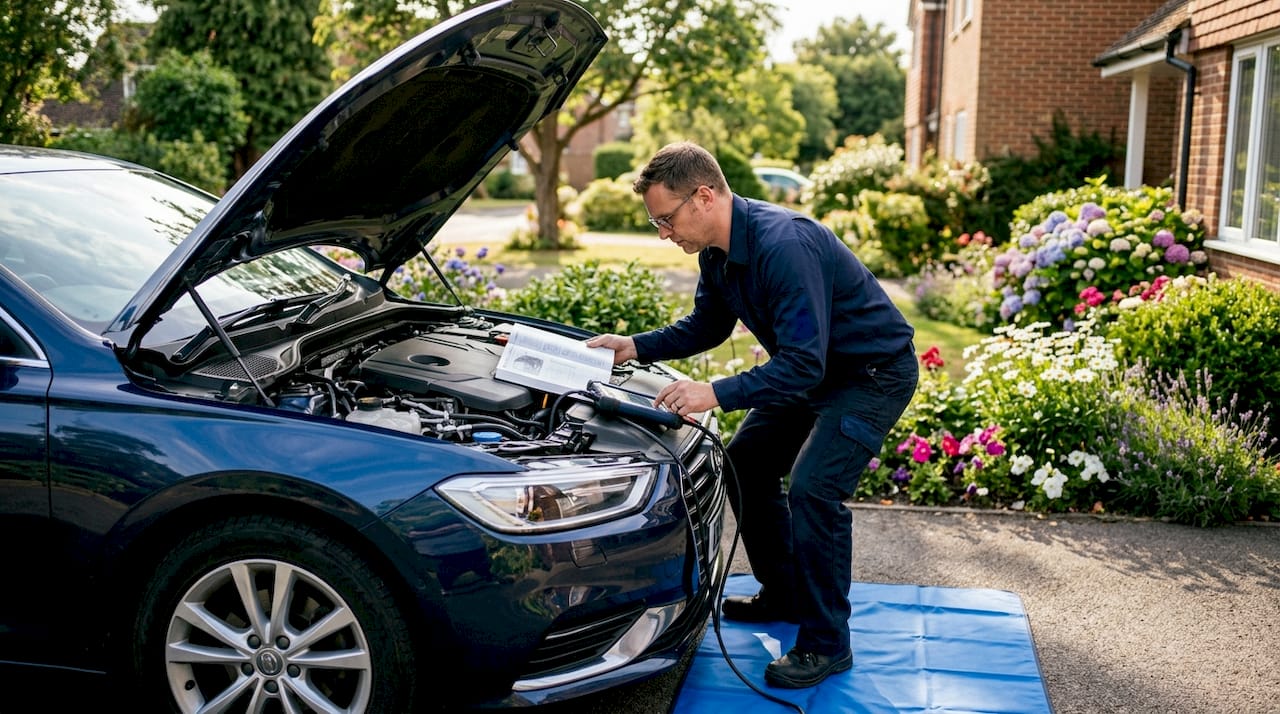
Bidirectional scan tools go further than reading codes. They send commands back to your vehicle’s systems, triggering components to activate or deactivate so a technician can test them without disassembly. When you add a large language model to that capability, the tool becomes a diagnostic partner rather than just a reader.
The MUCAR 892BT is a real-world example of this category. It integrates large language models enabling bidirectional actuator testing and supports over 35 maintenance functions across more than 120 vehicle brands. Functions include oil resets, battery registration, and steering angle calibration.
| Function | What it tests | Why it matters |
|---|---|---|
| Bidirectional actuator control | Activates individual components on command | Confirms part failure without removal |
| Oil life reset | Resets service interval counter | Prevents false maintenance warnings |
| Battery registration | Registers new battery to the ECU | Protects charging system from damage |
| Steering angle calibration | Resets steering sensor after alignment | Restores accurate stability control |
| Live ECU telemetry | Streams real-time sensor data | Catches intermittent faults static codes miss |
Effective diagnostics require direct integration with the vehicle’s ECU to capture live telemetry beyond static fault codes. Relying on app chatbots without that live data connection risks misdiagnosis.
3. Cloud-based remote diagnostics and vehicle health monitoring
Cloud-based diagnostics move vehicle health data off the car and into a connected system that can be accessed, analyzed, and acted on from anywhere. For fleet managers and individual car owners alike, this means knowing about a developing fault before it becomes a breakdown.
Here is what cloud-connected diagnostic systems typically provide:
- Continuous vehicle health monitoring that flags issues as they develop
- AI-generated repair reports sent directly to the car owner or shop
- Remote technician access to review fault history before the car arrives
- Predictive maintenance alerts based on mileage, sensor trends, and historical data
- Customer-facing transparency tools showing exactly what was found and why
AI synthesizes unstructured data from manuals, historic fault patterns, and vehicle-specific records into context-aware repair advice. That is a direct contrast to generic one-size-fits-all diagnostic charts that ignore your car’s actual history.
Cloud-based platforms also speed up the workflow inside a repair shop. When a technician already has your vehicle’s fault history and AI-generated report before you arrive, the diagnostic phase shrinks significantly. That time saving translates directly into lower labor costs for you.
4. Symptom-driven AI diagnostic assistants
Symptom-driven AI assistants let you describe what your car is doing in plain language, and the system builds a diagnostic picture before any physical inspection begins. You might type “grinding noise when braking at low speed” and receive a structured list of likely causes, ranked by probability, with suggested tests.
AI pre-diagnostic questionnaires cut diagnostic times by about 40 minutes per repair order and help shops increase job closing rates. That 40-minute reduction is significant because diagnostic labor is often billed at the same rate as repair labor.
Benefits for car owners using these tools include:
- Faster shop appointments because the technician already knows the likely fault
- Better technician allocation matching the right specialist to the job
- Reduced misdiagnosis risk from more complete symptom data
- Visual inspection reports with photos and AI recommendations
- Higher repair approval rates because customers understand what they are paying for
Symptom-based AI tools improve communication with shops by capturing details like sounds, vibrations, and the conditions under which a problem occurs. A shop that receives that data before your car arrives can prepare the right equipment and the right technician.
Pro Tip: When using a symptom-driven AI assistant, describe the exact conditions: speed, temperature, whether the car is cold or warm, and how long the symptom has been present. Vague inputs produce vague outputs.
5. AI-generated digital vehicle inspection reports
Digital vehicle inspection software with AI recommendations represents one of the most practical advances for car owners who want transparency. Instead of a handwritten list from a technician, you receive a photo-rich report on your phone showing exactly what was inspected, what was found, and what the AI recommends.
AI-driven visual reports and real-time customer communication increase trust and reduce repair delays. When you can see a photo of a worn brake pad next to the AI’s recommendation, approving the repair takes seconds instead of a skeptical phone call.
These reports also create a documented service history tied to your specific vehicle. That history feeds back into the AI’s diagnostic model, making future recommendations more accurate. The more data the system has about your car’s past behavior, the better it predicts what will fail next. New tech in modern vehicles has already demonstrated measurable safety improvements, and AI inspection reports extend that trend into the maintenance side of ownership.
6. Adaptive AI diagnostic decision trees
Adaptive diagnostic decision trees are the most significant shift in how technicians work through a vehicle problem. Traditional diagnostics followed a fixed flowchart. Adaptive AI builds a custom workflow in real time, adjusting the next test step based on what the previous step revealed.
AI builds custom diagnostic workflows that adjust to scan data and test results as they come in. That means a technician does not waste time running tests that the AI has already ruled out based on earlier data.
For car owners, this translates into shorter diagnostic appointments and fewer “we need to run more tests” delays. The AI narrows the field of possible causes faster than a technician working from memory or a static manual. Shops using adaptive decision tree tools report faster turnaround on complex electrical faults, which historically required hours of manual tracing.
7. How tech aids car diagnostics through ECU live telemetry
Live ECU telemetry is the foundation that makes all other diagnostic technologies more accurate. The ECU is your car’s central computer, and it generates a continuous stream of data covering engine temperature, fuel trim, ignition timing, oxygen sensor readings, and dozens of other parameters.
Direct ECU integration for live telemetry is necessary because static fault codes only capture a snapshot of a problem. An intermittent fault that clears itself before you reach the shop will not show up in a stored code, but live telemetry catches it in the act.
AI tools that connect directly to the ECU can flag a sensor reading that is technically within range but trending toward failure. That predictive capability is what separates professional-grade diagnostics from basic code readers. For car owners, it means catching a $150 sensor replacement before it becomes a $1,200 catalytic converter failure.
Key takeaways
Tech-enabled auto diagnostics deliver the most value when AI, live ECU data, and symptom input work together rather than as isolated tools.
| Point | Details |
|---|---|
| AI OBD2 scanners save money | Plain-language fault codes and cost estimates help owners avoid unnecessary shop fees. |
| Bidirectional tools prevent guesswork | Live actuator testing confirms part failure without disassembly, reducing misdiagnosis. |
| Symptom input cuts diagnostic time | AI pre-diagnostic questionnaires reduce shop diagnostic time by about 40 minutes per order. |
| Live ECU telemetry catches hidden faults | Static codes miss intermittent issues; live data streams catch them in real time. |
| Visual AI reports build owner trust | Photo-rich inspection reports increase repair approval rates and reduce delays. |
What I have learned from watching AI diagnostics change real repair outcomes
The most common mistake car owners make with AI diagnostic tools is treating the output as a final verdict. AI is a context-aware assistant, not a licensed mechanic. Top technicians use AI as a starting point and then verify physical components and sensors themselves before approving any repair. That two-step process is what separates a good outcome from an expensive misfire.
What I find genuinely useful about the current generation of tools is the shift toward real-time data integration. A tool that reads stored codes is helpful. A tool that streams live sensor data while the engine runs is a different category entirely. Car owners who understand that distinction make better decisions about which diagnostic service they are actually paying for.
The technology is moving fast, and the gap between entry-level consumer tools and professional-grade systems is narrowing. That is good news for anyone who wants to understand their vehicle before handing it to a shop. The best approach is to use AI diagnostics to arrive at a shop informed, not to skip the shop entirely.
— Aaron
Onsite Los Angeles Mobile Mechanic brings diagnostics to your location
Car owners in Los Angeles do not need to drive to a shop and wait for hours to get a clear answer about what is wrong with their vehicle. Onsite Los Angeles Mobile Mechanic uses digital diagnostic tools to assess your vehicle on-site, whether you are at home, at work, or anywhere in the greater Los Angeles area.
The process is direct: a technician arrives with professional-grade diagnostic equipment, runs a full assessment, and gives you an upfront quote with no hidden fees. Many common repairs, including battery replacements and oil changes, are completed within an hour. For car owners who want fast, honest answers without the tow truck, mobile diagnostic services from Onsite Los Angeles Mobile Mechanic are available by calling 213-583-4159.
FAQ
What are the most common examples of tech-enabled auto diagnostics?
The most common examples include AI-powered OBD2 scanners, bidirectional scan tools with large language model integration, cloud-based vehicle health monitoring, and symptom-driven AI diagnostic assistants. Each tool addresses a different stage of the diagnostic process.
How does AI improve automotive diagnostic accuracy?
AI synthesizes fault codes, live sensor data, and vehicle-specific history into context-aware repair advice, which is more accurate than generic fault code charts. It also builds adaptive diagnostic workflows that adjust based on real-time test results.
Can AI diagnostic tools replace a professional mechanic?
AI diagnostic tools complement mechanical expertise but do not replace it. Technicians must still verify physical components, sensor health, and wiring before approving any repair based on AI output.
How much can AI diagnostics save on repair costs?
AI-enabled OBD2 tools provide repair cost estimates ranging from $100 to $300 for wiring issues and $300 to $800 for module replacements, helping car owners avoid unnecessary diagnostic fees at a shop.
What is a symptom-driven AI diagnostic assistant?
A symptom-driven AI diagnostic assistant lets car owners describe vehicle problems in plain language, then generates a ranked list of likely causes and suggested tests. These tools cut diagnostic time by about 40 minutes per repair order and improve technician allocation at the shop.