If your brakes squeak for the first few stops on a cold morning and then go quiet, it is usually harmless. Moisture overnight forms a thin film of rust on the pads and rotors, and the first few stops scrape it off. If the noise stays after the car warms up, gets louder, or turns into grinding, the cause is something else, and it is worth having the brakes looked at soon.
This guide explains why cold brakes squeal, how to tell a harmless squeak from a warning, what you can safely check yourself, and when to book an inspection.
TL;DR
- A squeak or squeal during the first few stops of a cold or damp morning is common. Thin layers of rust can form on the pads, especially after exposure to moisture.
- Noise that fades within a few minutes of driving is usually not a problem. Noise that persists in all temperatures is a different story.
- Grinding, a brake warning light, steering pull or a pulsing pedal mean you should have the brakes inspected rather than wait.
- Pads are built with a wear indicator that squeals when the lining gets thin, so a squeal that never goes away usually means replacement time.
- We come to your home or workplace anywhere in the greater Los Angeles area, so you can get brakes checked without driving a questionable car to a shop.
Table of Contents
- Why brakes squeak when they are cold
- Harmless squeak or warning? A quick comparison
- When a squeak is the pads asking to be replaced
- What you can check yourself
- Two cold-weather myths worth dropping
- Our perspective: what we see on the driveway
- What a mobile brake inspection involves
- Is it safe to keep driving?
- Keeping cold-start noise to a minimum
- Need the brakes looked at in Los Angeles?
- FAQ
- Sources
Why brakes squeak when they are cold
Brake noise starts with friction. When a pad presses against a spinning rotor, the two surfaces vibrate at a high frequency. Honda’s Acura division explains that this vibration is an unavoidable result of friction, and that manufacturers use shims and grease to dampen it. Even so, humidity, road salt and ambient temperature can cause occasional noise in a healthy system. No brake system is silent in every possible condition.
Cold mornings stack the odds toward noise for a few reasons.
Moisture and a film of rust
Rotors are bare cast iron. Overnight dew, rain or a car wash leaves moisture on them, and a thin layer of surface rust appears within hours. AAA’s Club Alliance notes that this rust on the pads is what causes the squeak the first time you brake. After a few applications the pads wipe the surface clean and the noise disappears.
Cold pad material
Pad compounds behave differently when cold than when warm. Until the brakes build a little heat, the pad may grip and release in tiny jerks, which the rotor amplifies into a squeal. This is the reason noise often fades after a few minutes of normal driving. It is also why the other queries readers type, such as a squeal at low speed with a light touch on the pedal, so often describe the same thing: light pressure at crawling speed is exactly when a cold pad is most likely to vibrate.
Dust, grit and salt
HowStuffWorks points out that dusty or sandy conditions, severe braking and humidity can all change how much noise brakes make. In cold regions, road salt adds to this. In Los Angeles, the more common culprits are fine dust and the damp marine layer that settles on cars parked outside overnight.
Harmless squeak or warning? A quick comparison
The best clue is timing. Ask when the noise happens and when it stops.
| What you notice | Likely cause | What to do |
|---|---|---|
| Squeal on the first 1 to 5 stops, gone after the car warms up | Moisture, surface rust, cold pad material | Usually nothing. Mention it at your next service. |
| Squeal on light pedal pressure at low speed, intermittent | Normal pad vibration, humidity | Monitor. Book an inspection if it becomes constant. |
| High-pitched squeal every time you drive, warm or cold | Wear indicator touching the rotor | Schedule pad replacement soon. |
| Grinding or scraping | Pad material gone, metal on metal | Stop driving if you can and get it inspected promptly. |
| Squeal plus pulsing pedal or shaking | Rotor problem such as warping | Get the rotors checked. |
| Squeal plus brake warning light | System fault | Run through the safety checks, then get help. |
When a squeak is the pads asking to be replaced
Most modern pads include a small metal tab that rubs the rotor when the lining wears thin. HowStuffWorks describes it as a built-in warning that makes a distinct high-pitched squeal so the driver knows the pads are worn down to a critical thickness. Ignore it and the tab gives way to metal-on-metal contact, which damages the rotors.
The difference from a cold-weather squeak is consistency. A cold squeak comes and goes with temperature and moisture. A wear-indicator squeal is present on warm afternoons, on dry days, and often whether or not your foot is on the pedal.
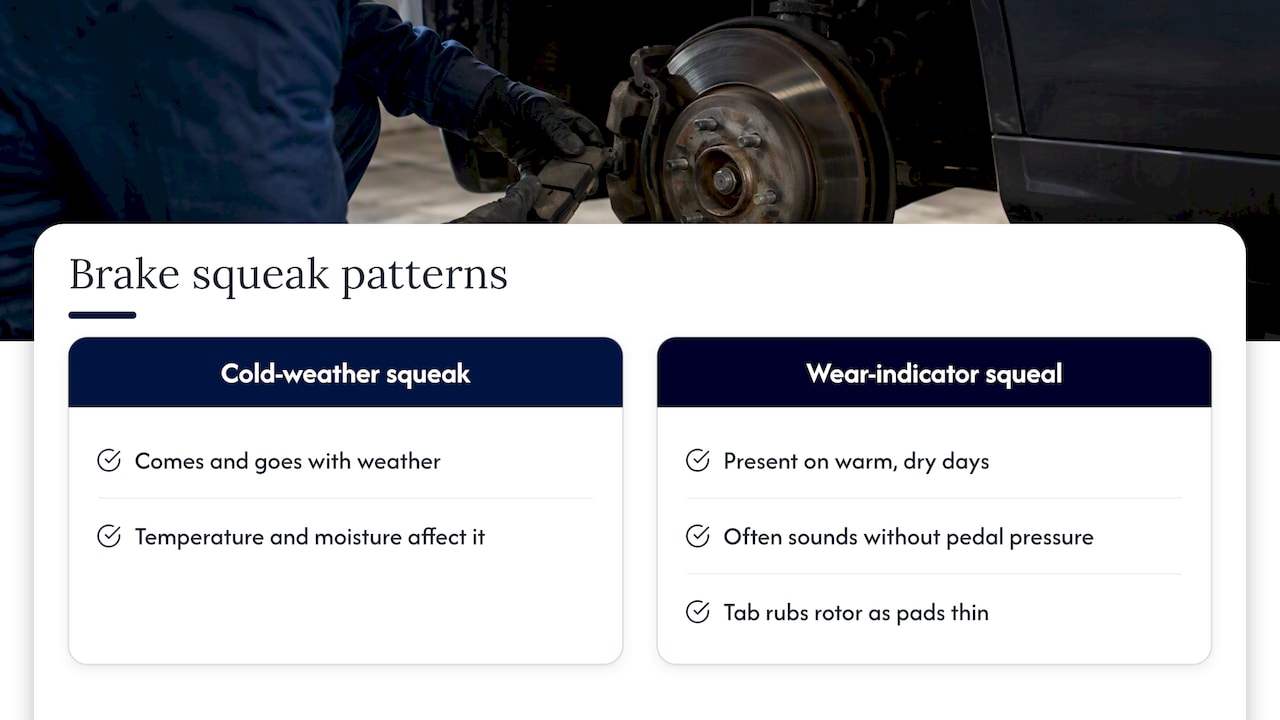
A second cause is glazing. If pads overheat, for example from heavy stop-and-go traffic or long downhill braking, the surface can harden and turn glassy. Glazed pads grip poorly and tend to squeal at any temperature. Neither cause gets better by waiting. Our guide on when to replace brake pads, what it costs and how a mobile repair works walks through the timing.
What you can check yourself
These checks take five minutes and need no tools beyond a flashlight.
- Note the pattern. Does the noise happen only in the first few stops, and only on cold or damp mornings? Write down what you hear and when. That detail helps a mechanic more than any description of the sound itself.
- Look through the wheel spokes. On many cars you can see the pad against the rotor. A thin sliver of friction material is a bad sign. Deep grooves or a rust-colored lip on the rotor edge deserve a closer look.
- Feel the pedal. Pulsing, a soft or sinking pedal, or a car that pulls to one side when braking points beyond a cold squeak. If the shaking is more than a hum, see our article on what causes a car to shake when braking, and on front versus rear warped rotors.
- Check the dashboard. A brake warning light changes the picture entirely. Our page on what to do when the brake light is on lists the checks to run first.
- Look under the car. Wet spots near a wheel or a pedal that sinks suggest a leak. Read the warning signs of a brake line leak and do not drive if you suspect one.
If wheels are caked in dark dust, cleaning them makes the pads and rotors easier to inspect. A guide to removing brake dust from wheels safely covers how long cleaner should sit on the surface. Keep the cleaner off the rotor faces and pads, and let wheels cool before you start.
Two cold-weather myths worth dropping
“Squeaks always mean I need new pads.” Not so. AAA says squealing does not necessarily mean your brakes are beyond repair. What matters is whether the noise changes into scraping or grinding.
“If it goes away, I can forget about it.” Mostly true for cold-start noise, but a sudden change in how your brakes sound deserves attention. AAA’s advice is that a change in noise, grinding, or a dashboard brake light should prompt an inspection by a certified technician, per your owner’s manual’s recommendations.
Our perspective: what we see on the driveway
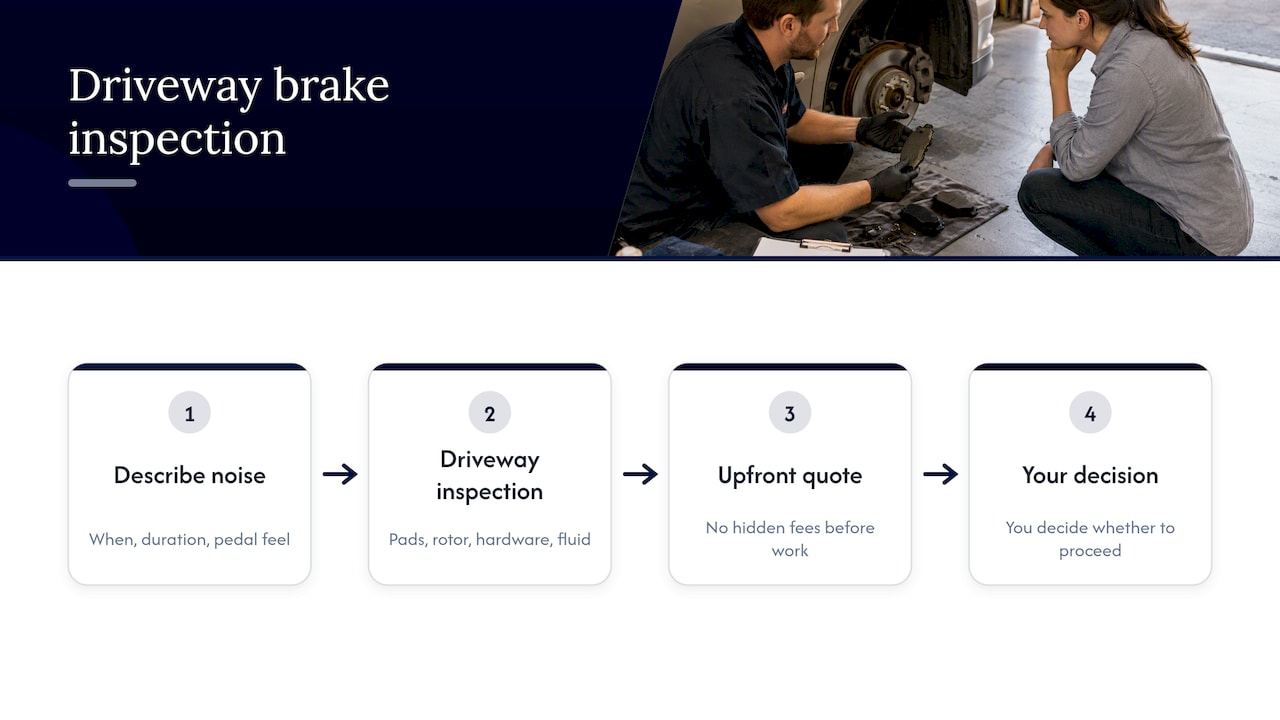
Most people call us about brake noise worried it means a big bill. In our experience, the first thing to establish is whether the sound is a temperature-and-moisture quirk or a mechanical symptom. We start with the story you tell us: when it happens, how long it lasts, whether the pedal feels different. Then we look at the parts.
Because we work at your location, we can inspect the car in the same place it sits overnight, which is often where the problem shows up. Pad thickness, rotor surface, hardware and fluid condition can all be checked in the driveway or the office parking lot. You get an upfront quote before any work starts, with no hidden fees, and you decide.
We also push back on the idea that every noise needs a repair. If your brakes are healthy and the sound is cold-morning rust, we will say so. If the pads are near the end, we would rather you replace them on a schedule that suits you than wait until the rotors are damaged, which turns a simple pad job into a larger one.
Fluid is the other thing owners tend to overlook. AAA notes that moisture can enter brake fluid over time and lower its boiling point, and that neglect can lead to a mushy or unresponsive pedal, a far more serious problem than a morning squeak. If you do not remember your last fluid service, read our guide on DIY versus professional brake fluid flushes in Los Angeles.
What a mobile brake inspection involves
A good inspection answers three questions: how much pad is left, what condition the rotors are in, and whether the hardware and fluid are sound. Here is the usual flow.
- You describe the noise. Timing, temperature, speed, and pedal feel.
- We remove the wheels and inspect. Pad thickness, wear pattern, rotor surface, caliper slide pins and clips.
- We check the fluid and the pedal. Fluid condition and any sign of leaks.
- You get a clear recommendation. If everything is fine, you will hear that. If something needs work, you get the upfront quote first.
- Repairs happen on the spot when the parts and the job allow it, so you do not need a tow or a day without your car.
Hardware matters more than people expect. Loose or worn clips and slide pins can cause noise even when the pads themselves have plenty of life, and they should be replaced when cracked or damaged. A thorough brake job treats them as part of the job, not an afterthought.
Is it safe to keep driving?
It depends on what you hear.
- Squeal in the first few stops that fades: generally fine to keep driving. Keep an eye on it.
- Constant squeal: the pads are likely near the end. Drive gently and book soon.
- Grinding, pulling, pulsing, a warning light or a soft pedal: do not put this off. Metal contact can ruin rotors quickly, and the other symptoms can point to failures that affect your ability to stop.
If you are unsure, a short inspection is cheaper than guessing. The bigger risk is assuming a changing sound is just the weather.
Keeping cold-start noise to a minimum
You cannot make brakes silent in every condition, but you can reduce nuisance noise.
- Drive the car regularly. Rust builds up faster on a car that sits for days.
- Brake gently for the first few stops. Let the pads clean the rotor surface before demanding hard stops.
- Keep hardware fresh. Replace clips and slide hardware when pads are changed.
- Do not ignore fluid. Follow the interval in your owner’s manual.
- Choose quality pads and have them installed properly. Poor fit and shortcuts are a frequent source of persistent noise.
Need the brakes looked at in Los Angeles?
We provide mobile brake repair anywhere in the greater Los Angeles area, seven days a week, with same-day service where possible. Call 213-583-4159 to book, since we do not have an app. Tell us what you hear and when, and we will come to you, inspect the brakes, and give you a clear price before any work begins. If your brake noise is part of a bigger picture, see everything else we handle on our services page.
FAQ
Why do my brakes squeak only when it is cold?
Cold, damp air lets a thin film of rust form on the rotors overnight, and cold pad material can vibrate more easily. The first few stops scrub the rust off, and the noise fades as the brakes warm up. This is common and usually harmless.
Why do my brakes squeal at low speed with light pedal pressure?
Light pressure at crawling speed is when pad vibration is most likely to turn audible. Acura’s own guidance says this kind of squeal is a byproduct of friction and can be intermittent even on healthy brakes. If it becomes constant, have the pads checked.
How long should cold brake squeal last?
A few stops or a few minutes of driving is typical. If it lasts through the whole drive or returns every time, treat it as a symptom rather than a weather quirk and book an inspection.
Is it safe to drive with squeaky brakes?
A brief cold-start squeak is generally safe. A constant squeal usually means pads are getting thin, so schedule service soon. Grinding, steering pull, a pulsing pedal or a brake warning light call for prompt professional attention.
Can I fix squeaky brakes myself?
For cold-morning noise, there is nothing to fix. For a worn-pad squeal, replacement is the fix, and it involves safety-critical parts. If you are not experienced with brakes, have a certified mechanic do it, and we can do it at your location.
Sources
- The Most Common Reasons For Squeaky Brakes, AAA Club Alliance
- Why are my brakes squeaking?, HowStuffWorks
- Why do my brakes make a squealing noise sometimes when I apply them lightly at low speeds?, Acura Brand Knowledge
- How Warmer Weather Affects Your Brakes, AAA Auto Repair
- Stay Safe With Winter Driving Tips From AAA, Your AAA Network