A lit brake warning light means your car’s computer has flagged a possible problem in the brake system, and you should check it before driving normally again. In most cases, it is not an emergency, but it always deserves a look within the next few minutes, not the next few days.
Start here: check whether the parking brake is engaged, check the brake fluid level, and press the pedal to see if it feels firm or soft. If the pedal sinks toward the floor or the light stays on after you release the parking brake, pull over and stop driving. A quick OBD-II/ABS scan can usually pinpoint the cause within minutes, and your owner’s manual will tell you exactly what your dashboard symbol means for your specific vehicle.
- Release the parking brake fully and confirm the light turns off
- Pop the hood and check the brake fluid reservoir against the MIN/MAX lines
- Press the pedal slowly. Firm and high is good, soft or sinking is not
- If none of that resolves it, treat the car as needing inspection before your next trip
Pro Tip: Keep your phone handy and call a mobile mechanic like Onsite Los Angeles Mobile Mechanic before you drive anywhere else if the pedal feels even slightly different than usual. A five minute phone call beats a brake failure on the freeway.
Key Takeaways
A lit brake warning light signals a possible brake system fault that requires checking the parking brake, fluid level, and pedal feel before continuing to drive normally.
| Point | Details |
|---|---|
| Check three things first | Confirm the parking brake is released, check fluid level, and test pedal firmness before driving further. |
| Red means stop now | A steady red brake warning after checks means pull over and arrange inspection or towing. |
| ABS is separate from brakes | ABS runs its own amber light and losing it doesn’t mean losing normal braking function. |
| Many fixes are quick and cheap | Fluid top-ups take 15 to 30 minutes, while pad replacement usually runs 1 to 2 hours. |
| Onsite Los Angeles Mobile Mechanic handles most fixes on location | Fluid top-ups, switch replacements, and many pad jobs can be done at your home or office with upfront pricing. |
Where to verify vehicle-specific guidance
- AutoZone’s breakdown of common brake light causes and checks
- Honda’s owner manual guidance on brake warning light behavior
- RepairPal’s explanation of the startup bulb check
- Your own owner’s manual and dealer remain the final authority for vehicle-specific procedures
Table of Contents
- Quick Brake Light Troubleshooting Checklist
- What Usually Causes the Brake Light To Come On?
- Red vs. Amber: What Your Dashboard Symbol Means
- Can You Keep Driving With the Brake Light On?
- How Mechanics Diagnose a Brake Warning Light
- How To Prevent the Brake Warning Light From Returning
- When a Mobile Mechanic Can Fix It on the Spot
- Get an On-Site Brake Inspection Without the Tow
- Frequently Asked Questions
- Sources
Quick Brake Light Troubleshooting Checklist
Run through these checks in order. Each one narrows down what you’re dealing with before you decide whether to keep driving.
- Release the parking brake completely. Make sure it’s not partially engaged or stuck, especially in cold or wet weather when cables can bind.
- Check the parking brake switch. If the brake fully releases but the light stays on, the switch itself may be stuck or faulty.
- Check brake fluid level. Open the hood and look at the reservoir against the MIN and MAX marks stamped on the side.
- Inspect for visible leaks. Look under the car and around the wheels for wet spots, drips, or a puddle that wasn’t there yesterday.
- Test pedal firmness. Press down with normal pressure. It should feel solid and stop well above the floor.
- Verify your brake lights work. Have someone watch while you press the pedal, or back up to a reflective surface and check the glow.
- If the pedal sinks or feels spongy, stop driving and arrange help
- If there’s a visible leak, don’t drive the vehicle at all
- If everything checks out but the light stays lit, get a diagnostic scan soon
Pro Tip: Most brake fluid reservoirs sit near the firewall on the driver’s side and have a translucent plastic body, so you can often read the fluid level without even opening the cap. Never remove the cap near a hot engine.
What Usually Causes the Brake Light To Come On?
The parking brake being left partially engaged is the single most common trigger, and it’s easy to miss on hills or after a quick stop. Low brake fluid, often from worn pads rather than a leak, runs a close second in frequency. AutoZone lists parking brake engagement, low fluid, ABS faults, and electrical issues as the core culprits, and that lines up with what shows up on a lift every week.
- Parking brake engaged or stuck (High): the most frequent cause, worse in cold or wet weather when cables can stick
- Low brake fluid from pad wear (High): as pads wear thin, caliper pistons extend farther and pull more fluid from the reservoir
- Worn brake pads triggering a wear sensor (Medium): often paired with a squeal or grinding sound
- ABS or wheel speed sensor fault (Medium): corrosion on a sensor ring can send false signals and trip the light
- Master cylinder or hydraulic leak (Medium to High): more serious, usually paired with a soft or sinking pedal
- Brake light switch or wiring fault (Low to Medium): the parking brake works fine, but a bad switch keeps signaling it’s on
- Bulb or instrument cluster fault (Low): rare, but a burned out warning bulb can hide a real issue
A meaningful share of drivers underreact when this light comes on, according to Ferodo’s research on warning light behavior, which is exactly backward given how cheap most fixes are compared to what a delay can cost. Weather plays a bigger role than most drivers assume. Cold mornings and wet conditions make parking brake cables stick more often, and that alone accounts for a good number of light-comes-on-then-goes-off situations. The light should also flash briefly at startup as a bulb check. If it doesn’t, the bulb or its circuit may already be faulty, which can mask a real brake problem down the road.
Red vs. Amber: What Your Dashboard Symbol Means
Color matters more than most drivers realize. A red brake warning symbol, whether it’s the word “BRAKE,” a circle with an exclamation point, or a stylized brake icon, signals an immediate safety concern that needs attention now. Amber or yellow lights typically point to something less urgent, like a service reminder or an ABS-related issue that doesn’t affect your regular braking.
- Red brake light: stop and check parking brake, fluid, and pedal feel immediately
- Amber ABS light: the anti-lock system has a fault, but standard braking usually still works
- Both lights on together: often points to a shared hydraulic or sensor issue and deserves a full scan
- Word “BRAKE” or exclamation in a circle: general brake system warning, check fluid and pedal first
ABS runs on its own separate light in most vehicles, and it doesn’t control your normal brakes, just the anti-lock function during hard stops. Losing ABS is not the same as losing brakes, but ignoring it removes a safety net you’ll want in wet or icy conditions.
Can You Keep Driving With the Brake Light On?
Here’s the simple rule: keep driving only if the pedal feels firm, there’s no fluid leak, the parking brake is fully released, and the light is amber rather than a steady red “BRAKE” warning. Anything short of that, and you’re better off stopping.
- Stop immediately if: the pedal feels spongy or sinks toward the floor
- Stop immediately if: the car pulls hard to one side when braking
- Stop immediately if: you hear grinding, smell something burning, or see fluid on the ground
- Stop immediately if: a red brake light stays on even after checking the parking brake
A short, slow drive to a nearby parking lot or driveway is reasonable if the pedal still feels solid and you’re just trying to get somewhere safe to inspect further, similar to the caution VehicleETC recommends when the light appears mid-drive. Anything involving a spongy pedal, a leak, or grinding metal means you call for a tow or a mobile mechanic instead of gambling on the drive.
Pro Tip: If you’re driving at night when a soft pedal or warning light appears, treat it as more urgent, not less. Reaction time and visibility are already reduced, similar to the added risks drivers face after dark even under normal braking conditions.
How Mechanics Diagnose a Brake Warning Light
Professionals don’t guess. They work through a set sequence designed to rule out the simple stuff before touching anything hydraulic.
- Confirm the parking brake is fully released and the switch isn’t stuck
- Measure brake fluid level and check for contamination or discoloration
- Visually inspect pads, rotors, calipers, and brake lines for wear or damage
- Run a pressure test to check for leaks in hoses, seals, or the master cylinder
- Perform a pedal firmness test under load
- Scan for ABS and wheel speed sensor codes using an OBD-II/ABS diagnostic tool
- Test drive when needed to confirm braking behavior and pulling
That order matters because it rules out cheap fixes before anyone starts pulling apart hydraulic components, a sequence outlined by Wagner Brake’s technical guidance on brake light diagnostics.
| Common Repair | Typical Time | Cost Expectation |
|---|---|---|
| Brake fluid top-up | 15–30 minutes | Low cost |
| Brake pad replacement | 1–2 hours | Moderate cost |
| Leak repair or master cylinder replacement | 1–4 hours | Higher cost |
| ABS sensor or module repair | 1–3 hours | Variable cost |

These are ranges, not quotes. Your actual cost depends on the vehicle, parts availability, and labor rates in your area, so it’s worth reviewing a pricing checklist before you commit to any repair.
How To Prevent the Brake Warning Light From Returning
Check your brake fluid every time you get an oil change, and replace it per your manufacturer’s interval rather than waiting for a warning. Have pads and rotors inspected at least once a year, or every 12,000 to 15,000 miles depending on how you drive. Keep sensor connectors clean and swap worn sensors before they fail completely.
- Follow your owner’s manual for fluid replacement intervals
- Get a brake inspection at every major maintenance visit
- Only top off fluid as a temporary measure if no leak is found
- Keep a simple log of brake checks and repairs to track wear over time
When a Mobile Mechanic Can Fix It on the Spot
A lot of brake light triggers don’t need a shop lift. Fluid top-ups, brake light switch replacements, basic electrical diagnostics, and many pad replacements can be handled right in your driveway or parking lot.
- Brake fluid top-up and leak location
- Brake light and switch replacement
- Pad replacement where space and tools allow
- Basic electrical diagnostics for wiring or sensor issues
- Mobile ABS code reading with the right equipment
Tow the vehicle instead if there’s an active hydraulic leak or total loss of braking. Call a mobile mechanic like Onsite Los Angeles Mobile Mechanic for inspections, fluid issues, and most switch or sensor repairs.
A mechanic’s take on false alarms
Plenty of brake light calls turn out to be a stuck parking brake or a corroded sensor, not a failing system. Still, check every time. Your owner’s manual and a proper diagnostic scan settle it faster than guessing.
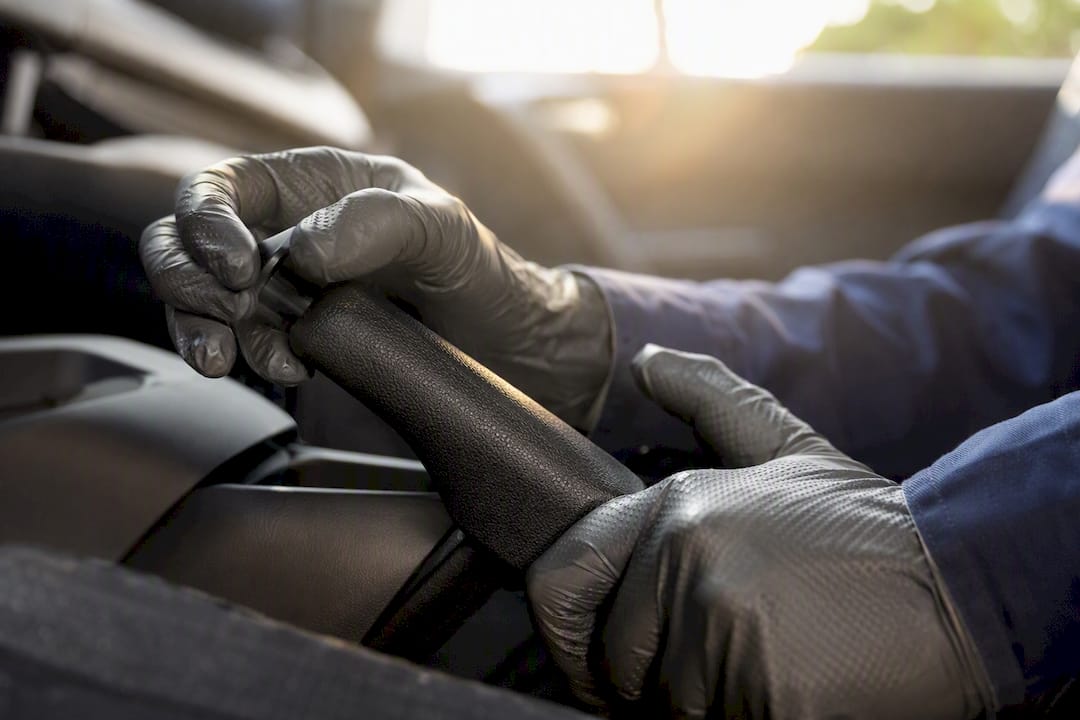
Get an On-Site Brake Inspection Without the Tow
Towing a car to a shop for something that might be a $20 fluid top-up doesn’t make sense, and that’s exactly the gap Onsite Los Angeles Mobile Mechanic fills for drivers across the Los Angeles area. Instead of waiting for a tow truck and a shop appointment, a mechanic comes to your home, office, or wherever the car sits, runs the same fluid checks, pedal tests, and ABS scans a shop would, and quotes the repair upfront before any work starts.
Many brake fixes, from fluid top-ups to pad replacement to switch repairs, get handled right where the car is parked, often within an hour. If the issue turns out to be a hydraulic leak or something requiring a lift, you’ll know that upfront too, with no surprise fees added later. When the light comes on and the pedal still feels firm, call to book a mobile inspection before the problem gets worse or more expensive.
Frequently Asked Questions
Why is my brake light on but my brakes feel fine?
The most common reason is a partially engaged parking brake or a stuck parking brake switch, especially after cold or wet weather. A quick release-and-reset often clears it, but if it returns, check fluid level next.
What does it mean when the ABS and brake light are both on?
This combination often points to a shared hydraulic or sensor fault rather than two unrelated problems. An OBD-II/ABS scan will usually identify whether it’s a wheel speed sensor, wiring issue, or something in the hydraulic system.
Is it safe to drive with the brake warning light on?
It depends on the pedal feel and the color of the light. If the pedal is firm, there’s no leak, and the light is amber, a short cautious drive is usually fine. A red light with a soft or sinking pedal means stop and get help.
How much does it cost to fix a brake warning light issue?
Costs vary widely depending on the cause. A fluid top-up costs very little and takes under 30 minutes, while a leak repair or master cylinder replacement runs higher and takes several hours.
Can a mobile mechanic actually fix brake problems, or do I need a shop?
A mobile mechanic can handle fluid top-ups, switch replacements, many pad jobs, and basic electrical diagnostics right at your location. Active hydraulic leaks or repairs requiring a lift typically still need a shop or a tow.
Sources
- Why Is My Brake Light On? – AutoZone
- Parking Brake/Brake Failure Warning Light (Honda owner manual)
- Brake warning lights explained – Ferodo
- Parking brake warning light – RepairPal