Roadside repair is defined as on-location vehicle service for minor issues, completed at your car’s exact position without towing. The roadside repair vs shop comparison comes down to three factors: problem complexity, cost, and how much time you can afford to lose. A battery jump or flat tire swap costs $50–$120 roadside, while the same fix through a tow and shop visit runs $150–$350. That gap matters. Onsite Los Angeles Mobile Mechanic handles dozens of these calls every week across the greater Los Angeles area, resolving most within an hour at the driver’s location.
1. What types of problems are right for roadside vs shop repair?
The job type is the first filter in any car repair options comparison. Roadside repair handles dead batteries, flat tires with a spare available, lockouts, fuel delivery, and minor fluid top-offs. These are low-complexity tasks that require basic tools and no lift.
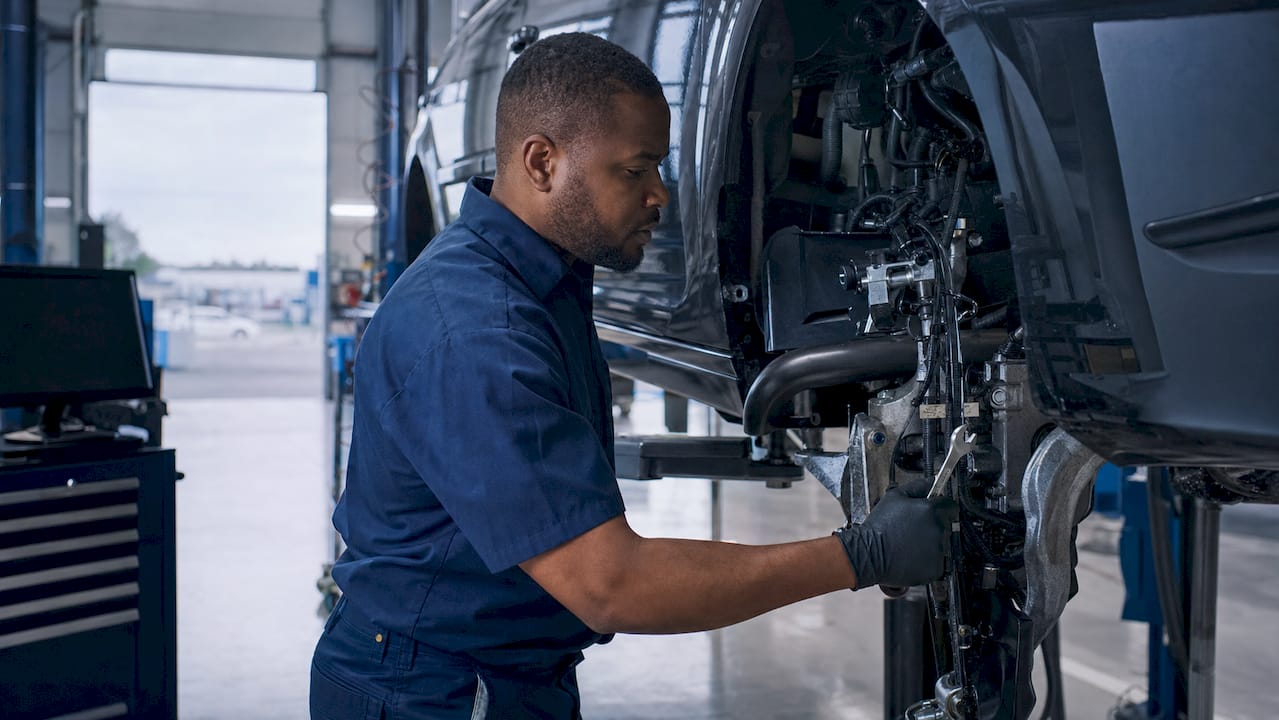
Shop repair becomes necessary when the problem involves the engine internals, transmission, suspension geometry, accident damage, or any fault that requires a diagnostic scan tool connected to a lift. A check engine light from a misfiring cylinder, for example, needs a shop’s OBD-II scanner and a tech who can physically inspect the combustion chamber.
The “two-point rule” offers a practical scoring method. If mobile service leads by two points on convenience, urgency, and cost, choose mobile. If the shop leads by two points on equipment, diagnostic depth, or warranty, go to the shop. This framework removes guesswork from a stressful situation.
Pro Tip: Before calling anyone, describe the symptom out loud as if explaining it to a friend. If you can name the problem clearly, it is likely a roadside fix. If you are describing a feeling or a sound you cannot identify, the shop’s diagnostic equipment is probably what you need.
2. How do costs and repair times compare?
Cost is where the roadside assistance vs garage debate gets concrete. A roadside battery boost costs $50–$80, while towing plus shop repair for the same issue averages $150–$350. That is a savings of $100–$270 on a single incident.
Time follows a similar pattern. Leading mobile providers achieve fix rates of 71%–80% with average technician arrival times between 38 and 45 minutes. A shop visit, by contrast, often involves a tow wait, a drop-off queue, and a same-day or next-day turnaround.
| Service | Roadside repair | Shop repair |
|---|---|---|
| Battery jump or replacement | $50–$80, 45–60 min | $150–$350, 2–4 hrs |
| Flat tire change | $50–$75, 30–45 min | $100–$200, 1–3 hrs |
| Oil change | $60–$100, 45–60 min | $60–$120, 1–2 hrs |
| Engine diagnostic | Not available | $100–$200, 1–2 hrs |
| Transmission repair | Not available | $800–$3,500+, 1–5 days |
Shops carry a hidden cost that rarely appears in the initial quote: logistical friction. Multiple trips for assessment, parts ordering, and pickup inflate the real time and money spent. One-visit mobile fixes eliminate that friction entirely.
3. What are the advantages of roadside repair?
Speed is the clearest advantage. Mobile repair services reach you where you are, which means no tow truck wait, no shuttle ride, and no sitting in a waiting room. For a busy driver in Los Angeles traffic, that difference can mean the gap between making a meeting and missing it entirely.
Cost transparency is the second advantage. Onsite Los Angeles Mobile Mechanic provides upfront quotes before any work begins. You know the price before the wrench turns. Traditional shops sometimes add diagnostic fees, shop supply charges, or labor minimums that inflate the final bill.
Routine maintenance tasks like oil changes and brake pad replacements, which cover 70%–80% of annual vehicle service, are fully manageable for a qualified mobile mechanic. The absence of shop overhead helps keep mobile pricing competitive for these high-frequency jobs.
Pro Tip: Ask any mobile provider upfront whether they carry the specific parts your vehicle needs before they arrive. A good mobile mechanic will confirm parts availability during the initial call, not after showing up.
4. What are the limitations of roadside repair?
Roadside repair cannot perform heavy repairs. Engine rebuilds, transmission overhauls, suspension alignment, and structural body work all require a lift, specialized machinery, and a controlled environment. Attempting these roadside creates safety risks and often produces incomplete results.
Weather and location add another constraint. A mobile mechanic working on a freeway shoulder in rain or extreme heat faces real safety and quality limitations. Shops provide a controlled environment that protects both the technician and the repair quality.
Diagnostic depth is the third limitation. Mobile mechanics carry portable scan tools, but a full diagnostic suite at a shop can read dozens of live data streams simultaneously and cross-reference them with manufacturer service bulletins. For intermittent electrical faults or complex drivability issues, that depth matters.
5. What are the advantages of traditional shop repair?
Shops carry complete tooling. A frame straightener, wheel alignment rack, transmission jack, and factory-level diagnostic software are not portable. For any repair that requires this equipment, the shop is the only viable option.
Warranty coverage is stronger at shops. Many repair facilities offer 12-month or 12,000-mile warranties on parts and labor. Some shops affiliated with manufacturer networks provide even longer coverage. That warranty protection has real value for major repairs.
Multi-technician teams allow shops to tackle complex jobs faster. A transmission replacement that one tech might take two days to complete can move through a shop with a dedicated drivetrain specialist in a single day. Specialization produces better outcomes on difficult jobs.
6. How to decide between roadside and shop repair
Treat the decision as a routing problem. Pre-vetting providers before a breakdown happens saves time and avoids costly mismatches between job complexity and service type.
Use these five questions to guide your choice:
- Can you describe the problem clearly? If yes, it is likely a roadside fix. If not, you need diagnostics.
- Is the vehicle safe to stay with? If you are on a busy road or in an unsafe area, prioritize getting to safety before deciding on repair type.
- Does the fix require a lift or specialized equipment? If yes, the shop is the only option.
- How urgent is the repair? Emergency auto repairs that cannot wait for a shop appointment are strong candidates for mobile service.
- What does your insurance cover? Standard roadside assistance policies typically cover labor time but exclude parts and shop labor costs unless you have purchased an add-on.
When you are unsure, call Onsite Los Angeles Mobile Mechanic for a quick phone assessment. Describing the symptom to a qualified tech takes two minutes and can save you from paying twice for the wrong service.
7. Real-world scenarios and common pitfalls
A dead battery is the most common roadside call. A mobile mechanic arrives, tests the battery and alternator, and replaces the battery on-site. Total time: under an hour. Total cost: $80–$120. The same situation routed through a tow and shop visit costs $200–$350 and takes half a day.
The risk comes when the battery is only a symptom. If the alternator is failing, a roadside battery swap solves nothing. Misrouted repairs occur when mobile service is attempted for a job that actually requires shop equipment. The driver pays for the mobile visit, then pays again for the tow and shop repair. Proper upfront diagnosis prevents this.
Service quality in mobile repair depends on technician qualifications and parts quality, not on the location of the repair. A certified mobile technician using OEM-equivalent parts delivers results that match shop standards for the jobs within mobile service scope.
Insurance misunderstandings create a separate category of surprise costs. Many drivers assume their roadside assistance plan covers everything. Standard policies cover the mechanic’s time at the scene but exclude parts and shop labor unless a specific add-on is purchased. Reading your policy before a breakdown is the only way to avoid an unexpected bill.
Shops also carry hidden logistical costs that drivers underestimate. Drop-off, assessment, parts ordering, and pickup can stretch a one-day repair into three days of coordination. Mobile service collapses that into a single visit.
Key takeaways
The most effective approach to the roadside repair vs shop comparison is matching the job complexity to the service type before booking, not after.
| Point | Details |
|---|---|
| Cost savings are real | Roadside fixes cost $50–$120 vs. $150–$350 for tow plus shop on the same minor job. |
| Fix rates are high for mobile | Qualified mobile providers resolve 71%–80% of calls on-site within 45–60 minutes. |
| Shop repair wins on complexity | Engine, transmission, and alignment work require equipment that only a shop can provide. |
| Misrouted repairs cost double | Booking the wrong service type leads to paying for both mobile and shop visits. |
| Insurance gaps are common | Standard roadside policies exclude parts and shop labor without a purchased add-on. |
What I have learned from watching drivers choose wrong
The most expensive mistake I see is not choosing the wrong repair type. It is choosing without asking. Drivers call a tow truck out of habit when a mobile mechanic could have fixed the problem in the parking lot. Or they call a mobile service for a transmission noise that clearly needs a lift and a specialist.
The certified mobile technician question matters more than most drivers realize. A mobile mechanic with proper credentials and OEM-equivalent parts delivers the same result as a shop for the jobs within mobile scope. The location of the repair does not determine the quality. The technician does.
What has changed in 2026 is the diagnostic capability mobile techs carry. Portable scan tools now read live data streams that would have required a shop bay five years ago. That shift has expanded the range of problems mobile service can resolve confidently. The gap between roadside and shop capability is narrower than most drivers assume.
My honest recommendation: pre-vet your providers before you need them. Know who you would call for a battery, and know which shop you trust for major work. That two-minute decision made in advance saves hours of stress when something actually breaks.
— Aaron
Onsite Los Angeles Mobile Mechanic: repair that comes to you
Car owners across Los Angeles who want fast, transparent service without a tow truck call Onsite Los Angeles Mobile Mechanic at 213-583-4159.
The service covers oil changes, battery replacements, brake jobs, and a full range of mobile mechanic services completed at your home, office, or wherever your car sits. Upfront quotes mean no surprise charges. Most common repairs finish within an hour. For drivers who need to understand how onsite car repair works before booking, the process is straightforward: call, describe the problem, get a quote, and schedule. No app required.
FAQ
What is the main difference between roadside repair and shop repair?
Roadside repair handles minor, on-location fixes like battery jumps and flat tires, while shop repair covers complex jobs requiring lifts, alignment racks, and advanced diagnostic equipment. The job type determines which service is appropriate.
Is roadside repair cheaper than going to a shop?
A roadside battery boost costs $50–$80 compared to $150–$350 for towing and shop repair for the same issue. For minor fixes, roadside service saves $100–$270 per incident.
Can a mobile mechanic fix my car as well as a shop?
Service quality depends on technician qualifications and parts quality, not location. A certified mobile mechanic using OEM-equivalent parts matches shop standards for jobs within mobile service scope.
Does roadside assistance insurance cover parts and labor?
Standard roadside assistance policies cover the mechanic’s labor time at the scene but typically exclude parts and shop labor costs. Drivers need a specific add-on to cover those expenses.
When should I always choose a shop over roadside repair?
Choose a shop for engine rebuilds, transmission repairs, wheel alignment, accident damage, and any fault requiring a vehicle lift or factory-level diagnostic software. These jobs cannot be completed safely or correctly at roadside.