Comparing auto repair estimates fairly means analyzing itemized breakdowns for parts, labor, diagnostics, and warranty coverage rather than simply choosing the lowest total. Studies from 2026 show a 47.3% price variance on identical repairs across cities, with some markets exceeding 180%. That gap exists not because one shop is dishonest and another is not, but because estimates differ in scope, parts quality, and labor standards. Car owners who know what to look for protect themselves from unnecessary costs and poor repairs.
How to compare auto repair estimates fairly: what to examine first
The industry term for this process is “estimate analysis,” and it goes well beyond comparing two bottom-line numbers. Itemized estimates showing parts costs, labor by task, fees, and taxes are the baseline requirement for any fair comparison. A shop that hands you a single-line total is not giving you enough information to evaluate the work.
Every solid estimate breaks down into four categories:
- Labor hours and rate. US labor rates in 2026 range from $80–$130/hr for independent shops, $90–$140/hr for chains, and $120–$180/hr at dealerships. Dealership repairs often run 40–60% higher in total cost. Knowing the hourly rate lets you calculate whether the quoted hours make sense.
- Parts classification. OEM (original equipment manufacturer), aftermarket, and remanufactured parts carry different price points, quality levels, and warranty terms. Ask for part numbers so you can verify what you are actually getting.
- Diagnostic fees. Fees in the $80–$180 range reflect real value from scan tools, road tests, and physical inspections. A reputable shop credits this fee toward the repair if you approve the work.
- Taxes, shop fees, and disposal charges. These add up. An estimate that omits them will look cheaper than it actually is.
Vague line items are a warning sign. Phrases like “repair as needed” or “miscellaneous materials” hide incomplete scopes. Ask for a written explanation of every charge before you approve anything.
Pro Tip: Request the estimate in writing and ask the shop to specify whether parts are OEM, aftermarket, or remanufactured. That single question reveals more about a shop’s standards than almost any other.
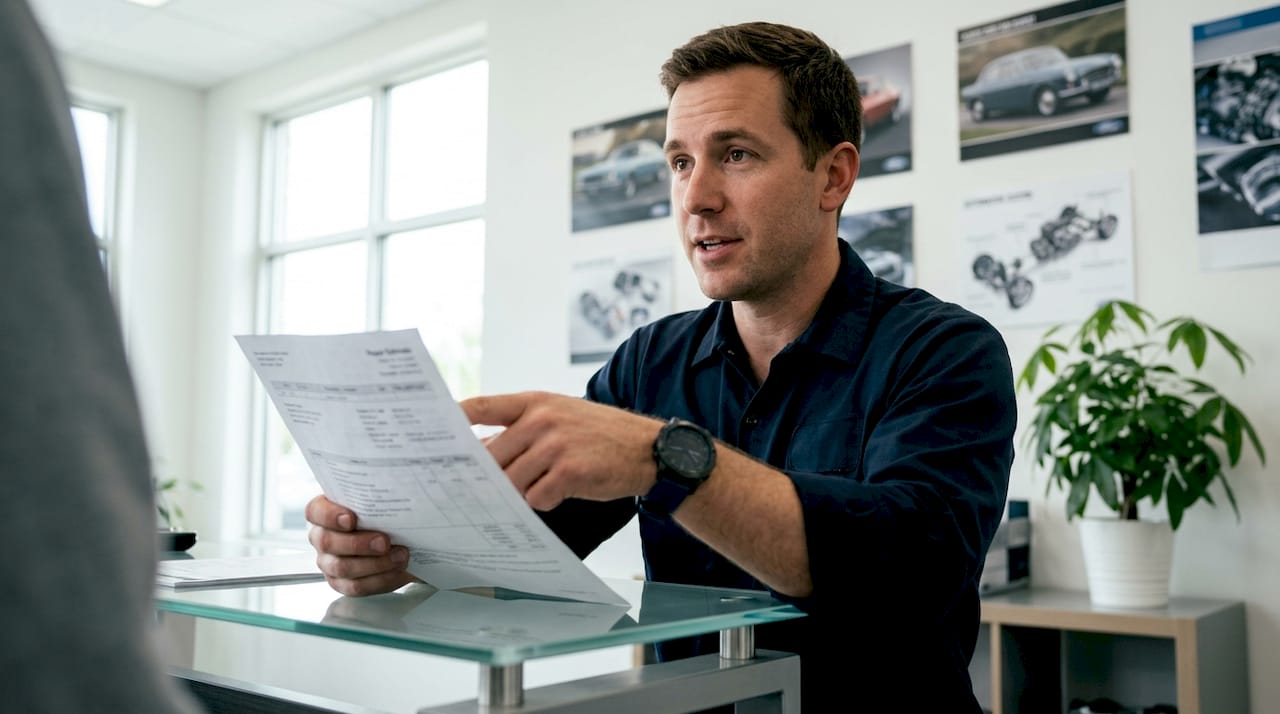
How do you collect and organize multiple repair quotes?
Getting multiple estimates and requesting detailed breakdowns side by side improves your confidence and protects your budget. The process works best when you treat it like a structured review rather than a casual price check.
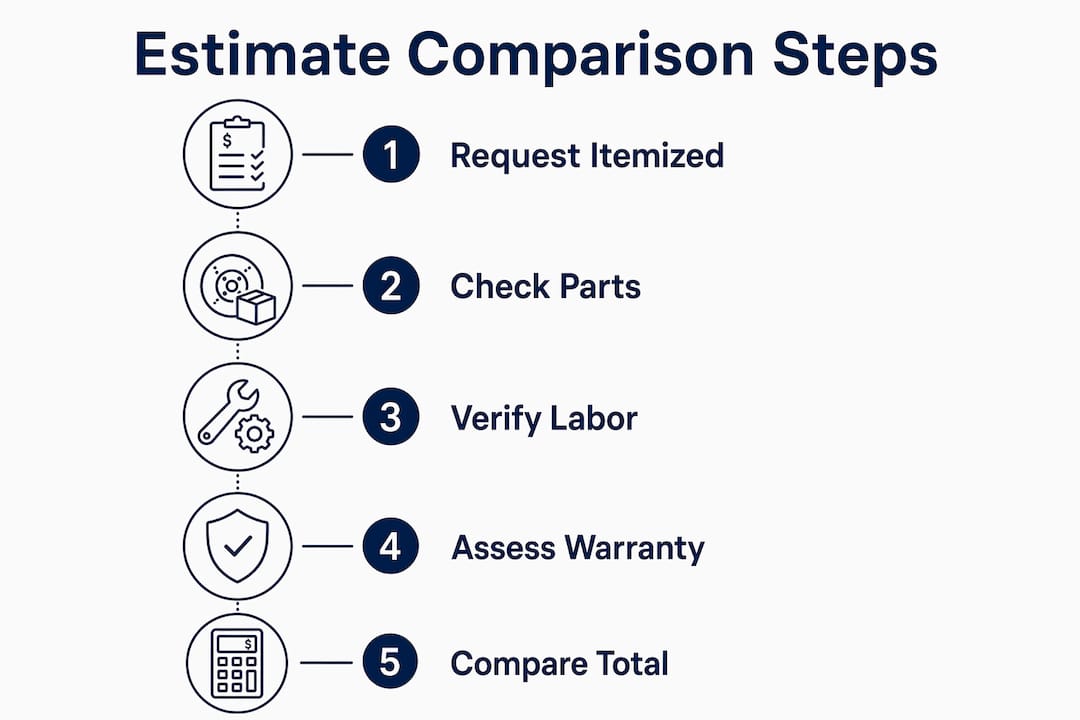
Follow these steps to organize your auto repair cost comparison effectively:
- Request written, itemized estimates from at least three shops. Verbal quotes are not comparable. Written estimates create a paper trail and force shops to commit to specific numbers.
- Confirm the scope is identical across all estimates. If one shop quotes a brake job that includes rotor resurfacing and another quotes replacement, you are not comparing the same repair. Align the scope before you compare prices.
- Record labor hours for each task. Labor hours quoted should align with published flat-rate manuals. If one shop quotes two hours for a job that flat-rate standards set at four, something is being skipped.
- Note parts type and warranty for each line item. OEM parts typically carry a 12-month or 12,000-mile warranty. Aftermarket warranties vary widely.
- Build a side-by-side comparison table. Use the format below to normalize your data.
| Category | Shop A | Shop B | Shop C |
|---|---|---|---|
| Labor rate (per hour) | $95 | $110 | $145 |
| Labor hours quoted | 2.5 | 4.0 | 4.0 |
| Parts type | Aftermarket | OEM | OEM |
| Parts warranty | 90 days | 12 months | 24 months |
| Diagnostic fee credited | No | Yes | Yes |
| Total estimate | $380 | $620 | $710 |
Shop A looks cheapest until you notice it quotes 1.5 fewer labor hours and uses aftermarket parts with a 90-day warranty. That table tells a completely different story than the totals alone.
What red flags should you watch for between estimates?
Differences between estimates most often come from varying parts quality, labor scope, and warranty coverage rather than price manipulation. Understanding that distinction helps you evaluate quotes without assuming bad intent.
Watch for these specific red flags when analyzing car repair quotes:
- Labor hours well below flat-rate standards. Hours significantly below published manuals often indicate omitted safety procedures or shortcuts that compromise repair quality.
- No diagnostic evidence. A quality estimate documents the reasoning behind repairs with photos or videos. If a shop cannot show you what they found, you cannot verify the repair is necessary.
- Missing warranty terms. An estimate without explicit warranty language is a liability for you, not the shop.
- Vague or bundled line items. “Labor” as a single charge with no task breakdown makes it impossible to verify hours or scope.
- Pressure to approve immediately. Legitimate shops give you time to review. Urgency tactics often accompany inflated estimates.
A lower total price can conceal missing diagnostics, inferior parts, or omitted labor steps. The long-term cost of a cheap repair that fails is always higher than the upfront cost of a thorough one.
Pro Tip: Ask every shop for photos or a video of the problem area before approving work. Shops that use visual diagnostic evidence are demonstrating transparency, not just selling you on a repair.
Understanding how parts pricing works in auto repair also helps you catch inflated markups before you sign anything.
How do you choose the best repair estimate for your needs?
Car owners often mistake the lowest estimate as the best deal. Value comes from complete diagnostics, quality parts, and strong warranty coverage, not the smallest number on the page.
Use these criteria when making your final decision:
- Prioritize warranty coverage. A higher-priced estimate with superior warranty terms can be more economical over time than a cheaper one with no coverage. A 24-month warranty on brake pads costs less in the long run than replacing 90-day parts twice.
- Verify parts quality against your vehicle’s needs. OEM parts are the right choice for newer vehicles still under manufacturer warranty. Quality aftermarket parts from reputable brands are acceptable for older vehicles.
- Ask for clarification in writing. If a line item is unclear, email the shop and request a written explanation. This protects you and signals to the shop that you are paying attention.
- Keep all estimates and receipts. Records support warranty claims, insurance disputes, and resale documentation. A fair market car repair price guide can help you verify whether the final number is reasonable for your area.
- Seek a second opinion for large repairs. Any estimate above $500 for a single repair warrants a second look. Shops that discourage second opinions are telling you something important.
Clear communication with the shop matters as much as the estimate itself. A mechanic who explains the repair in plain language, answers your questions directly, and provides written documentation is demonstrating the kind of transparency that protects you long after the repair is done. For context on how dealer vs. mobile mechanic costs compare in 2026, the pricing gap between service channels is often larger than most car owners expect.
Key Takeaways
Comparing repair estimates fairly requires evaluating labor hours, parts quality, warranty terms, and diagnostic evidence, not just the final price.
| Point | Details |
|---|---|
| Itemized estimates are non-negotiable | Always request written breakdowns covering labor, parts, fees, and taxes before comparing shops. |
| Labor hours reveal scope | Cross-check quoted hours against flat-rate manuals to catch omitted steps or safety shortcuts. |
| Parts type changes the math | OEM vs. aftermarket vs. remanufactured parts affect both upfront cost and long-term reliability. |
| Warranty terms determine real value | A higher estimate with a 24-month warranty often costs less over time than a cheaper quote with 90-day coverage. |
| Red flags are in the language | Vague terms like “repair as needed” signal incomplete scopes and should always be questioned in writing. |
What I’ve learned from watching car owners get burned by estimates
The most common mistake I see is treating a repair estimate like a restaurant menu. Car owners scan to the bottom, find the total, and pick the cheapest option. That approach works fine for a burger. It fails badly for a transmission.
The shops that produce the lowest estimates are not always cutting corners intentionally. Sometimes they are quoting a narrower scope, using lower-grade parts, or skipping diagnostic steps that a more thorough shop includes automatically. The problem is that you cannot tell the difference from the total alone. You need the line items.
The other pattern I see constantly is car owners who skip the second opinion because they feel awkward asking. There is nothing awkward about it. Any shop worth your business expects you to do your research. The ones that push back on second opinions are the ones you should avoid.
Transparency is not a bonus feature in auto repair. It is the baseline standard. If a shop cannot explain every charge in plain language and back it up with evidence, that is your answer.
— Aaron
Onsite Los Angeles Mobile Mechanic: transparent estimates, no surprises
Onsite Los Angeles Mobile Mechanic brings the repair directly to your location anywhere in the greater Los Angeles area, which changes the estimate conversation entirely.
Every quote from Onsite Los Angeles Mobile Mechanic is itemized upfront, covering labor, parts, and fees with no hidden charges added after approval. You see exactly what you are paying for before any work begins. Many common services, including oil changes and battery replacements, are completed within an hour at your home, office, or wherever your vehicle is parked. For car owners who want to skip the shop entirely and still get a transparent repair estimate, calling 213-583-4159 connects you directly with a mobile mechanic who can walk you through the scope and pricing before you commit to anything. You can also review the full list of available mobile mechanic services to see what fits your situation.
FAQ
What does a fair auto repair estimate include?
A fair estimate lists labor hours and rate, parts type and part numbers, diagnostic fees, taxes, and any shop fees as separate line items. Vague bundled charges or single-line totals are not sufficient for a fair comparison.
How many estimates should I get before approving a repair?
Get at least three written, itemized estimates for any repair above $200. For major repairs above $500, a second opinion from a different shop type, such as an independent versus a dealership, adds useful context.
Why do repair estimates vary so much between shops?
Price variance of 47.3% on identical repairs is documented across US cities in 2026. The differences come from labor rates, parts quality, diagnostic thoroughness, and warranty terms rather than price manipulation alone.
Should I always choose the lowest repair estimate?
The lowest estimate often reflects a narrower scope, inferior parts, or missing warranty coverage. Lower total prices can conceal omitted labor steps or cheap parts that increase long-term costs.
What is a flat-rate manual and why does it matter?
A flat-rate manual is an industry-standard reference that sets the expected labor hours for specific repairs. Quotes significantly below those benchmarks often indicate skipped steps, which can affect safety and repair quality.