Many urgent vehicle repairs are defined as fixes a trained mechanic can complete in 60 minutes or less, without towing, without a shop visit, and without a full day of downtime. Battery replacements, brake pad swaps, starter motor repairs, and alternator fixes all fall into this category. For car owners dealing with a sudden breakdown in Los Angeles traffic, knowing which repairs qualify as one-hour fixes changes everything. Onsite Los Angeles Mobile Mechanic completes many of these services on-site, at your location, with upfront pricing and no hidden fees.
What repairs are done in one hour?
The most common vehicle repairs completed within 60 minutes share two traits: they involve a single, accessible component, and the replacement part is small enough to carry on a service truck. When both conditions are met, a skilled technician can diagnose, replace, and test the fix without leaving your parking lot.
Here are the repairs that consistently fall within the one-hour window:
- Battery replacement: A dead or failing battery is the single most common roadside fix. Swapping a battery takes 15–30 minutes for most vehicles. The job involves disconnecting terminals, removing the hold-down bracket, and installing the new unit.
- Alternator repair or replacement: A failing alternator causes warning lights, dimming headlights, and eventual stalling. Alternator replacement typically runs 45–60 minutes on most passenger vehicles when the part is on hand.
- Brake pad replacement (single axle): Front or rear brake pads on a standard sedan take 30–45 minutes per axle. The caliper comes off, the old pads slide out, and the new ones go in. No machining required when rotors are still within spec.
- Starter motor replacement: A car that clicks but won’t crank usually has a bad starter. Accessing and swapping the starter takes 30–60 minutes depending on engine layout.
- Tire rotation or spare tire installation: Rotating four tires takes under 30 minutes with a lift. Mounting a spare and torquing the lug nuts to spec takes about 15 minutes.
- Fuse replacement and electrical resets: A blown fuse causing a dead window, radio, or interior light takes 10–20 minutes to locate and replace using the vehicle’s fuse diagram.
- Oil change and filter replacement: A standard oil change with a new filter runs 20–30 minutes. Mobile oil change service eliminates the wait at a shop entirely.
- Air filter replacement: Swapping a clogged engine air filter takes under 10 minutes. A dirty filter reduces fuel efficiency and engine response noticeably.
- Minor sensor replacements: An oxygen sensor or mass airflow sensor swap takes 20–45 minutes. Clearing the associated fault code with a scan tool adds another 5 minutes.
- Fluid top-offs: Coolant, power steering fluid, and brake fluid checks and refills take under 15 minutes and prevent larger failures down the road.
Pro Tip: Keep your vehicle’s year, make, model, and VIN ready when you call for service. A technician who knows the exact vehicle can pre-load the correct parts before arriving, cutting total repair time by 15–20 minutes.
What factors affect whether a repair can finish in one hour?
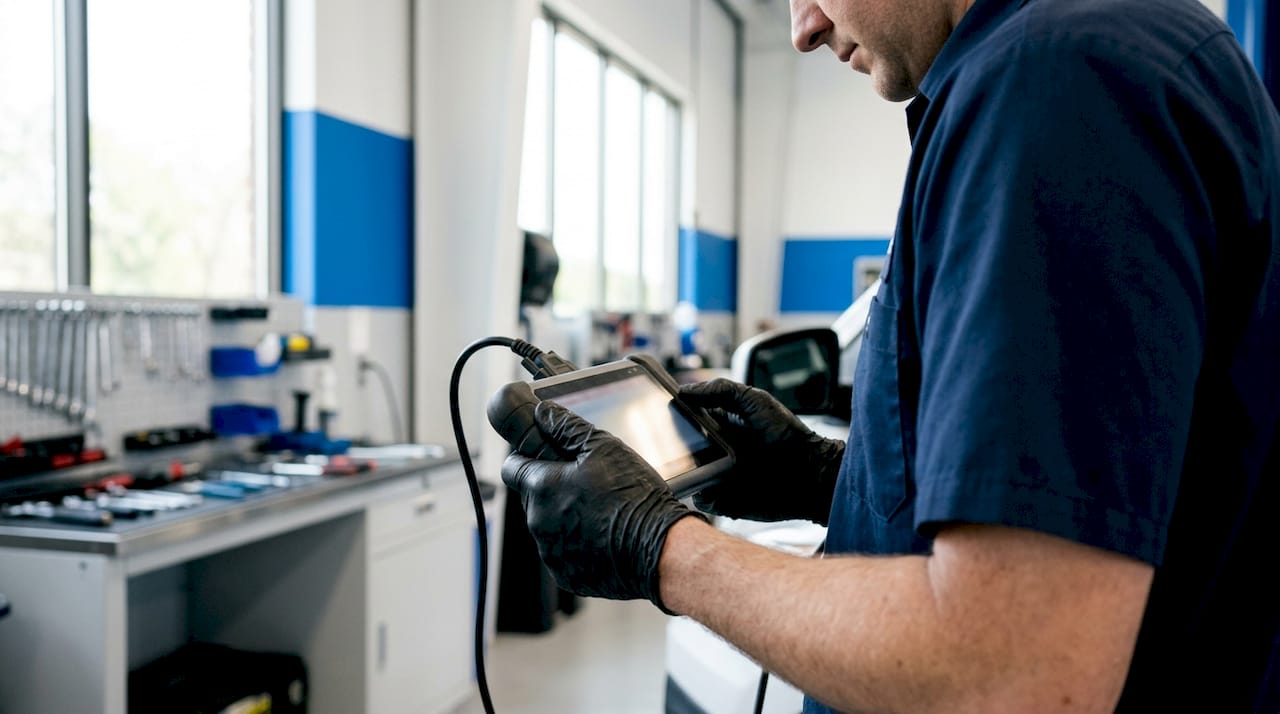
Accurate diagnosis is the single biggest factor in whether a repair finishes on time. Correct initial diagnosis prevents replacing functional parts and wasting the first 20 minutes of a service call. A technician who spends two focused minutes observing symptoms before touching a tool will almost always finish faster than one who starts replacing parts immediately.
| Factor | Impact on repair time |
|---|---|
| Diagnostic accuracy | Misdiagnosis adds 30–60 minutes of rework |
| Parts availability | Missing parts cause same-day delays or multi-day waits |
| Vehicle age and condition | Corroded bolts and worn hardware add 15–30 minutes |
| Repair complexity | Multi-component failures extend time beyond one hour |
| Post-repair testing | Two-minute system test confirms fix durability |
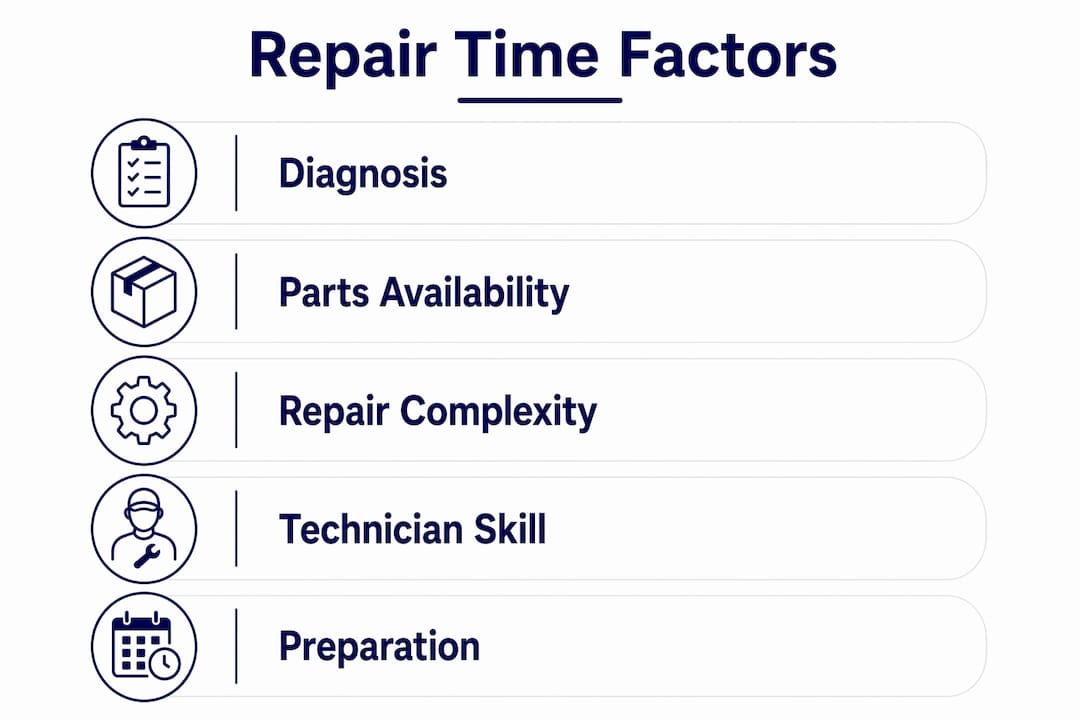
Parts availability is the second major variable. Mobile mechanics with stocked trucks carry common replacement parts and can resolve the majority of standard service calls on the first visit within one hour. A technician who has to order a part and return the next day has already failed the one-hour standard, regardless of how fast the actual installation goes.
Vehicle age matters more than most car owners expect. A battery replacement on a 2022 sedan takes 20 minutes. The same job on a 2005 truck with a corroded battery tray and seized hold-down bolts can take 50 minutes. Rust, stripped fasteners, and brittle wiring all add time that no technician can fully predict in advance.
Fast repairs are not about rushing. Spending the first few minutes on correct diagnosis reduces overall repair time more than any other single action a technician can take.
How can car owners prepare to get repairs done faster?
Clear symptom descriptions cut diagnostic time in half. When you call to book a repair, describe exactly what the vehicle does and does not do. “The car clicks once when I turn the key but won’t start” tells a technician far more than “it won’t start.” That level of detail lets the mechanic arrive with the right part already loaded.
- Describe symptoms precisely. Note when the problem started, what sounds or warning lights appear, and whether the issue is constant or intermittent.
- Know your vehicle details. Year, make, model, trim level, and engine size determine which parts fit. Have this ready before you call.
- Clear the work area. If the mechanic is coming to your home or office, make sure the vehicle is accessible from all sides and not blocked in.
- Avoid DIY attempts on complex systems. Attempting to fix a starter or alternator without the right tools often strips bolts or damages wiring, adding repair time and cost.
- Book same-day service when symptoms first appear. A same-day repair appointment prevents a minor issue from becoming a roadside breakdown.
- Ask about parts availability when booking. A mobile mechanic who confirms the part is on the truck before arriving eliminates the most common cause of repair delays.
Onsite Los Angeles Mobile Mechanic operates with a mobile warehouse approach. The service truck carries the most common replacement parts for Los Angeles area vehicles, which means the technician arrives ready to fix, not just diagnose. That preparation is what makes one-hour vehicle repairs a realistic outcome rather than a marketing claim.
Pro Tip: After any repair, ask the technician to run the vehicle for at least two minutes before leaving. Post-repair testing confirms the fix held under real operating conditions and prevents a repeat call for the same issue.
Which repairs take longer than one hour?
Some repairs cannot be rushed without creating safety risks or causing additional damage. Knowing which jobs fall outside the one-hour window helps you set realistic expectations and plan your day accordingly.
- Engine or transmission replacement: These jobs require draining fluids, disconnecting dozens of components, and precise reassembly. Most take 6–12 hours minimum.
- Head gasket replacement: A blown head gasket requires removing the cylinder head, resurfacing mating surfaces, and careful torque sequencing. Expect a full day or more.
- AC compressor replacement: Replacing a compressor requires evacuating and recharging the refrigerant system, which alone takes 45–60 minutes. Total job time runs 3–5 hours.
- Timing belt or chain replacement: Accessing the timing system requires removing multiple covers and components. This is a 3–6 hour job on most engines.
- Complex electrical diagnostics: When a fault code points to a system rather than a single sensor, tracing the actual failure through wiring harnesses can take multiple visits.
- Parts ordering delays: Any repair requiring a non-stock part automatically extends beyond one hour. This is the strongest argument for choosing a mobile mechanic who carries inventory.
The repair-versus-replacement decision also affects timeline. A vehicle with a failed transmission and 180,000 miles may not justify a multi-day repair. A mobile mechanic who gives you an honest assessment of that tradeoff saves you time and money, even if the answer is not what you hoped to hear.
Key Takeaways
Mobile mechanics with stocked trucks and accurate diagnostics complete the majority of common vehicle repairs within one hour, eliminating towing delays and shop wait times entirely.
| Point | Details |
|---|---|
| One-hour repairs are well-defined | Battery, brake pad, alternator, starter, and sensor swaps consistently finish within 60 minutes. |
| Diagnosis drives speed | Spending two minutes on accurate diagnosis prevents rework and cuts total repair time. |
| Parts availability is critical | A stocked mobile truck resolves most service calls on the first visit without ordering delays. |
| Car owner preparation helps | Precise symptom descriptions and cleared work areas reduce on-site diagnostic time significantly. |
| Some repairs always exceed one hour | Engine, transmission, and compressor jobs require hours, not minutes, regardless of technician skill. |
What I’ve learned from watching quick repairs go wrong
The biggest mistake car owners make is confusing speed with efficiency. A repair that takes 25 minutes because the technician skipped the diagnostic step is not a fast repair. It’s a repair that will probably fail again within a week. I’ve seen this pattern repeatedly: a battery gets swapped in 20 minutes, the car starts, the customer is happy, and then the alternator that was killing the battery all along destroys the new battery within two weeks. The fix was fast. The diagnosis was wrong.
The mobile mechanic model changes this dynamic when it’s done right. A technician who arrives with a scan tool, a multimeter, and a truck full of common parts can diagnose accurately and fix immediately in the same visit. That combination is what makes the one-hour standard achievable. It’s not about working faster. It’s about arriving prepared.
Car owners also underestimate how much their own preparation affects repair time. A vehicle parked in a tight garage with no room to open the hood adds 10 minutes before the technician even starts. A car owner who can’t describe the symptom beyond “it’s making a noise” adds another 15 minutes of diagnostic guesswork. The one-hour window is a partnership between a prepared technician and an informed car owner.
Onsite Los Angeles Mobile Mechanic operates with that partnership in mind. The upfront pricing model means no surprises, and the mobile warehouse approach means the technician arrives ready to resolve the issue, not just assess it.
— Aaron
Onsite Los Angeles Mobile Mechanic: fast repairs at your location
Car trouble doesn’t wait for a convenient time. Onsite Los Angeles Mobile Mechanic brings professional repair service directly to your home, office, or parking lot across the greater Los Angeles area.
The service truck carries the most common replacement parts for local vehicles, which means most repairs finish on the first visit without ordering delays. You get an upfront quote before any work begins, and you pay only for what the repair actually requires. Browse the full list of available repair services to see what can be handled at your location today. To book a same-day appointment, call 213-583-4159 and describe your symptoms. A technician will confirm parts availability and give you an arrival window.
FAQ
What vehicle repairs are typically done in under one hour?
Battery replacements, brake pad swaps, alternator replacements, starter motor repairs, oil changes, air filter replacements, and minor sensor swaps all regularly finish within 60 minutes when the correct part is available on-site.
Does a mobile mechanic really finish repairs in one hour?
Mobile mechanics with stocked service trucks resolve the majority of standard service calls on the first visit within one hour, avoiding the parts-ordering delays that extend shop repair times.
What is the most important factor in a fast vehicle repair?
Accurate diagnosis is the single most important factor. Correct diagnosis before any part is touched prevents rework and keeps total repair time within the one-hour window.
How do I prepare my car for a one-hour mobile repair?
Describe your symptoms precisely when booking, know your vehicle’s year, make, and model, and make sure the car is accessible from all sides. Ask the technician to confirm parts availability before arriving.
Which repairs should I never expect to finish in one hour?
Engine replacements, transmission rebuilds, head gasket repairs, timing belt replacements, and AC compressor jobs all require multiple hours. Any repair requiring a special-order part also extends beyond one hour automatically.