Honest mechanic pricing is the practice of providing clear, upfront, and itemized costs for auto repairs that reflect true labor and parts expenses without hidden fees or unnecessary markups. The industry term for this standard is transparent auto repair pricing, and it covers every line item on your estimate: labor hours, parts cost, shop fees, and taxes. Car owners who understand what fair mechanic rates look like are far less likely to overpay. This guide breaks down how mechanic pricing works, what regional data says about average repair costs, and exactly how to tell an honest shop from one that is not.
What is honest mechanic pricing and what does it include?
Honest mechanic pricing means every cost on your estimate is named, explained, and justified. Accurate, itemized estimates break down labor, parts, shop fees, and taxes so you know what you are paying for before any work begins. Clear communication around pricing builds trust and prevents surprise charges at pickup.
A standard repair estimate has four components:
- Labor charges: The shop’s hourly rate multiplied by the time needed for the repair. Most independent shops in the U.S. charge between $110 and $170 per billed hour. That rate is not pure profit. It covers mechanic wages, tools, insurance, and shop overhead.
- Parts cost: The price of replacement components, which may include a markup. Parts markups typically range 20%–50%, so always ask for the brand name, part number, and whether the part is OEM (original equipment manufacturer) or aftermarket.
- Shop fees: Charges for supplies like rags, fluids, and disposal. These are legitimate but should be listed as a specific line item, not buried under a vague label.
- Taxes: Standard and non-negotiable, but they should appear as a separate line, not folded into an inflated subtotal.
Pro Tip: Ask for a written, itemized estimate before authorizing any work. A shop that refuses to provide one in writing is a shop worth leaving.
Understanding parts pricing in auto repair helps you spot when a markup crosses from reasonable into excessive. OEM parts carry higher markups than aftermarket alternatives, but both should be disclosed by name.
How does location and shop type affect fair mechanic rates?
Where you live and where you take your car both have a major impact on what you pay. There is an average 47.3% price variance for identical repair procedures across 50 major U.S. metro areas, with some cities showing differences exceeding 180%. That variance has accelerated by 12% since 2025. A brake job that costs $280 in Memphis may run $510 in Los Angeles for the exact same parts and labor time.
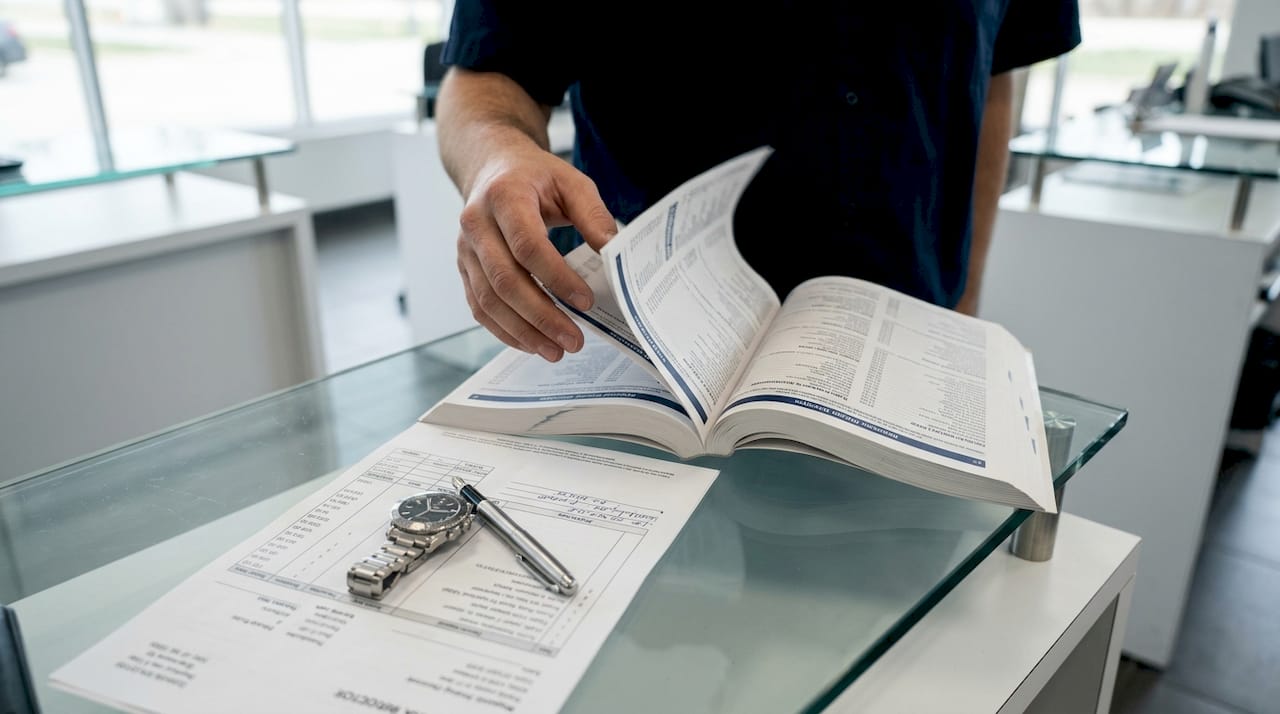
Shop type drives another significant price gap. Dealerships typically charge $20–$40 more per hour than independent shops, with dealership rates often exceeding $150–$180 per hour. The table below shows how these differences add up on a common repair.
| Repair Type | Independent Shop (avg.) | Dealership (avg.) |
|---|---|---|
| Oil change (full synthetic) | $75–$100 | $110–$150 |
| Brake pad replacement (front) | $180–$260 | $280–$380 |
| Alternator replacement | $400–$550 | $550–$750 |
| Timing belt service | $500–$750 | $750–$1,100 |
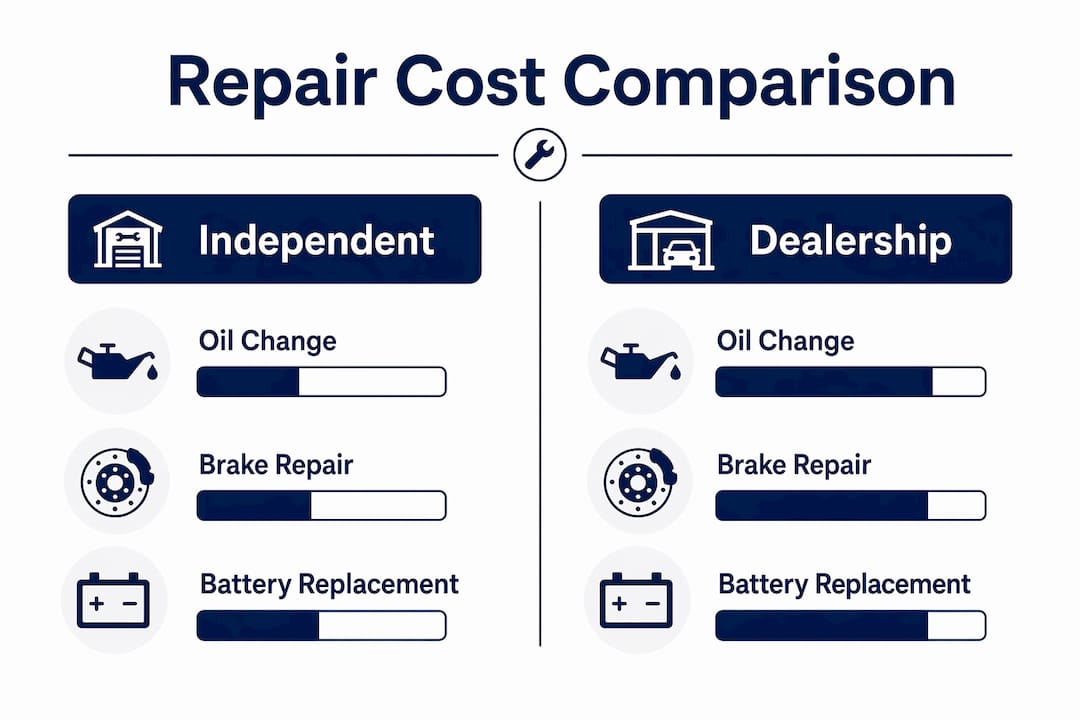
Dealerships charge more for several reasons: factory-trained technicians, OEM-only parts policies, and higher facility overhead. That does not make their pricing dishonest. It does mean you are paying a premium for brand-specific expertise, which matters most for newer vehicles still under warranty.
Pro Tip: Use RepairPal or a similar estimator to check the going rate for your specific repair in your zip code before calling any shop. Walking in with a number already in hand changes the conversation.
The dealer vs. mobile mechanic cost comparison shows that independent and mobile mechanics consistently offer more competitive labor rates without sacrificing quality on most standard repairs.
What are the warning signs of dishonest mechanic pricing?
Dishonest pricing rarely announces itself. It hides in vague language, rushed conversations, and estimates that are hard to read. Knowing the red flags protects you before you hand over your keys.
The most common warning signs are:
- Vague line items. Charges labeled “Miscellaneous Shop Charges” or “Engine Service” with no further detail are a top sign of non-transparent pricing. Every charge should have a specific name.
- Refusal to itemize. A shop that gives you a single total without breaking out parts and labor is not giving you a real estimate. Refusal to itemize repairs is a major red flag.
- Pressure to approve immediately. Honest mechanics give you time to review an estimate. High-pressure tactics to approve work on the spot are a signal that the shop does not want you to compare prices.
- No written estimate. Verbal quotes are not binding. Any shop unwilling to put the estimate in writing is leaving itself room to charge more at pickup.
- Recommended repairs with no explanation. Structural conflicts in auto repair mean 30–50% of recommended repairs may be unnecessary or overpriced. Ask the mechanic to show you the worn part and explain why the repair is needed now.
Honest mechanics do the opposite. They show you the failed component, explain the repair in plain language, distinguish between repairs that are urgent and those that can wait, and provide a written breakdown before touching the car. Consumer Reports identifies the best honesty indicator as a shop willing to explain repair necessity, provide written breakdowns, and separate necessary repairs from recommended maintenance.
A warranty on parts and labor is another strong signal of trustworthiness. Shops that stand behind their work have no reason to hide what they charged for.
Pro Tip: Ask the mechanic to show you the labor time guide entry for your repair. Standard labor time guides are publicly accessible, and honest shops will show customers these references to justify the hours billed.
How do you compare mechanic quotes to confirm honest pricing?
Getting a second quote is the single most effective tool for confirming fair pricing. Quotes within 15% of local averages are generally competitive. Quotes that run 30% or more above local averages deserve a direct question or a second opinion. Comparing quotes can save car owners $200–$3,000 depending on the repair.
A practical framework for evaluating any estimate:
- Request written, itemized estimates from at least two shops. Compare each line item, not just the total. A lower total can hide inflated parts costs offset by lower labor, or vice versa.
- Check labor hours against published guides. Alldata and Mitchell1 are the two most widely used labor time references in the industry. If a shop quotes four hours for a job that the guide lists at two, ask why.
- Verify parts by brand and part number. Unspecified “mystery” parts may hide low-quality components priced as premium. Ask for the brand name and look it up.
- Use RepairPal for a local benchmark. RepairPal provides repair cost estimates by zip code and vehicle, giving you a credible reference point before you walk into any shop.
- Separate urgent from optional repairs. Ask the mechanic to mark each item on the estimate as safety-critical, recommended, or optional. This prevents bundled estimates from obscuring what you actually need today.
The auto repair pricing checklist for car owners walks through each of these steps in detail and is worth reviewing before your next service appointment.
Finding a quality auto body repair shop follows the same principles: written estimates, itemized parts, and a willingness to explain every charge.
Key Takeaways
Honest mechanic pricing requires written, itemized estimates that separate labor, parts, shop fees, and taxes, with rates benchmarked against local averages and no vague or unexplained charges.
| Point | Details |
|---|---|
| Itemized estimates are non-negotiable | Every estimate should list labor hours, parts by name, shop fees, and taxes as separate line items. |
| Labor rates vary widely by shop type | Independent shops charge $110–$170/hr on average; dealerships typically run $20–$40 higher. |
| Regional price variance is significant | Identical repairs can cost 47.3% more or less depending on your city, so benchmark locally. |
| Red flags are specific and recognizable | Vague line items, refusal to itemize, and pressure tactics all signal non-transparent pricing. |
| Second opinions save real money | Quotes 30%+ above local averages should be questioned; comparing estimates can save $200–$3,000. |
Why pricing transparency is the real test of a good mechanic
Car owners often focus on the total at the bottom of an estimate. That is the wrong number to watch. The line items above it tell you everything about whether a shop is being straight with you.
I have seen estimates where the labor rate looked reasonable but the parts were marked up 80% with no brand listed. I have seen the opposite too: premium OEM parts at fair cost, but labor hours that doubled what the guide called for. Neither is honest pricing. Honest pricing means every number on that page is defensible, and the mechanic can explain each one without hesitation.
The car owners who get the best service are not necessarily the ones who negotiate hardest. They are the ones who ask the right questions before approving any work. “Can you show me the part you are replacing?” “What labor guide are you using for this job?” “Is this repair urgent or can it wait 30 days?” Those three questions alone will tell you more about a shop’s integrity than any online review.
Mechanics who welcome those questions are the ones worth returning to. Shops that get defensive or vague when you ask for specifics are telling you something important. Demand transparency. It is not rude. It is your right as a paying customer.
— Aaron
Honest pricing from Onsite Los Angeles Mobile Mechanic
Onsite Los Angeles Mobile Mechanic provides upfront, itemized quotes before any repair begins. There are no hidden fees, no vague line items, and no pressure to approve work on the spot.
Every estimate from Onsite Los Angeles Mobile Mechanic breaks out labor, parts by name and quality level, and any applicable fees so you know exactly what you are paying for. The service comes to you anywhere in the greater Los Angeles area, which means no towing costs and no waiting room. Many common repairs, including oil changes and battery replacements, are completed within an hour. To book a service or get a quote, call 213-583-4159 or review the full list of mobile mechanic services available near you.
FAQ
What does honest mechanic pricing mean?
Honest mechanic pricing means providing a written, itemized estimate that clearly lists labor hours, parts by name, shop fees, and taxes before any work begins. No charges should appear at pickup that were not disclosed upfront.
How much do mechanics charge per hour on average?
Independent shops charge between $110 and $170 per hour on average, while dealerships typically charge $150–$180 or more. Nearly 50% of shops fall in the $120–$159 per hour range.
How can I tell if a mechanic is overcharging me?
Compare the quote against local averages using RepairPal, and ask the shop to show you the labor time guide for your repair. Quotes 30% or more above local averages warrant a second opinion.
What are the biggest red flags in a repair estimate?
Vague charges like “Miscellaneous Shop Charges,” refusal to itemize parts and labor, and pressure to approve work immediately are the clearest signs of non-transparent pricing.
Should I always get a second opinion on car repairs?
A second opinion is worth getting any time a quote feels high or a shop recommends multiple repairs at once. Research shows 30–50% of recommended repairs may be unnecessary, and comparing estimates can save $200–$3,000.