A professional AC recharge in the United States typically runs $150 to $310, with most shops landing near $264 to $310 once you include a basic leak check. A DIY kit costs $30 to $130 but skips the vacuum step a real repair needs. Refrigerant type is the single biggest swing factor in that price, since R‑1234yf systems run $250 to $500 versus $150 to $300 for older R‑134a cars.
If you’re not sure which refrigerant your car uses, or the AC has been weak for more than a few days, skip the DIY can and book a professional evacuate‑and‑recharge. It’s the only version of this job that actually protects your compressor.
- National range for professional service: $150 to $310, refrigerant type dependent
- DIY kit cost: $30 to $130
- Add‑on diagnostics (dye or electronic leak detection): $50 to $120
Quick fact: Kelley Blue Book’s pricing data puts the average professional AC recharge at $264 to $310, a figure that already assumes a leak check is part of the job, not an extra.
Key Takeaways
Refrigerant type, not shop location, is the single biggest factor separating a $150 AC recharge from a $500 one.
| Point | Details |
|---|---|
| Know your refrigerant type | Check the underhood label for R‑134a or R‑1234yf before requesting quotes. |
| Expect $150 to $500 professionally | R‑134a systems run $150 to $300; R‑1234yf systems run $250 to $500. |
| Demand a real vacuum step | A proper recharge evacuates moisture first; skipping it risks compressor damage. |
| Budget for leak repairs separately | O‑ring fixes run $100 to $300; compressor replacement can reach $1,200. |
| Onsite Los Angeles Mobile Mechanic | Offers upfront quotes and on‑location evacuate‑and‑recharge service across greater Los Angeles. |
Table of Contents
- AC Recharge Cost Breakdown: Refrigerant, Labor, and Diagnostics
- R‑134a vs R‑1234yf: Why Refrigerant Type Changes the Price
- What a Proper Professional AC Recharge Actually Includes
- DIY AC Recharge Kits vs Professional Service
- When a Recharge Isn’t Enough: Leak and Component Repairs
- Estimating Your Car’s AC Recharge Cost by Vehicle Type
- How a Mobile Mechanic Approaches an AC Recharge
- Book a Transparent AC Recharge With Onsite Los Angeles Mobile Mechanic
- Sources
AC Recharge Cost Breakdown: Refrigerant, Labor, and Diagnostics
Every quote you get should break down into a handful of predictable pieces. Refrigerant itself typically costs $20 to $80 depending on type and how many pounds your system holds. Labor adds another $80 to $150, since most shops bill a half hour to a full hour for the job. Leak detection, when it’s not folded into the base price, runs $50 to $120 on top. Small parts like O‑rings or a Schrader valve cap rarely add more than $10 to $30, but they show up on itemized invoices more often than people expect.
Some shops quote a flat rate that bundles all of this together. Others itemize every line, which is actually the better sign, because it lets you check whether a leak check is really happening or just implied. Before paying, it’s worth knowing which invoice line items are standard versus padding, and a car repair invoice checklist can help you spot the difference fast.
- Refrigerant: $20 to $80
- Labor (30 to 60 minutes): $80 to $150
- Leak detection add-on: $50 to $120
- Small parts (O-rings, valve caps): $10 to $30
Quick fact: HonestMechanix’s cost breakdown notes that dealerships commonly charge 20 to 40% more than independent shops for the identical job, mostly due to labor rate differences, not better parts.
R‑134a vs R‑1234yf: Why Refrigerant Type Changes the Price
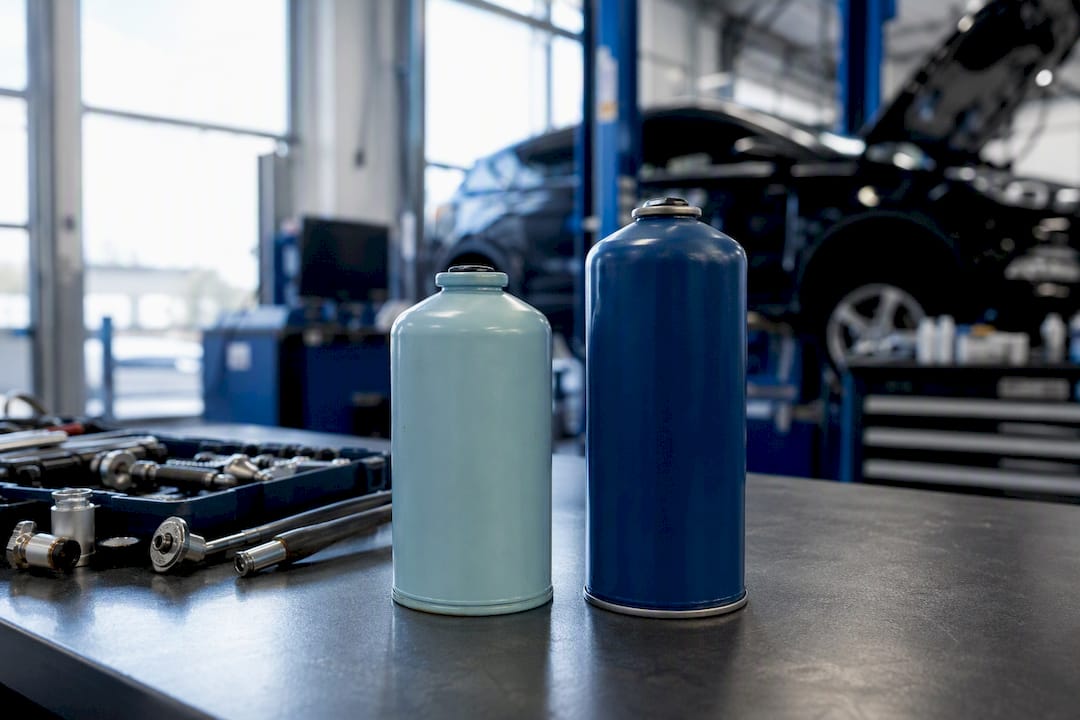
Your car’s refrigerant type sets the floor and ceiling on your quote before a technician even looks under the hood. R‑134a systems, common in vehicles built before roughly 2013, typically cost $150 to $300 to recharge. R‑1234yf systems, standard on most newer vehicles, run $250 to $500 for the same basic service.
The gap comes down to supply and equipment. R‑1234yf costs far more per pound than R‑134a because fewer producers make it and it requires specialized recovery machines and certified handling. That premium isn’t going away soon, since the refrigerant’s price is tied to a narrow supplier base rather than a temporary shortage.
- R‑134a systems: $150 to $300
- R‑1234yf systems: $250 to $500
- Where to check: the underhood sticker near the AC compressor lists your exact refrigerant type
Pro Tip: Snap a photo of your underhood refrigerant label before you call for quotes. Reading “R‑134a” or “R‑1234yf” over the phone gets you a far more accurate price than guessing based on your car’s age.
What a Proper Professional AC Recharge Actually Includes
A correct recharge is not just “add gas and go.” A real service follows five steps, and skipping any of them is how you end up paying for the same repair twice.
- Recover the old refrigerant into a certified recovery machine.
- Vacuum the system to pull out trapped air and moisture.
- Inspect for leaks using UV dye, soap bubbles, or an electronic sniffer.
- Recharge with the correct refrigerant type and exact weight.
- Test performance at the vents to confirm proper cooling and pressure.
The vacuum step matters more than most drivers realize. Moisture left in the system can freeze inside the expansion valve or mix with refrigerant to form acid, both of which shorten compressor life. HonestMechanix’s procedure breakdown puts a proper job at 30 to 60 minutes when done right. Dye and electronic leak detection are often billed separately, typically $50 to $120 on top of the base recharge.
Pro Tip: Ask directly whether your quote includes a vacuum step. If a shop can’t answer that question clearly, that’s a red flag worth walking away from.
DIY AC Recharge Kits vs Professional Service
A can of refrigerant from an auto parts store costs $30 to $130 and takes fifteen minutes in your driveway. That’s the appeal. The catch is what it skips.
DIY kits have no way to vacuum the system, run a real leak check, or measure exact refrigerant weight. Overcharging a system is common with these kits, and it can blow a seal or damage the compressor outright. There’s also an environmental cost to venting old refrigerant into the air during a rushed top-off, which professional recovery equipment avoids entirely.
- DIY kits skip evacuation, meaning trapped moisture stays in the system
- Overcharging is one of the most common DIY mistakes and can damage seals
- A quick top-off is reasonable only if you’ve confirmed a tiny, recent leak and just need a small refill
Pro Tip: If your AC blew cold two weeks ago and just started fading now, a small top-off might hold you over. If it’s been weak for a month or longer, you likely have a leak that a can of refrigerant won’t fix.
When a Recharge Isn’t Enough: Leak and Component Repairs
Sometimes the recharge is the easy part, and the real cost shows up when a technician finds where the refrigerant actually went. O‑ring and hose leaks are the most common and cheapest to fix, usually landing in the $100 to $300 range including labor. A failing condenser or evaporator core is a bigger job, often $300 to $800 depending on accessibility and whether the dash has to come apart. A bad compressor is the top of the range, frequently $500 to $1,200 once you include the refrigerant recharge that has to happen afterward anyway.
- O-ring or hose leak: $100 to $300
- Condenser or evaporator replacement: $300 to $800
- Compressor replacement: $500 to $1,200
Quick fact: Add‑on diagnostics like dye testing or electronic leak detection, commonly $50 to $120, are usually what catches these leaks before they turn into a bigger repair bill.
Before authorizing a big repair, ask whether new parts carry a warranty and whether the shop tested the whole system or just the symptom you mentioned. A transmission fluid leak diagnosis follows a similar logic: find the actual source before throwing parts at the problem.

Estimating Your Car’s AC Recharge Cost by Vehicle Type
System size and complexity move your price up or down from the baseline range. A compact economy car with a single AC zone sits at the low end, often $150 to $250 for R‑134a systems. A midsize sedan lands close to the same range unless it’s running R‑1234yf. SUVs and trucks hold more refrigerant and typically add $50 to $100 or more to the total. Dual-zone systems and vehicles with rear AC vents need extra refrigerant and more labor to service both circuits properly.
- Economy or compact: $150 to $250
- Midsize sedan: $150 to $300
- SUV or truck: $200 to $400
- Luxury or dual-zone/rear AC: $300 to $500+
Before calling for a quote, have your VIN, refrigerant type from the underhood label, and a clear description of symptoms ready. That alone can shave real guesswork out of the estimate a shop gives you over the phone.
How a Mobile Mechanic Approaches an AC Recharge
Onsite Los Angeles Mobile Mechanic diagnoses and recharges most AC systems right at your home or office, with an upfront quote before any work starts. Mobile service handles the diagnostics and recharge steps well for the large majority of jobs. A shop’s lift and specialized equipment only become necessary for major teardown repairs like a full evaporator core replacement. For a mobile visit, just clear space around the front of the car and expect roughly 30 to 60 minutes on site, similar to how onsite car repair typically works.
— Aaron
Book a Transparent AC Recharge With Onsite Los Angeles Mobile Mechanic
Onsite Los Angeles Mobile Mechanic skips the waiting room entirely. Instead of dropping your car off and hoping the quote matches what you were told on the phone, a technician comes to your home or office, diagnoses the AC system on the spot, and gives you an upfront price before touching anything.

The service covers the full job: on‑location diagnosis, a proper evacuate‑and‑recharge, and minor leak repairs or part replacements when that’s what the system actually needs. Most visits wrap up within an hour, which matters if you’re a busy professional trying to fit a repair between meetings instead of losing half a day at a shop. Certified recovery and charging equipment matter here too, and the reasoning behind that investment is worth understanding if you’re comparing why proper diagnostic equipment affects pricing across providers.
Onsite Los Angeles Mobile Mechanic serves the greater Los Angeles area. To get an upfront quote for your AC recharge, call to book a mobile appointment and a technician will confirm your refrigerant type and estimated cost before arriving.
Sources
- AC Recharge: What Is It? – Kelley Blue Book
- AC Recharge: 2026 Price Guide | AmpAuto
- How Much Does a Car AC Recharge Cost? – HonestMechanix