Workplace car maintenance is the practice of conducting routine vehicle upkeep at or near the worksite to keep vehicles safe, compliant, and ready to operate. The standard industry term for this practice is fleet preventive maintenance, though it applies equally to individual company cars and employee vehicles serviced during work hours. Both employees and managers benefit from understanding car maintenance procedures, since neglected vehicles create safety risks, compliance failures, and lost productivity. Mobile mechanic services have accelerated adoption of this model, making auto service in the workplace more accessible than ever before.
What is workplace car maintenance and what procedures does it involve?
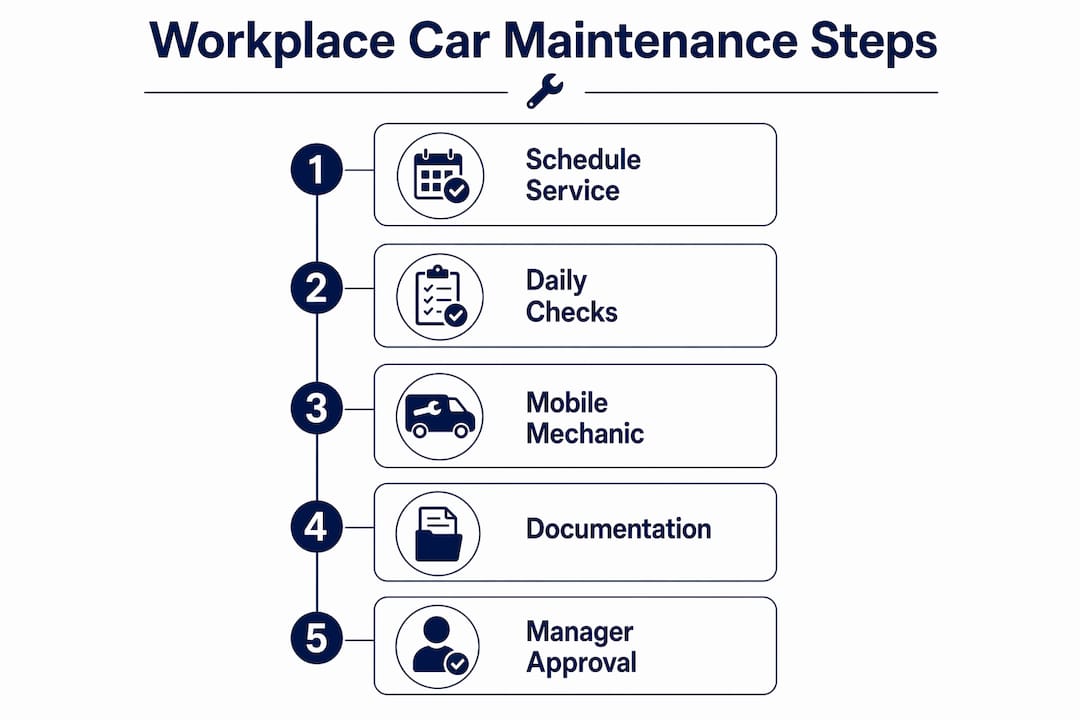
Workplace car maintenance covers a defined set of tasks performed on vehicles while they are parked at or near a work location. These tasks fall into two categories: scheduled service and daily driver checks. Scheduled service includes oil changes, brake inspections, battery diagnostics, tire rotations, and fluid top-offs. Daily checks are shorter, driver-led inspections that happen before or after each shift.
The most common scheduled procedures include:
- Oil and filter changes to prevent engine wear from contaminated lubricant
- Tire pressure checks and rotations to extend tire life and maintain fuel efficiency
- Brake inspections covering pad thickness, rotor condition, and brake fluid integrity
- Battery diagnostics to catch failing cells before a vehicle fails to start
- Fluid top-offs covering coolant, power steering, transmission, and windshield washer fluid
- Exterior light checks to confirm headlights, brake lights, and turn signals function correctly
Documentation is a non-negotiable part of this process. Maintenance logs create a paper trail that protects both the driver and the employer in the event of an accident or compliance audit. Mobile mechanics accommodate all of these procedures onsite, working around the vehicle’s parked schedule rather than requiring a shop visit.
Pro Tip: Set a recurring calendar reminder for the first Monday of each month to run through your vehicle’s fluid levels and tire pressure before you leave the parking lot. Five minutes of prevention prevents hours of downtime.
How does workplace car maintenance benefit employees and managers?
The benefits of workplace vehicle upkeep split cleanly between personal convenience and operational efficiency. Employees gain back time they would otherwise spend driving to a shop, waiting for service, and arranging a ride back to work. Managers gain higher fleet availability and lower per-vehicle operating costs over time.
The operational case is straightforward:
- Reduced vehicle downtime. On-site servicing maximizes asset utilization by keeping vehicles operational within company premises. Every hour a vehicle sits in a traditional shop is a direct productivity loss.
- Lower accident risk. Vehicles with documented, current maintenance records have fewer mechanical failures on the road. Fewer failures mean fewer accidents, which directly reduces insurance liability for the employer.
- Compliance protection. Documented maintenance schedules demonstrate due diligence to regulators and insurers. This matters especially for fleets subject to Department of Transportation or state-level vehicle safety standards.
- Cost savings over time. Mobile maintenance treated as a scheduled business activity eliminates the reactive, expensive repairs that follow deferred upkeep. Consistent small-scale service prevents the large-scale failures that ground vehicles entirely.
Convenience also influences how often employees actually get their vehicles serviced. Workplace-based mobile services remove the traditional barriers of scheduling conflicts and shop wait times, which means maintenance happens on time rather than being postponed indefinitely.
What role do mobile mechanic services play in workplace car maintenance?
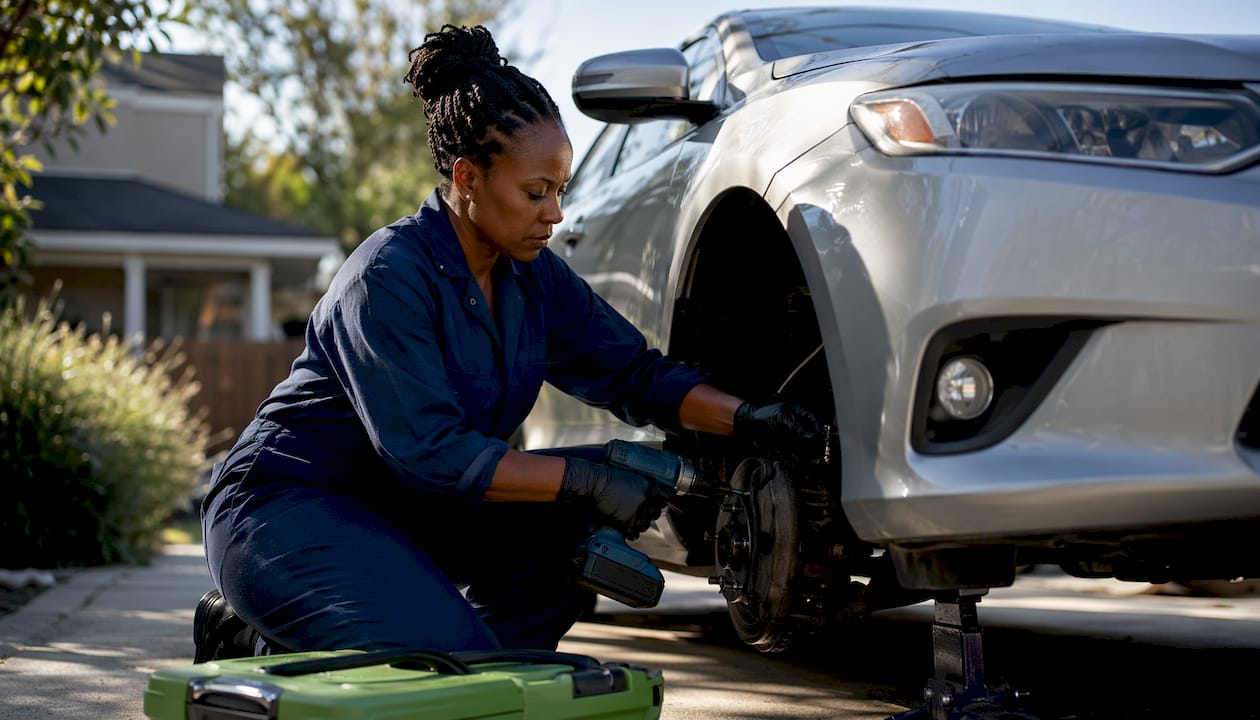
Mobile mechanics bring professional vehicle service directly to the worksite, eliminating the need for towing or off-hours shop visits. The model works because most routine maintenance tasks require only a few square feet of flat, accessible pavement and a standard electrical connection. Oil changes, battery replacements, brake pad swaps, and fluid services all qualify.
The scale of mobile service adoption signals a genuine shift in how fleets and individual drivers approach maintenance. Ford completed nearly 579,000 mobile service visits in Q2 2025 alone. That volume shows the model has moved well past the novelty stage and into mainstream fleet operations.
| Service type | Typical onsite completion time | Primary benefit |
|---|---|---|
| Oil and filter change | 30–45 minutes | Prevents engine wear |
| Battery replacement | 15–30 minutes | Eliminates no-start failures |
| Brake pad replacement | 45–60 minutes | Restores stopping performance |
| Tire pressure and rotation | 20–40 minutes | Extends tire life |
| Fluid top-off | 10–20 minutes | Maintains system function |
Onsite Los Angeles Mobile Mechanic operates on exactly this model across the greater Los Angeles area. Services like oil changes and battery replacements are completed within an hour, and pricing is provided upfront with no hidden fees. Employees and managers can book by calling 213-583-4159 to schedule service at their location.
Pro Tip: Before scheduling a mobile mechanic at your workplace, confirm with your facility or property manager that the parking area permits fluid-related vehicle work. Coordinating vendor access in advance prevents day-of delays.
What responsibilities do employees have for vehicle upkeep between scheduled services?
Scheduled maintenance handles the major service intervals, but employees carry daily responsibilities that no employer program replaces. Drivers are legally required to perform walk-around inspections covering tire condition, fluid levels, and exterior lighting before operating a company vehicle. Skipping these checks creates both a safety risk and a personal compliance exposure.
The daily walk-around should cover:
- Tires: Check for visible damage, low pressure, or uneven wear
- Fluid levels: Confirm oil, coolant, and windshield washer fluid are within range
- Lights: Test headlights, brake lights, reverse lights, and turn signals
- Wipers: Confirm blades clear the windshield without streaking
- Mirrors and glass: Check for cracks or obstructions that affect visibility
- Leaks: Look under the vehicle for fresh fluid spots on the pavement
These checks take under five minutes and catch the problems that scheduled service cannot predict, such as a nail in a tire or a fluid leak that developed overnight. Employees who skip daily checks and then experience a mechanical failure on the road face personal liability, even when their employer maintains a formal maintenance program. Integrating the walk-around into the start-of-shift routine, the same way a pilot runs a pre-flight checklist, removes the friction of treating it as an optional extra.
Key Takeaways
Workplace car maintenance works best when scheduled service, daily driver checks, and mobile mechanic access operate together as a single system rather than separate tasks.
| Point | Details |
|---|---|
| Define the practice clearly | Workplace car maintenance combines scheduled service and daily driver checks performed at or near the worksite. |
| Mobile services expand access | Mobile mechanics complete most routine tasks onsite in under an hour, eliminating shop visits and reducing downtime. |
| Employees carry daily duties | Legal walk-around checks covering tires, fluids, and lights remain the driver’s responsibility between scheduled services. |
| Documentation protects everyone | Maintenance logs create compliance records that protect both drivers and employers during audits or accident reviews. |
| Coordinate before scheduling | Confirm parking permissions and safety protocols with facility managers before booking any onsite vehicle service. |
The shift I’ve watched happen in professional settings
The clearest change I’ve seen over the past few years is that maintenance is no longer treated as something you fit around work. It’s becoming part of the workday itself. Fleets that used to batch vehicles for weekend shop visits now schedule mobile service during Tuesday afternoon parking hours and lose zero operational time. That shift is not just convenient. It’s a structural improvement in how organizations manage vehicle assets.
The employees who benefit most are the ones who stop treating their daily walk-around as optional. A five-minute check before the first drive of the day is the single highest-return maintenance habit available. It catches the problems that no scheduled service interval can predict, and it keeps the driver legally protected. The combination of a solid mobile service program and a disciplined daily check routine is the standard that well-run fleets are already operating at. Everyone else is catching up.
— Aaron
Onsite Los Angeles Mobile Mechanic brings service to your parking spot
Employees and managers in the Los Angeles area no longer need to choose between vehicle upkeep and a full workday. Onsite Los Angeles Mobile Mechanic provides professional mobile mechanic services directly at your workplace, covering oil changes, battery replacements, brake service, and more. Every job comes with an upfront quote and no hidden fees.
Most services finish within an hour while your vehicle sits in your regular parking spot. There is no towing, no waiting room, and no lost afternoon. Call 213-583-4159 to book a visit and keep your vehicle road-ready without stepping away from work. Onsite Los Angeles Mobile Mechanic serves the greater Los Angeles area, including Long Beach and Pasadena.
FAQ
What is workplace car maintenance?
Workplace car maintenance is the practice of performing routine vehicle upkeep, such as oil changes, tire checks, and brake inspections, at or near an employee’s worksite. It combines scheduled mobile service with daily driver-led checks to keep vehicles safe and compliant.
What procedures are included in workplace vehicle upkeep?
Standard procedures include oil and filter changes, tire pressure checks, brake inspections, battery diagnostics, fluid top-offs, and exterior light verification. Daily walk-around checks covering tires, fluids, and lights are also part of the routine.
Are employees responsible for vehicle checks even with a company maintenance program?
Yes. Drivers are legally required to perform daily walk-around inspections covering tire condition, fluid levels, and lighting functions regardless of any employer-provided maintenance program. Skipping these checks creates personal safety and compliance exposure.
How do mobile mechanics support workplace car maintenance?
Mobile mechanics bring tools and parts directly to the worksite and complete most routine services in under an hour while the vehicle is parked. This model eliminates shop visits and keeps vehicles operational during the workday.
What should managers do before scheduling onsite vehicle maintenance?
Managers should coordinate with property or facility managers to confirm parking permissions, fluid containment requirements, and vendor access protocols before booking any onsite service. Skipping this step often results in day-of delays or denied entry.