A hard shift almost always traces back to fluid condition, a solenoid or sensor fault, or worn mechanical parts, roughly in that order of likelihood. Check your transmission fluid level and color first, and note whether the hard shift happens cold, warm, or both. If you notice slipping, a burning smell, a fluid leak, or a warning light, stop driving and diagnose the source first to stop car odour for good before the damage spreads.
TL;DR:
- The most common cause of hard shifting is low or dirty transmission fluid, which affects hydraulic pressure and smooth gear engagement.
- Hard shifts that occur only when cold typically indicate incorrect fluid viscosity or specification, which improves as the fluid warms up.
- Gear-specific hard shifting points to faulty shift solenoids or sensors, often identifiable through diagnostic codes and sensor data.
- Symptoms right after a battery disconnect, fluid change, or software update may require resetting the transmission control module to relearn shift patterns.
- Any severe symptoms like slipping, burning odor, or warning lights require immediate stopping and professional diagnosis to prevent costly internal damage.
Table of Contents
- What Causes Hard Shifting in an Automatic Transmission?
- How Do You Narrow Down the Cause?
- Can You Check or Fix This Yourself Before Calling a Shop?
- When Should You Stop Driving, and What Will It Cost to Fix?
- What Do Experienced Mechanics Check First?
- Editorial Take: How to Handle a Hard Shift Without Overpaying
- Get an Onsite Diagnosis Before You Pay for Guesswork
- Sources
- FAQ
What Causes Hard Shifting in an Automatic Transmission?
Most hard shifts start small and cheap to fix, then turn expensive if you ignore them long enough. The causes of hard shifting tend to fall into a handful of categories, and the timing of the symptom usually tells you which one you’re dealing with.
Low or dirty ATF is the most common culprit. Automatic transmission fluid does double duty as a lubricant and a hydraulic medium. When the level drops or the fluid breaks down, hydraulic pressure inside the valve body drops too, and gears start grabbing instead of sliding into place smoothly.
Wrong ATF viscosity or specification causes a particular flavor of trouble: hard shifts that show up specifically on a cold start and fade once the fluid warms up. Every automaker specifies a particular ATF type for a reason, and using the wrong one changes how quickly the fluid can flow through cold valve-body passages.
Shift solenoid or sensor faults tend to produce gear-specific symptoms. A car that shifts hard only between second and third gear, for example, points at a solenoid controlling that specific shift, not a system-wide fluid problem. A scan tool will often catch a stored or pending code tied to a speed sensor or solenoid circuit.
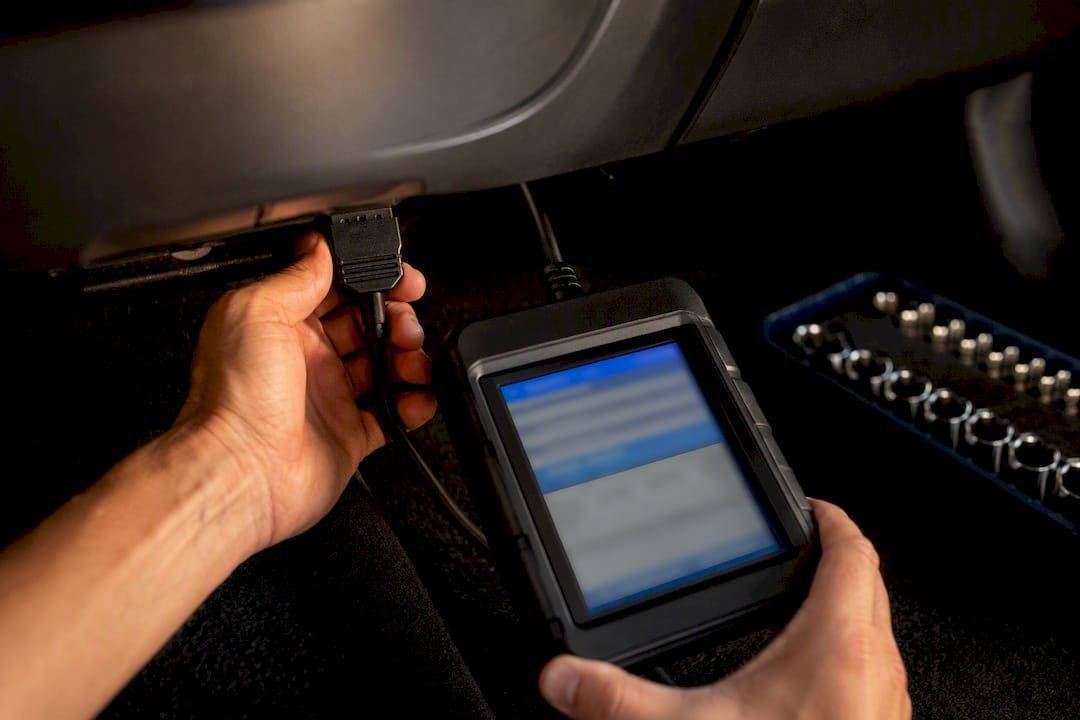
TCM adaptive-memory mismatches show up right after a battery disconnect, a fluid change, or a software flash. The transmission control module relearns shift timing over time, and a reset can fix hard shifts that begin right after service work, but it won’t touch a part that’s actually worn out.
Mechanical wear is the category nobody wants to hear. Worn clutch packs, damaged bands, or a failing valve body cause harder, more consistent shifts that don’t improve with a fluid top-up. A torque converter or engine mount problem often shows up as a clunk shifting into Drive or Reverse, sometimes paired with a vibration you can feel through the seat.
Here’s the quick reference version:
- Hard shift only when cold, smooths out warm: likely fluid viscosity or specification issue
- Hard shift in one specific gear: likely solenoid or sensor
- Hard shift right after a battery disconnect or service: likely adaptive memory, may need a reset
- Hard shift constant regardless of temperature, worsening over weeks: likely mechanical wear
- Clunk into Drive or Reverse plus vibration: likely torque converter or mount issue
How Do You Narrow Down the Cause?
A shop that skips straight to parts replacement is guessing, and you’re the one paying for the guess. AAA’s approach to catching transmission problems early puts symptom logging and inspection ahead of any teardown, and that order matters.
- Write down the exact shift event (which gear, what speed), whether the engine was cold or warm, how hard you were accelerating, and anything unusual recently, like a battery disconnect, a tow, or a fluid change.
- Look under the car for fresh spots, then check the fluid itself for color and smell. Dark, burnt-smelling fluid or a milky tint both point toward real damage, not a minor glitch.
- Have a scan tool pull stored and pending codes, and watch live data from the speed and input/output sensors while driving if possible.
- A shop’s next step usually includes a line-pressure test, a solenoid bench test, and sometimes a full valve-body inspection paired with an adaptation check.
Pro Tip: Ask for an itemized written estimate that separates diagnosis, fluid service, solenoid or software work, and internal repair into distinct lines. A vague one-number quote makes it impossible to tell whether you’re paying for a $150 fluid service or a $2,500 rebuild.
Can You Check or Fix This Yourself Before Calling a Shop?
You can rule out the cheapest cause yourself in about ten minutes. Pull the transmission dipstick (many newer vehicles require checking through a scan tool port instead, so check your owner’s manual first) and look at both the level and the fluid’s condition.
- Check level per your manual’s cold or warm procedure. Some vehicles specify checking with the engine running in Park; others want it off.
- Clear red or slightly amber fluid is normal; brown, black, or burnt-smelling fluid signals overheating or wear, and milky fluid means coolant contamination that needs immediate attention.
- Top up only with the exact ATF specification listed in your owner’s manual. Never mix fluid types or grab a generic “universal” bottle off the shelf.
- Drive gently afterward and note whether the hard shift changes, improves, or stays the same, then record the conditions again.
What you should never do: overfill the transmission, guess at a fluid type, or keep driving once you notice slipping or a burning smell. A recurring low fluid level points to a leak, not consumption, since automatic transmissions don’t burn fluid the way engines burn oil. If topping up doesn’t hold or the smell shows up again within days, a roadside diagnostic visit will save you more time than another trip to the parts store.
When Should You Stop Driving, and What Will It Cost to Fix?
Some symptoms mean “drive carefully to a shop.” Others mean “stop now.” Slipping between gears, a burning odor, a heavy leak, sudden loss of drive, grinding noises, or a lit warning light all fall into the second category, and AAA warns that ignoring these signs risks major damage that started as something minor.
Cost breaks into rough categories, and a real quote depends heavily on your specific vehicle:
- A diagnostic fee to identify the actual cause, separate from any repair
- Fluid, filter, or gasket service, generally the least expensive fix
- Solenoid, sensor, or software repair, a middle tier that’s still far cheaper than a rebuild
- Internal repair or rebuild, which varies enormously by transmission design and labor time
Before agreeing to anything expensive, ask which tests were run, ask to see the fluid sample, and request separate line items for parts and labor along with any warranty terms. A mobile mechanic can often complete the initial diagnosis, fluid inspection, and basic sensor work right at your curb, which saves the tow fee if the fix turns out to be simple.
What Do Experienced Mechanics Check First?
Technicians who see hard-shifting complaints every week don’t start with the transmission pan. They start with a conversation.
Collecting the exact conditions, which shift, cold or warm, how much throttle, whether the battery was recently disconnected, is the single most useful step before any testing begins. Fluid checks and leak inspection come next because they’re fast, cheap, and catch a large share of cases. Using the wrong fluid can cause damage that no amount of later diagnosis can undo.
That order (symptom log, fluid check, leak trace, then testing) mirrors both AAA’s and Consumer Reports’ published guidance, and it’s the same sequence Onsite Los Angeles Mobile Mechanic follows on every hard-shift call: an on-location diagnostic check, a fluid inspection or change, and a transparent upfront quote before any deeper work starts.
Editorial Take: How to Handle a Hard Shift Without Overpaying
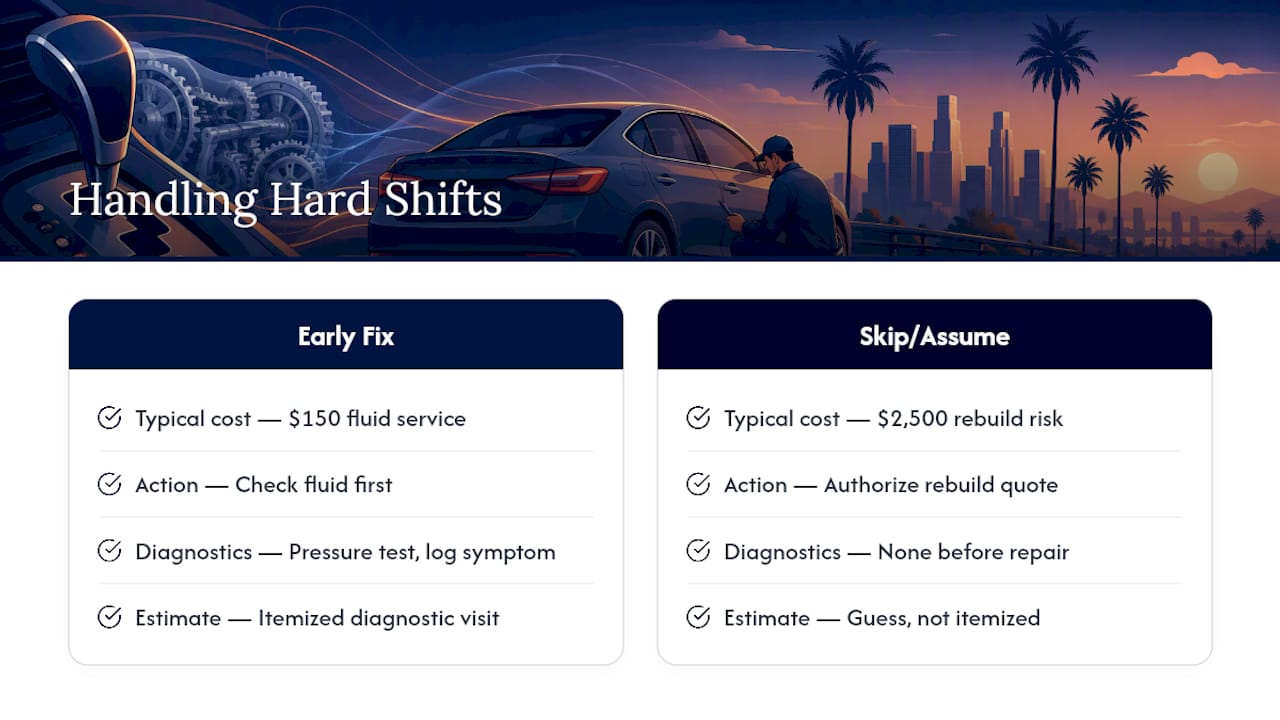
Check the fluid first. If nothing urgent shows up, that alone resolves a surprising share of complaints, and it costs you almost nothing to rule out.
The real mistake most drivers make is skipping straight to “my transmission is dying” and authorizing a rebuild quote before anyone runs a pressure test or pulls adaptation data. Log the exact symptom, get a diagnostic visit instead of a guess, and insist on an itemized estimate. Acting on good information early is what keeps a $150 fluid service from turning into a $2,500 repair six months later.
— Aaron
Get an Onsite Diagnosis Before You Pay for Guesswork
A mobile mechanic service is an alternative to towing your car to a shop and waiting on a phone call. Mechanics come to your home or office, run fluid inspections, leak tracing, and diagnostic checks similar to those done at shops, and provide transparent, upfront pricing before any work starts.
Many hard-shift diagnostics and fluid services can be completed on-location within an hour, helping minimize downtime for repairs that might just be fluid related. If the problem requires solenoid, sensor, or internal work beyond what can be addressed onsite, the assessment is provided itemized by category to clarify costs and needed repairs. Browse the full range of mobile diagnostic and repair services to see what’s covered.
To book, call and describe your symptom log: which gear, cold or warm, and anything recent like a battery disconnect or fluid change. This conversation often helps narrow down the likely cause before the mechanic arrives, facilitating faster and fairly priced diagnostic visits.
Sources
- Maintain Your Car’s Transmission and avoid costly repairs – Consumer Reports
- How to catch transmission problems before they get expensive | AAA Club Alliance
FAQ
How Can I Fix a Hard-Shifting Automatic Transmission?
Start by checking the ATF level and condition, since low or degraded fluid is the most common fixable cause. If fluid looks and smells normal, a scan for stored codes and a TCM adaptation reset are the next logical steps before any mechanical repair.
Does a Hard Shift Mean a Bad Transmission?
No, a hard shift does not automatically mean the transmission is failing. Causes range from a simple fluid service to a solenoid or sensor fix, and internal repair is only one possibility among several.
How Much Does It Cost to Fix a Hard-Shifting Transmission?
Cost depends entirely on the cause, and a real number requires a vehicle-specific quote. Fluid or filter service sits at the low end, solenoid and sensor repairs fall in the middle, and internal rebuild work costs the most, so always ask for an itemized estimate before approving repairs.
What Causes a Stiff Gear Shift in an Automatic?
A stiff or hard gear shift usually points to low hydraulic pressure from old fluid, a solenoid or sensor fault, or a TCM adaptation mismatch after recent service. Worn clutch packs or a failing valve body cause similar symptoms but require mechanical repair rather than a fluid or software fix. Onsite Los Angeles Mobile Mechanic can run an on-location diagnostic check to narrow down which of these applies to your vehicle.