If you’re searching for ahat247.com alternatives, the short answer is this: your best options fall into three categories, and mobile mechanic services tend to win on convenience for most everyday repairs.
Here’s how the main service types break down:
- Official dealership service departments handle warranty work and brand-specific diagnostics, but appointments can stretch days out and labor rates run high.
- Independent full-service auto repair shops offer broader pricing flexibility and often faster scheduling than dealerships, though you still need to bring the vehicle in.
- Mobile mechanic services come to your home, workplace, or roadside location. They cover routine maintenance and diagnostics without requiring a tow or a waiting room.
Each category suits a different situation. A major transmission rebuild belongs at a shop with a lift. A dead battery at 7 AM in your driveway? That’s exactly what mobile mechanics exist for.
What are the best ahat247.com alternatives for mobile repair?
Choosing the right provider comes down to a handful of concrete factors, not just who shows up first in a search.

1. Verify ASE certification before booking
ASE certification is the clearest credential signal in the U.S. auto repair industry. A mechanic who holds current ASE credentials has passed standardized tests covering specific vehicle systems, which reduces the risk of misdiagnosis and repeat visits. Ask directly whether the technician assigned to your job is ASE-certified, not just whether the company employs some certified staff.
2. Confirm vehicle class compatibility
Not every mobile mechanic works on every vehicle. Confirming your vehicle class before scheduling prevents a technician from arriving and turning the job down. Light-duty gasoline cars, SUVs, pickups, and vans are widely covered. Light-duty diesel pickups are covered by some providers. Heavy-duty commercial trucks and semi-trailers require specialized shops entirely.
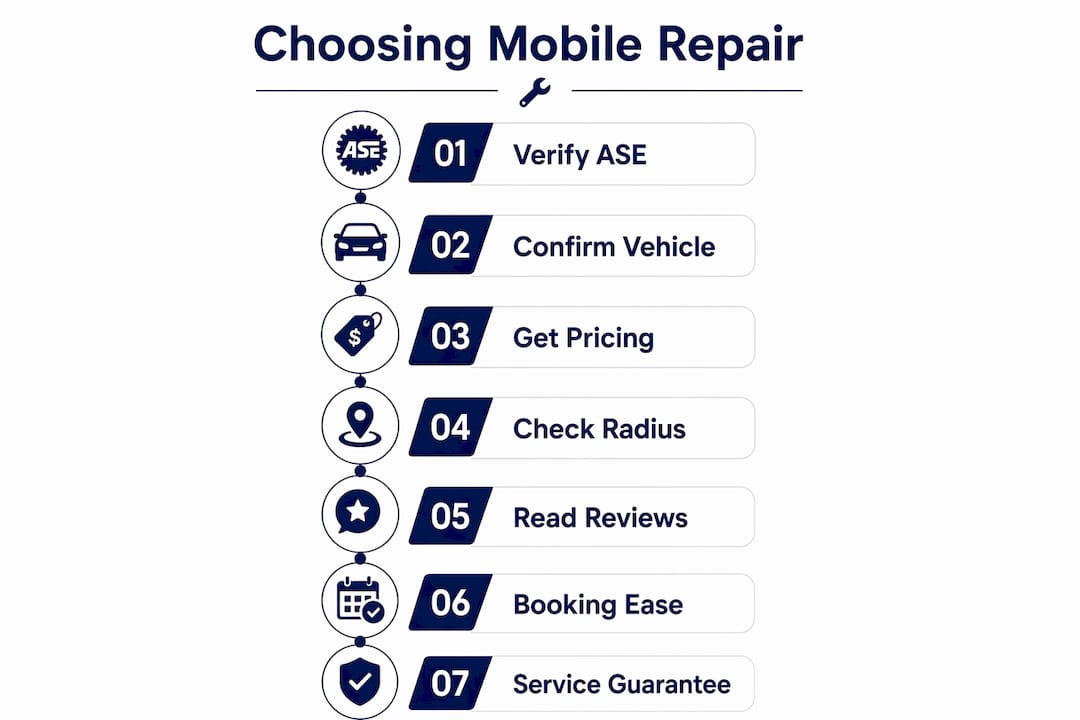
3. Demand upfront, itemized pricing
Transparent pricing separates trustworthy providers from the ones who quote low and bill high. A reliable mobile mechanic gives you a firm price before any work starts, broken down by parts and labor. If a provider won’t commit to a number until after they’ve “looked at it,” that’s a red flag worth taking seriously.
4. Check geographic service radius
Mobile mechanics typically operate within a defined radius from their base, often around 50 miles. A provider advertising national coverage but based far from your location may have slower response times and higher travel fees. Local providers with genuine knowledge of your area’s traffic patterns tend to respond faster and more reliably.
5. Read reviews for diagnostic accuracy, not just friendliness
Customer reviews are most useful when they mention specific outcomes: did the mechanic correctly identify the problem on the first visit? Did the repair hold? Positive reviews about “great attitude” tell you less than reviews that say “fixed my alternator in 45 minutes and it’s been running fine for six months.”
6. Evaluate booking ease and response time
A mobile mechanic who takes 24 hours to confirm an appointment defeats much of the convenience advantage. Look for providers who offer same-day or next-day scheduling, clear communication about arrival windows, and a direct phone line rather than a form-only booking system.
7. Ask about service guarantees and warranty coverage
Reputable providers stand behind their work with a parts and labor warranty. The specifics vary, so ask before booking: how long does the warranty last, and what does it cover? A provider who can’t answer that question clearly probably hasn’t thought through what happens when something goes wrong.
Pro Tip: Ask whether the repair you need can realistically be done mobile before scheduling. Some jobs, like suspension overhauls or timing belt replacements on certain engines, require a lift and shop tools. A good mobile mechanic will tell you that upfront rather than show up and improvise.
What services can a mobile mechanic actually handle?
The common misconception is that mobile mechanics only handle emergencies. Modern mobile services cover far more than a jump-start or a flat tire.
Services well-suited for mobile repair:
- Oil and filter changes
- Battery testing and replacement
- Brake pad and rotor replacement
- Diagnostic scans using OBD-II tools
- Alternator and starter replacement
- Serpentine belt replacement
- Spark plug replacement
- Light-duty fleet maintenance for service vans and contractor pickups
Jobs that typically require a shop:
- Engine or transmission rebuilds
- Repairs requiring a vehicle lift (exhaust work, full suspension overhauls)
- Air conditioning recharge and leak repair (requires specialized equipment)
- Multi-day diagnostic procedures
The vehicle class matters here too. Most mobile mechanics work on light-duty gasoline vehicles and select light-duty diesel pickups. If you drive a heavy-duty commercial truck, a mobile general mechanic is not the right call.
Mobile mechanics vs. traditional shops: the real trade-offs
Neither option is universally better. The right choice depends on what your car needs and what your schedule allows.
Advantages of mobile mechanics:
- No towing costs or logistics
- Service at your home, office, or roadside location
- Often faster turnaround for standard repairs
- Available outside normal business hours, including nights and weekends
- Reduced downtime for working drivers
Limitations to know:
- Geographic radius limits coverage in rural or outer-suburban areas
- Complex repairs requiring lifts or heavy shop equipment aren’t possible on-site
- Pricing for some jobs can run higher than a shop rate when travel is factored in
Where traditional shops have the edge:
- Full equipment for major mechanical work
- Broader service scope under one roof
- Often more competitive pricing on labor-intensive jobs
- Established parts supplier relationships for faster sourcing
The pros and cons of mobile mechanics come down to this: for routine maintenance and standard component replacements, mobile wins on convenience. For anything that needs a lift or specialized tooling, a shop is the practical choice. Knowing which category your repair falls into before you book saves time and avoids frustration.
For a detailed cost comparison, the dealer vs. mobile mechanic pricing breakdown covers what you’d typically pay across service types.
Onsite Los Angeles Mobile Mechanic: a trusted alternative worth knowing
If you’re in the greater Los Angeles area and need a mobile mechanic you can actually rely on, Onsite Los Angeles Mobile Mechanic is worth a direct look. The service covers the full LA metro, coming to your home, workplace, or wherever your vehicle is sitting.
Here’s what sets it apart from generic mobile repair options:
- ASE-certified technicians handle every job, which means the person working on your car has passed standardized competency tests, not just watched a few videos.
- Upfront, transparent pricing with no hidden fees. You get a quote before work starts, and that’s the number you pay.
- Fast turnaround on common repairs. Many services, including oil changes and battery replacements, are completed within an hour at your location.
- Accurate diagnostics on the first visit. The goal is to fix the problem correctly the first time, not to schedule a follow-up.
- Broad service scope covering gasoline cars, SUVs, pickups, vans, and light-duty trucks across Los Angeles.
Onsite Los Angeles Mobile Mechanic handles mobile brake repair, alternator replacement, diagnostic scans, oil changes, battery service, and more. For drivers who value their time and don’t want to spend half a day at a shop, that combination of speed, transparency, and certified expertise is the practical alternative to both dealerships and traditional repair shops.
Pro Tip: If you’re comparing mobile mechanic options in Los Angeles, check the LA coverage area before booking. Not every provider actually reaches your neighborhood, even if they list your city.
Onsite Los Angeles Mobile Mechanic comes to you, no shop required
Skipping the dealership or the independent shop isn’t just about convenience. It’s about getting the same quality of repair without rearranging your day around a drop-off and pickup.
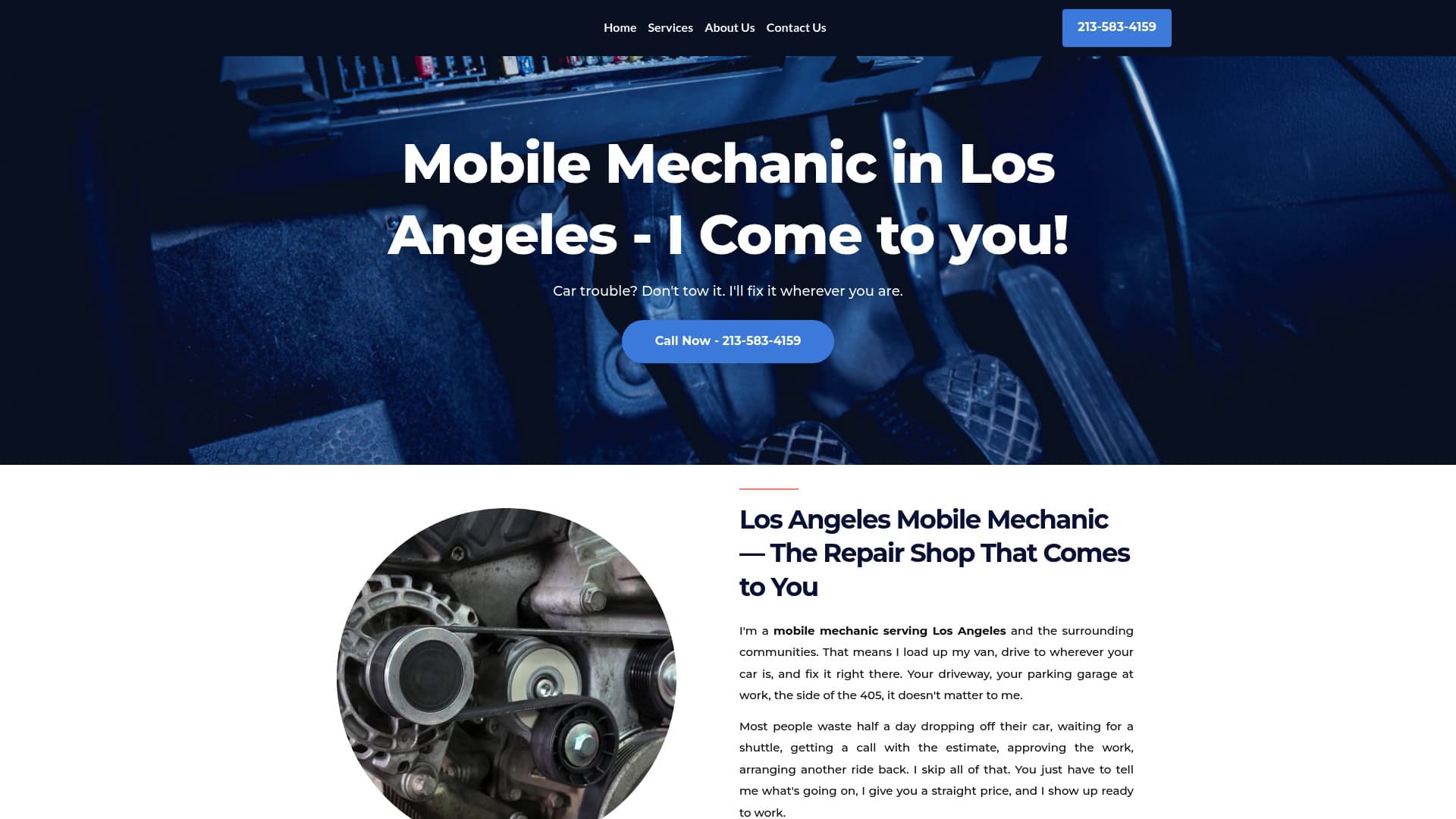
Onsite Los Angeles Mobile Mechanic brings ASE-certified service directly to your location anywhere in the greater Los Angeles area. No towing, no waiting rooms, no surprise fees at pickup. You get an upfront quote, a certified technician, and a repair completed where your car already is. For auto repair marketing insights relevant to the mobile service industry, auto repair SEO resources offer useful context on how providers in this space differentiate themselves.
Ready to book? Call Onsite Los Angeles Mobile Mechanic directly to schedule service or get a quote. Check the full list of available services to confirm your repair is covered, then call 213-583-4159 to set up an appointment at your location.
Key Takeaways
Mobile mechanic services are the most convenient ahat247.com alternative for routine repairs, provided the mechanic is ASE-certified, offers transparent pricing, and operates within your area.
| Point | Details |
|---|---|
| Three main alternative categories | Dealerships, independent shops, and mobile mechanics each suit different repair types and budgets. |
| ASE certification matters most | Verify the specific technician is ASE-certified to avoid misdiagnosis and repeat visits. |
| Mobile service has real limits | Repairs requiring a lift or heavy equipment must go to a shop, regardless of provider claims. |
| Geographic radius affects reliability | Local mobile providers within a defined service area respond faster than national brands with distant coverage. |
| Onsite Los Angeles Mobile Mechanic | Offers ASE-certified, transparent-pricing mobile repair across greater Los Angeles, bookable by phone at 213-583-4159. |